

Parks & GardensIkebukuro/Akabane
Meishu no Taki Park (Oji, Tokyo)(Nanushi no Taki Park)
stroll garden with a central pondJapanese-style gardenwaterfall
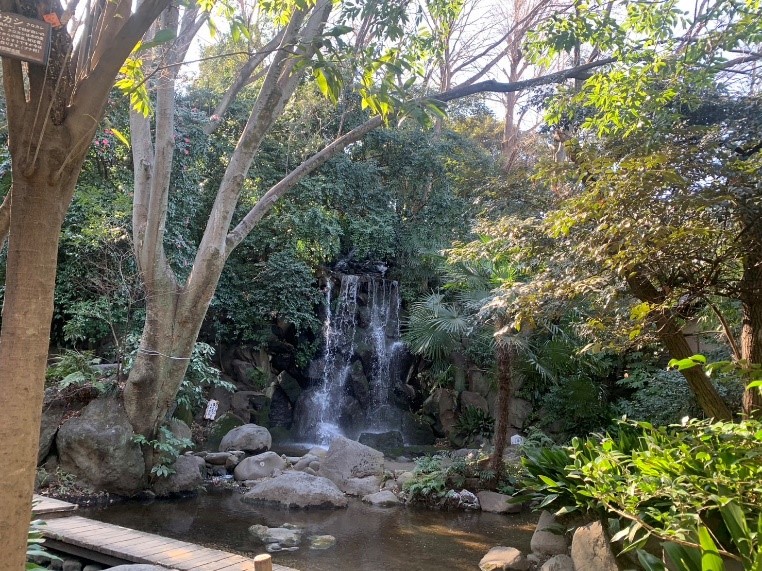
The park began during the Ansei era (1854-1860) of the Edo period (1603-1868), when the Hatano family, the feudal lords of Oji Village, opened a summerhouse in their mansion for people to use. In the mid-Meiji period (1868-1912), it passed into the hands of Tokuzaburo Kakiuchi, a trader, and was developed as a garden. In 1938, Seikyoken Co., Ltd. acquired the property and built a cafeteria and swimming pool, but it was destroyed by fire in an air raid in April 1945. Fifteen years later, the garden was reopened to the public by the Tokyo Metropolitan Government. Today, the garden is loved by local people as a Japanese garden with beautiful zelkova trees and mountain maples. There were many waterfalls in the Oji area in the past, and seven of them were called “Oji Shichitaki” (seven waterfalls of Oji), but only “Meishu no Taki” in this park is still in existence. It is a powerful waterfall and one of the highlights of the park.
Spot OutlineOutline
| address (e.g. of house) | 1-15-25 Kishimachi, Kita-ku, Tokyo |
|---|---|
| Access | Approx. 10 min. walk from JR and Subway Oji Sta. |
| phone | 03-3908-9275 |
| Business Hours | 9:00-17:00 (9:00-18:00 from July 15 to September 15) |
| External Links | |
| Founding and opening of business | Ansei era (1854-1860) |