

You can do it yourself! How to tie a yukata obi – Butterfly knot
man’s formal divided shirtyukata (light cotton kimono worn in the summer or used as a bathrobe)bowknot
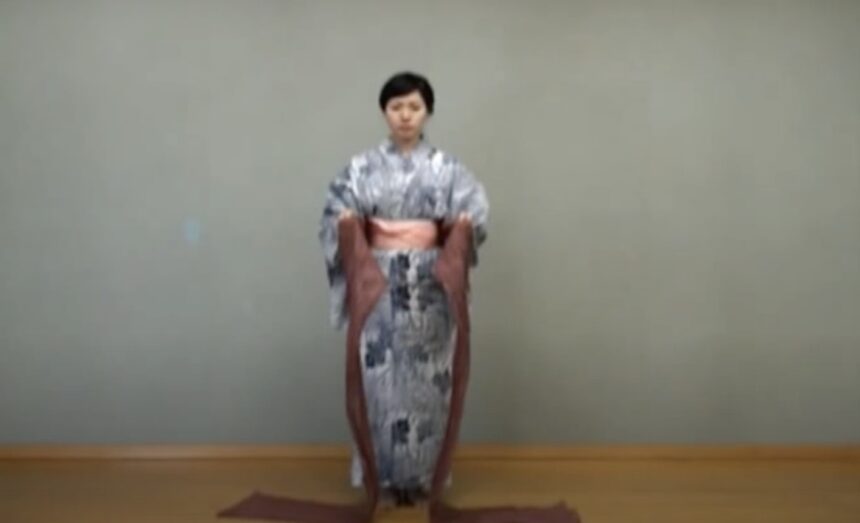
The soft heko obi is tied in a butterfly knot, an obi knot that adds loveliness and glamour.This is a very simple knot that is easy to tie, even for those who are not confident in obi tying.
1: Adjust the width of the obi to fit you.
2: Align the center of the obi with the center of your back, turn the obi from back to front and wrap the obi around your own torso.
After wrapping two coils around the body, tie a single knot with the lengths of the left and right sides aligned.
3: After that, hold the left and right obi at their side positions and pull firmly downward.
If you do not pull firmly at this time, the obi will loosen.*The number of wraps should be adjusted according to the length of the belt.
4: Tie a butterfly knot in front of the body, adjusting the butterfly wings and the “tare” so that they are the same length.
At this point, bring the knot to the top of the obi so that the ribbon is high up, giving a youthful impression.
5: Shape the entire piece.
6: Holding the obi with both hands, shift it to the right and turn it to the back, being careful not to expose the yukata.
7: Finally, shape it again and it is done.
Tokyo Tarothree
store that has been gone out of business