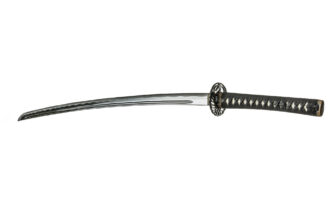
point (of a sword, etc.)

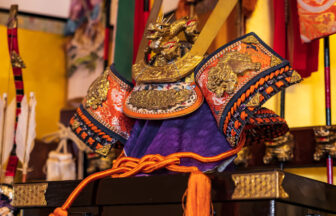
armour

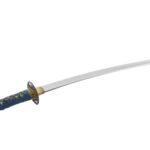
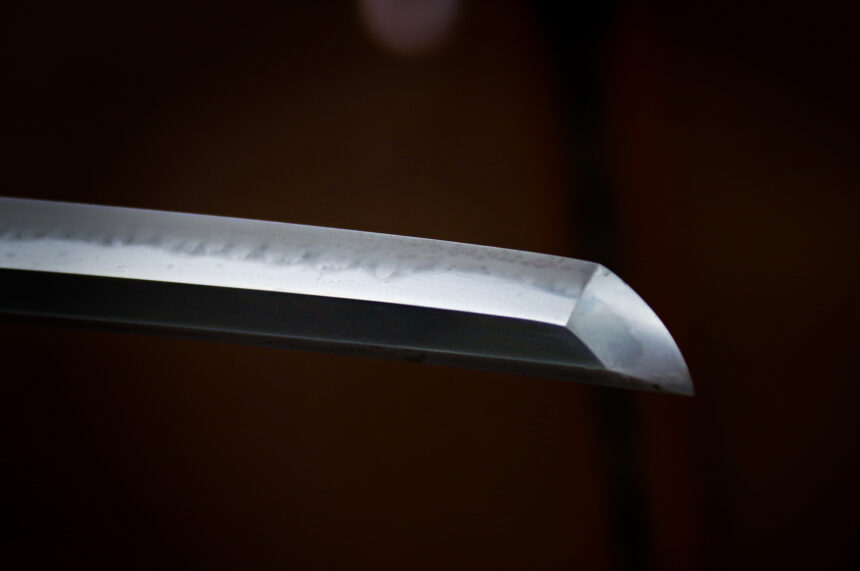
point (of a sword, etc.)(KISSAKI)

Japanese sword

The most advanced point of the sword blade. Shinogi-suji. The part of the blade above the mitsutogashira, where shinogi-suji (a raised line running vertically down the side of the blade) and yokote-suji (a horizontal line running from shinogi-suji to the blade edge) intersect. The part of the blade above the mitsutogashira, where Shinogi-suji and Yokotesuji intersect (the horizontal boundary line running from Shinogi-suji to the blade edge). It is also called “spearhead. It is one of the most beautiful parts of a Japanese sword, and is also valued from an artistic point of view.
It is used for cutting and stabbing directly at the enemy, and has been improved to make it stronger and sharper. There are five types of kirisaki according to length and shape: kamasu kirisaki, koshikirisaki, ikubikirisaki, chukikirisaki, and miyakirisaki.

新着・おすすめ情報

  1. A Walk in Edo with Old Maps] No.5: Traces of Edo Remain Strong in “Differences in Elevation” and “Town Names” in Ushigome and Ichigaya

  2. revitalization

  3. Oiwa Inari Tamiya Shrine

  4. Kakurinji Temple (Shirokanedai, Tokyo)

  5. What does a “Hands and Feet Master” do? The series of craftsmen who make dolls

  6. 【第11回】江戸時代に生まれた「かけそば」の起源

  7. The taste of soba-tsuyu is the character of the restaurant. What is the taste that Sarashina Nunoya has continued to preserve?

  8. Seppuku monaka” and “Keikyuu monaka” …… “Shinshodou” produces wagashi that are both humorous and delicious.

  9. Itsukaichi Constitution Draft Monument (Akiruno, Tokyo)

  10. Tokyo National Museum

  11. Shinko Matsuri (torch festival) is held at Kameido Tenjinja Shrine! A solemn spring fire festival in memory of Sugawara no Michizane

  12. Nezu Shrine (Nezu, Tokyo)

  13. What kind of sake brewing method is “mizu-hashiroshi”? Words related to sake

  14. What are the characteristics of Edomae Sushi?

  15. What is the origin of the name “Kintsuba”? How is it written in kanji?