Festival ReportKameari/Shibamata
Katsusenji Temple Enma Opening in Kitasenju! A New Year’s tradition with stalls on the first Enma day
Shozenji TempleKitasenjuYama (as protector deity of the south in esoteric Buddhism)
Set in Katsusenji, Kitasenju
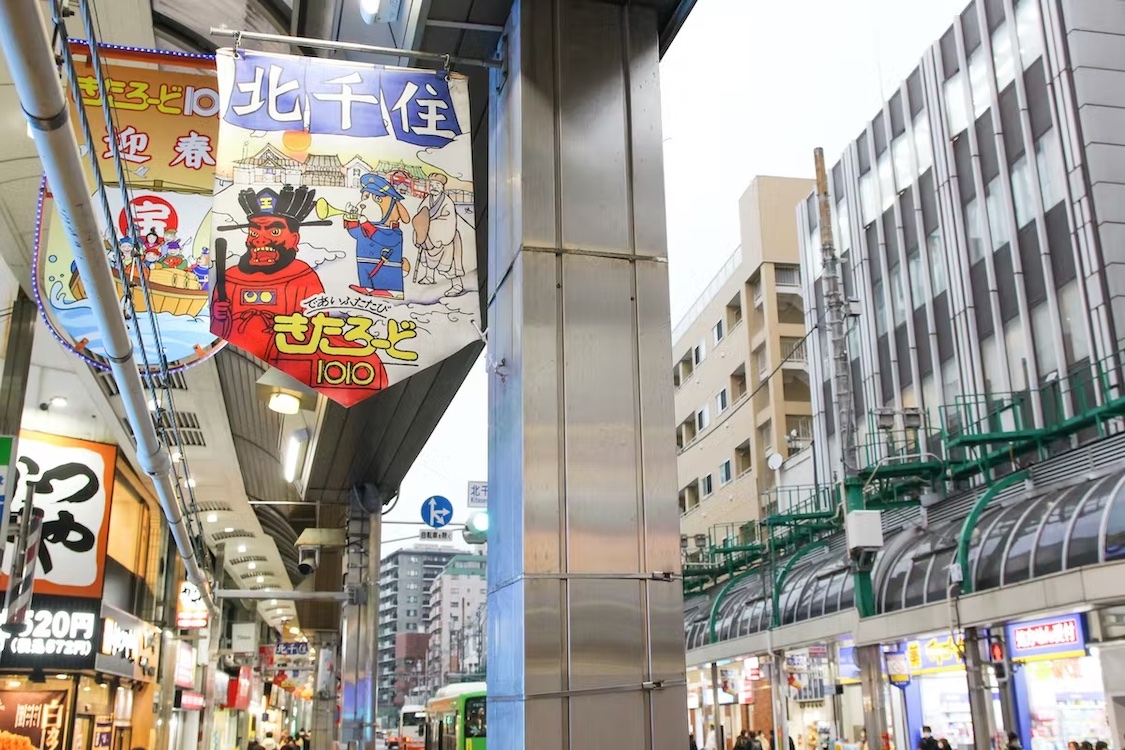
It is located in Adachi-ku, Tokyo. The Nikko Kaido and Oshu Kaido, two of the five highways developed in the Edo period, pass through this area, and this is the first post town from Nihonbashi.”Chinese “Senju” constellation (one of the 28 mansions)The land has been crowded with travelers heading north as “Senju-juku. The temple of the Jodo sect, located in Senjujuku, is the setting for the festival introduced here. The name of the festival is “Shozenji Temple Enma Opening“!
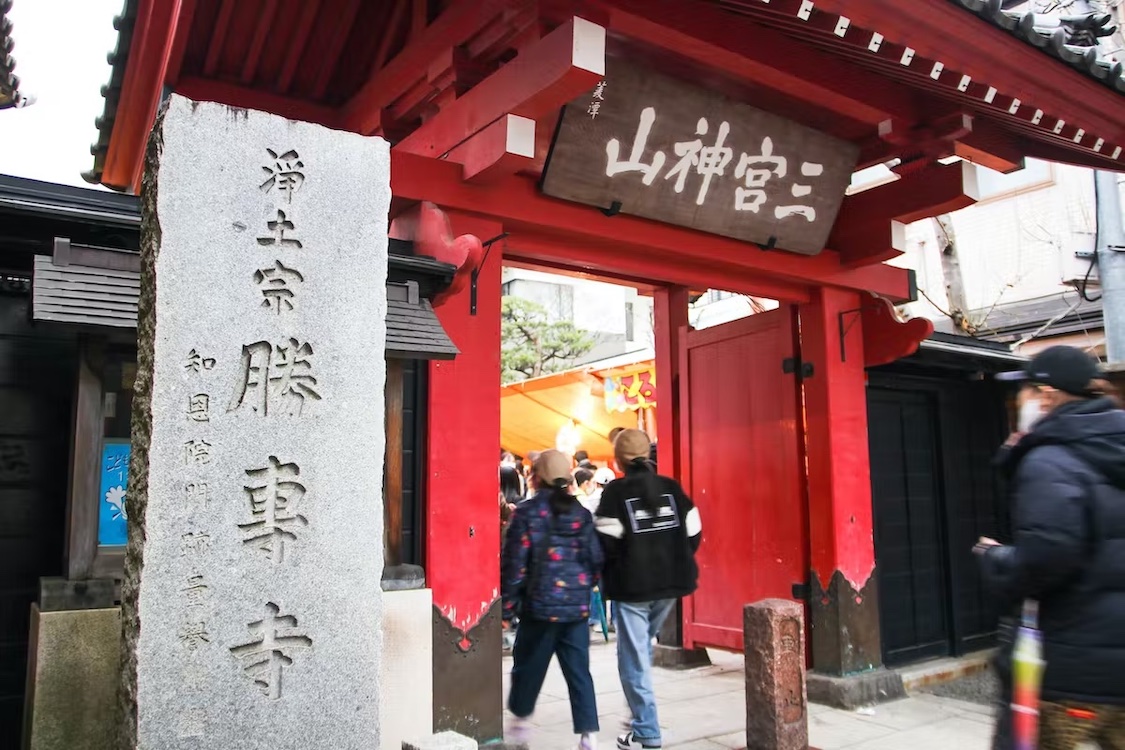
Shosenji Temple was founded in 1260 during the Kamakura period (1185-1333). It is known for its bright red gate.”Akamon TempleThe temple has been popularly known by the local people by its other name, “Hidetada Tokugawa Temple”. In the Edo period (1603-1867), the Tokugawa shoguns Hidetada, Iemitsu, and Ietsuna used this temple as a base for falconry and visits to Nikko. The Enma-opening is held every year on January 15 and 16 and July 15 and 16. Especially on January 16.”Yama (king of the world of the dead, who judges the dead)The festival is known as the day of “Yabu-iri,” and since it was also Yabu-iri, the festival has long been crowded with many people who come to visit the festival to celebrate Enma’s festival.
Now that we have come to Katsusenji Temple on January 15, the first day of the festival, let me introduce you to the festivities!
Opening of the temple twice a year
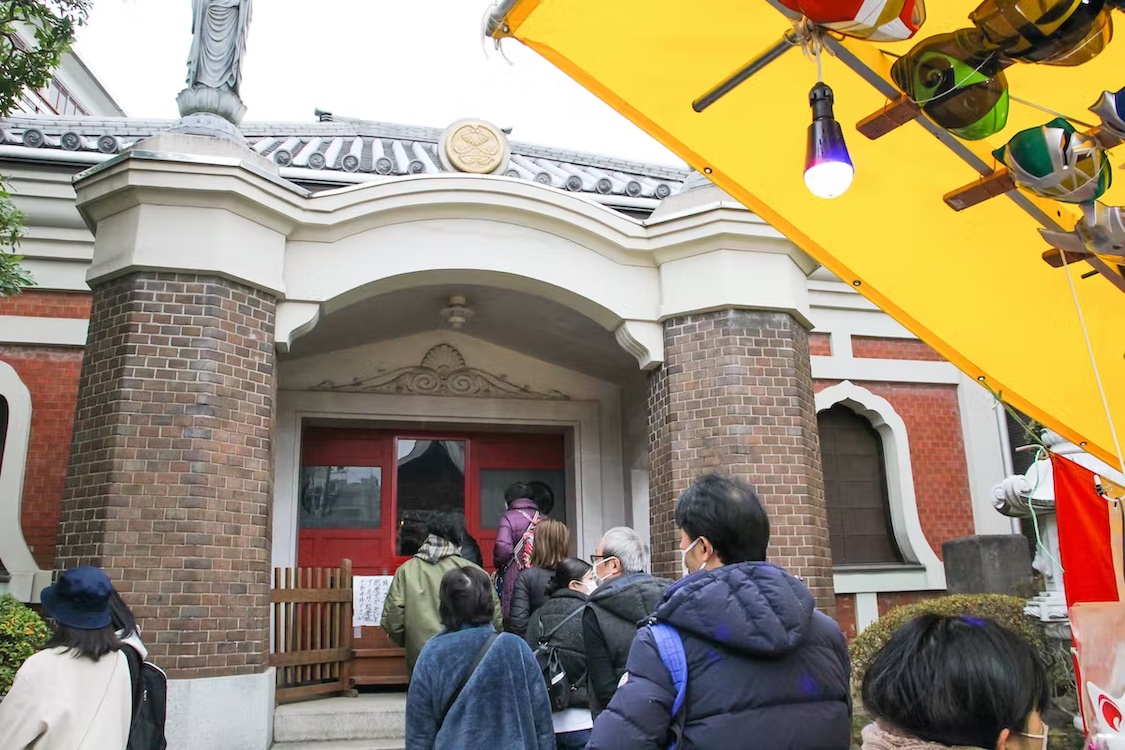
The main hall, built in 1906 (Meiji 39), was modeled after an Indian temple and is characterized by its modern appearance with red bricks on the walls. First, pay your respects!
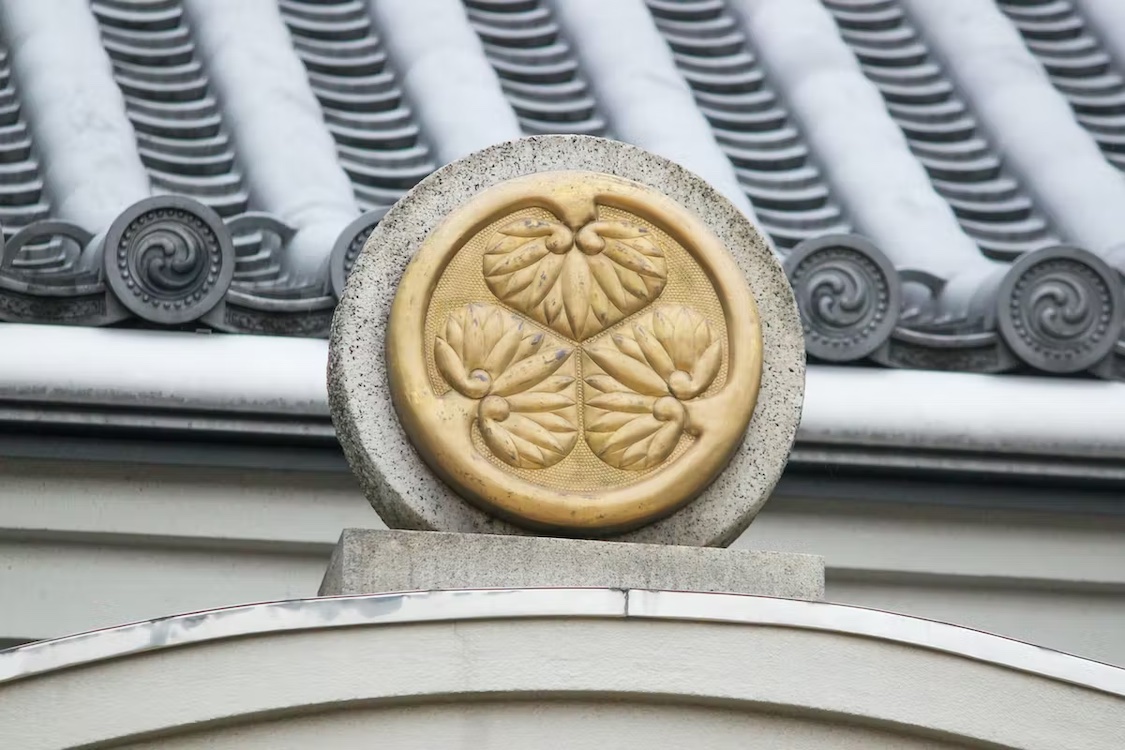
If you look at the roof of the main hall, you will see the crest of the Tokugawa Shogun’s family, the crest of a three-leaf hollyhock! It was allowed to be used because it had been a stopping place for the shoguns.
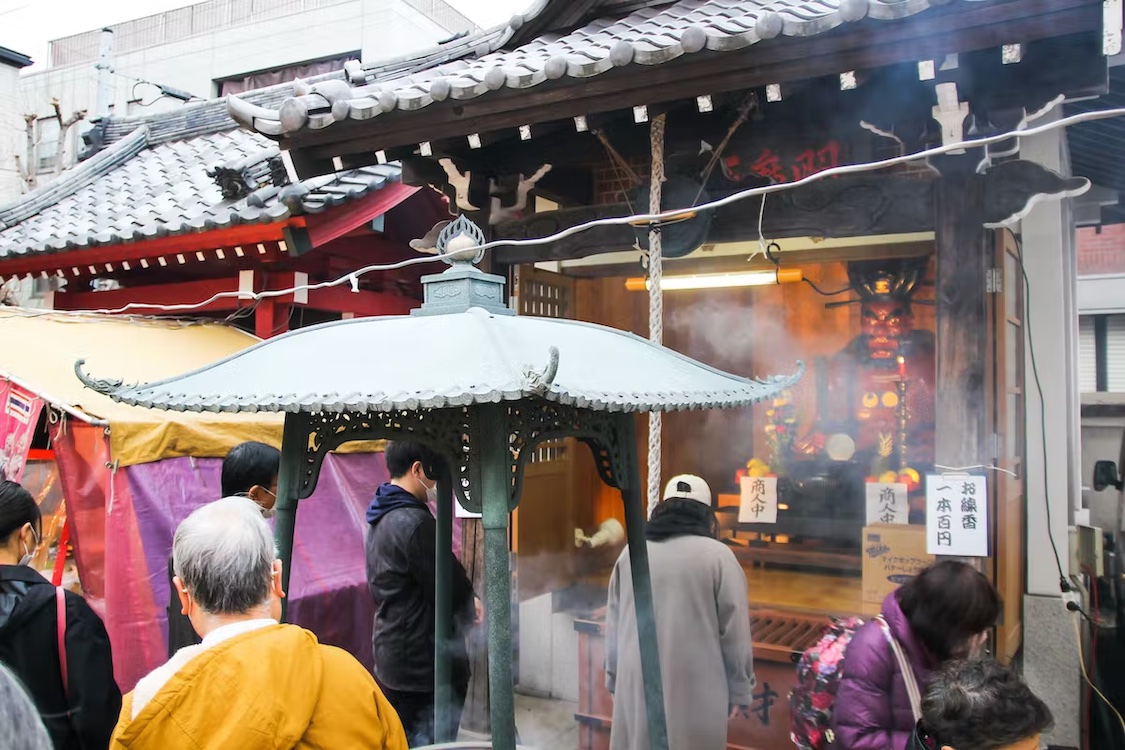
Looking back from the main hall, by the red gate is Enma Hall. A precious opening ceremony was being held, and many people were lined up to visit the hall.
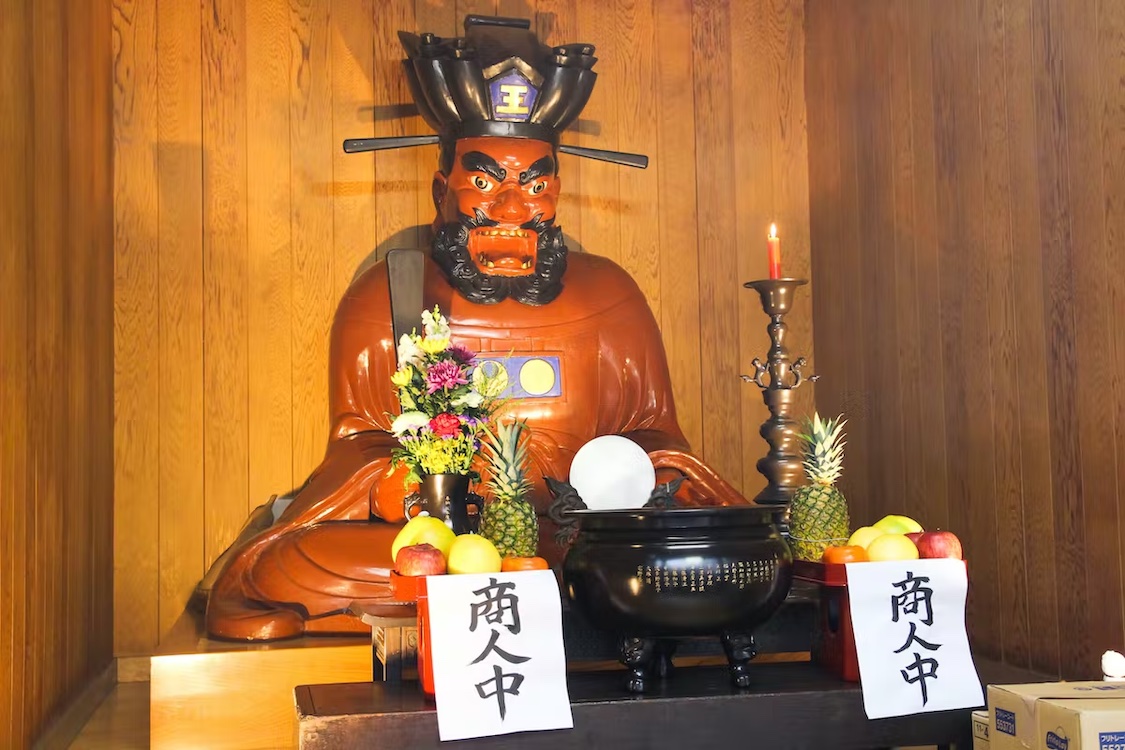
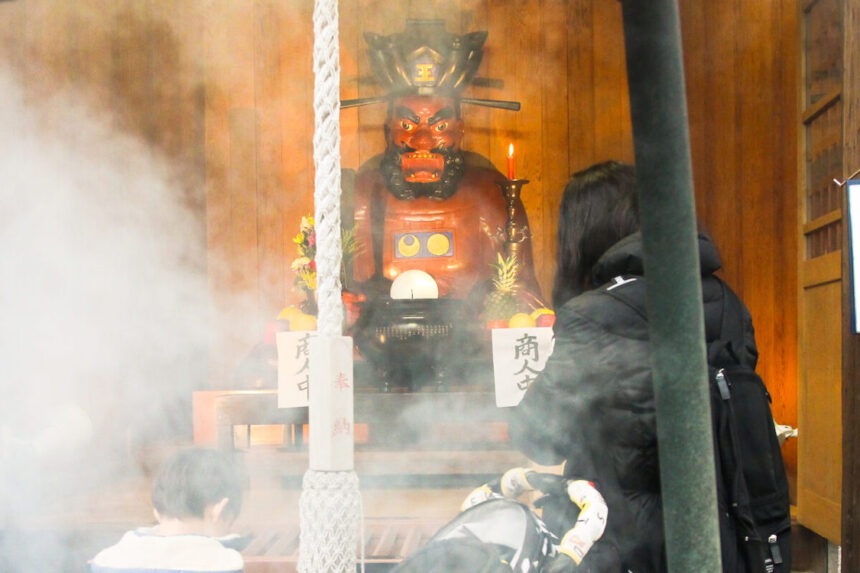
Enma is showing his face. This Enma is made of wood and lacquered, and was opened in 1789 during the Edo period (1603-1868).
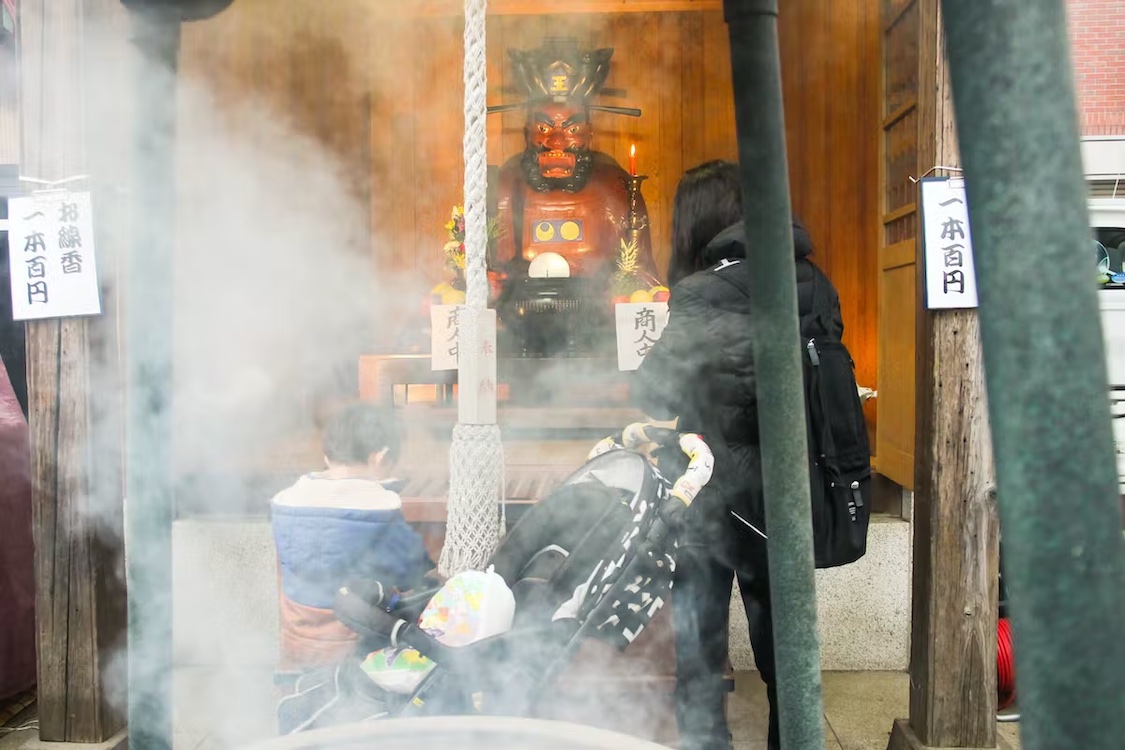
Let’s take a closer look. The red figure with its mouth wide open is very powerful!
This is how it looks from the opposite side. We see them only twice a year, but we hope to receive their blessings.
Beside the Enma Hall, lucky charms were also sold, including money charms with Enma on them, traffic safety stickers, and Enma-mikuji, a fortune written in the shape of Enma. Please check them out!
Stalls fill the precincts and approach to the temple
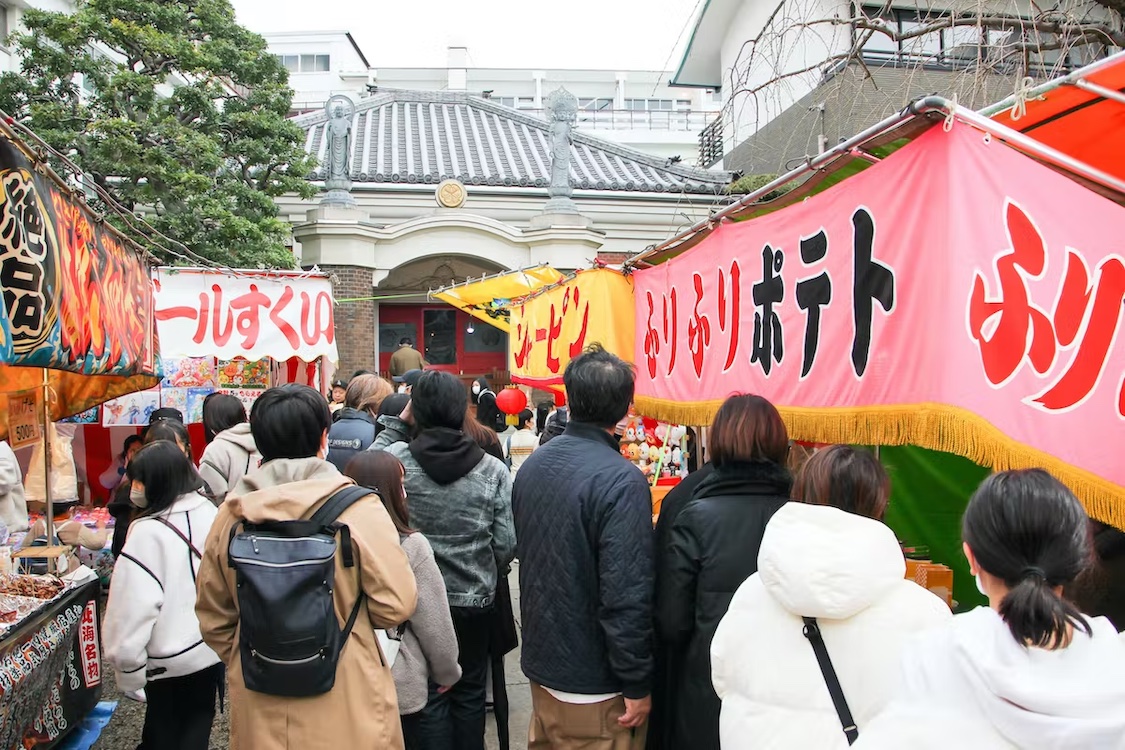
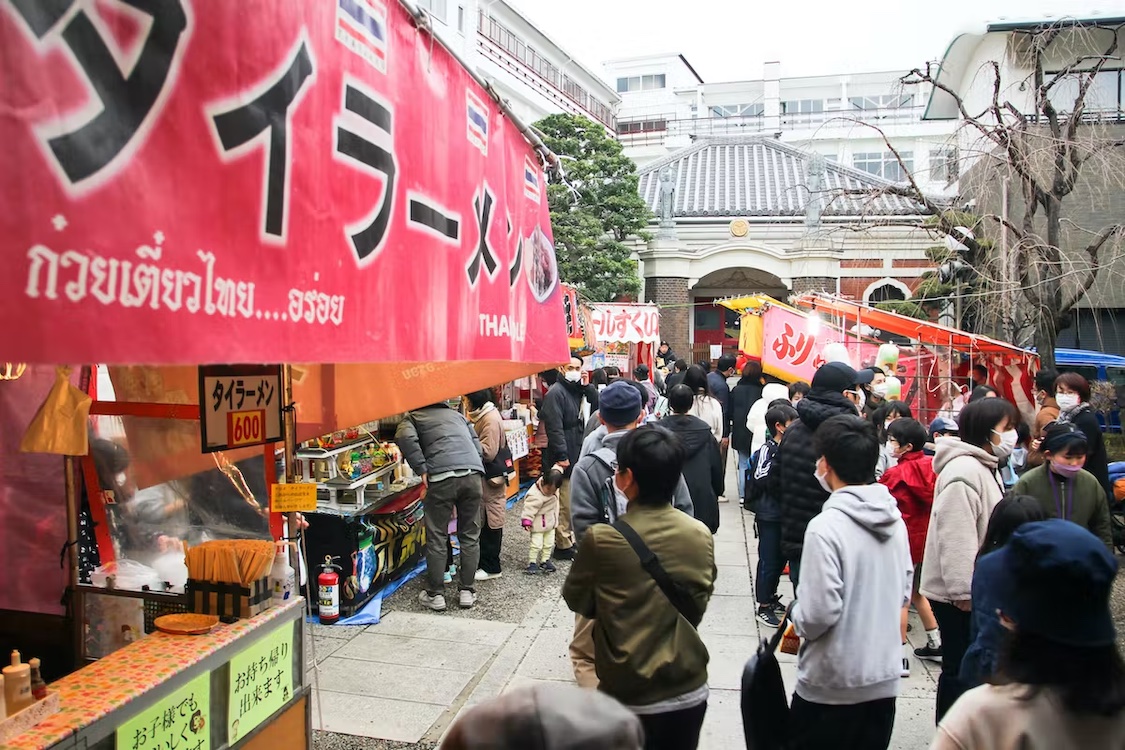
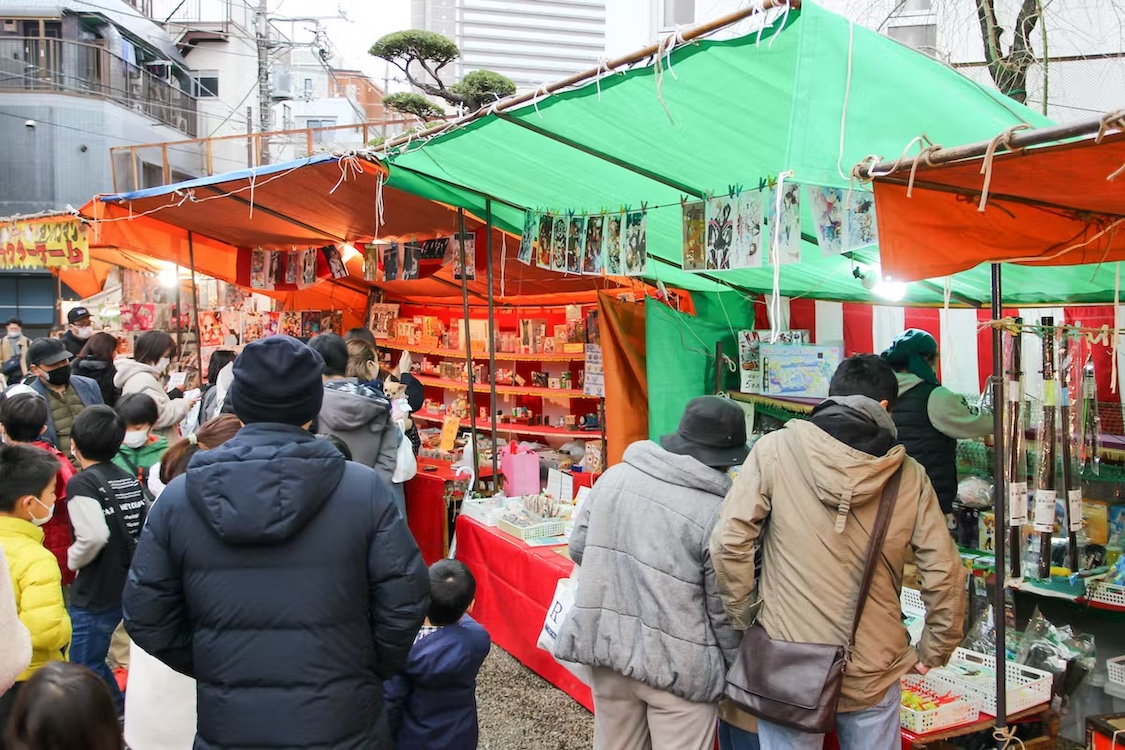
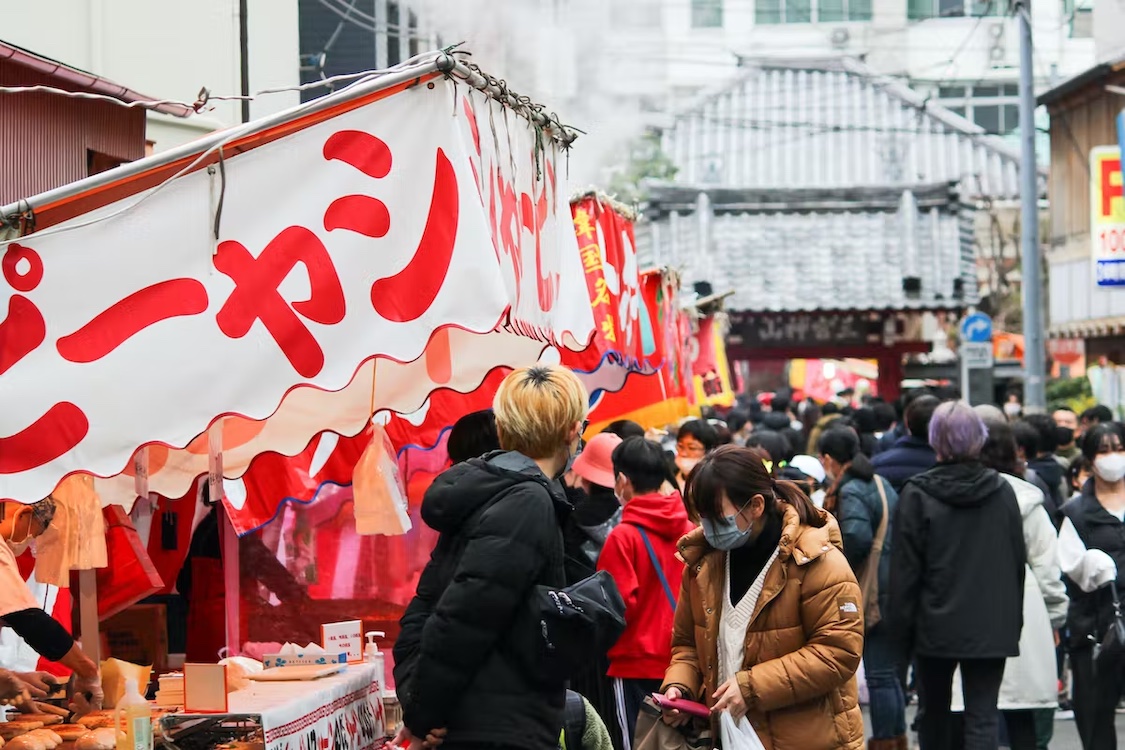
The charm of Enma Kaike is that there will be many stalls in the temple grounds and on the approach to Katsusenji Temple. The main hall of the temple is also lined with such stalls!
As you go deeper into the precincts of the temple, you will find an area with a series of stalls where you can play. Local children are rushing to the area!
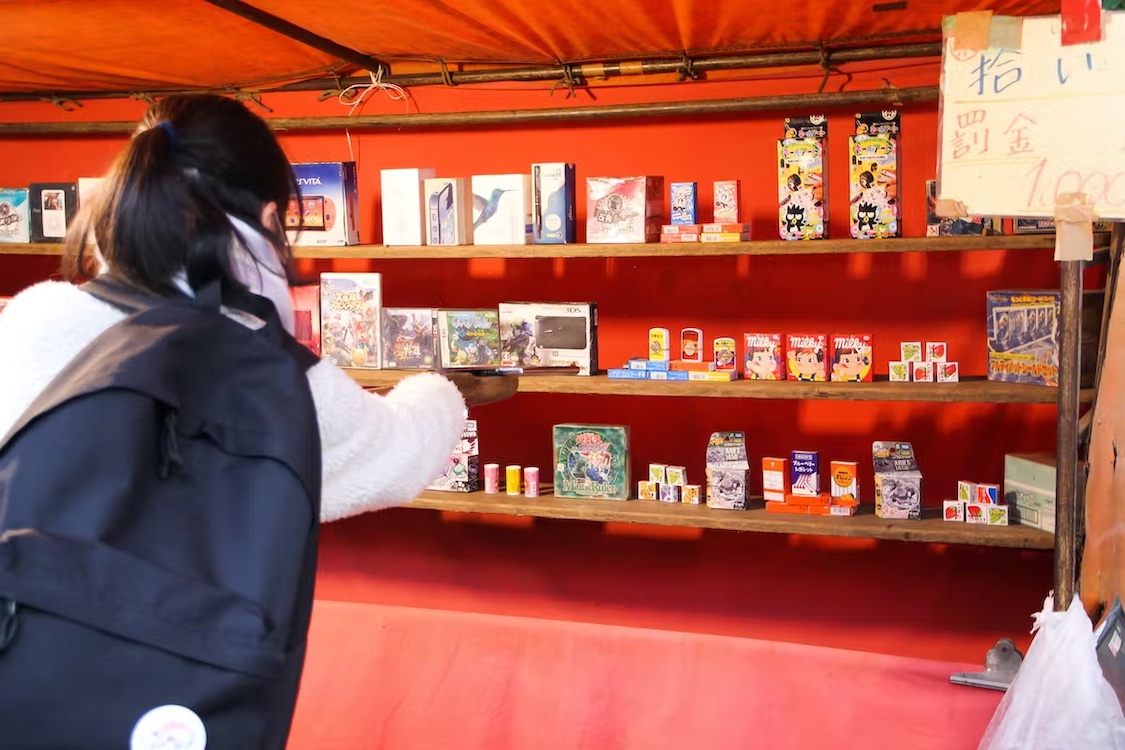
First, let’s start with the standard festival event, target shooting. Can you hit the ball?
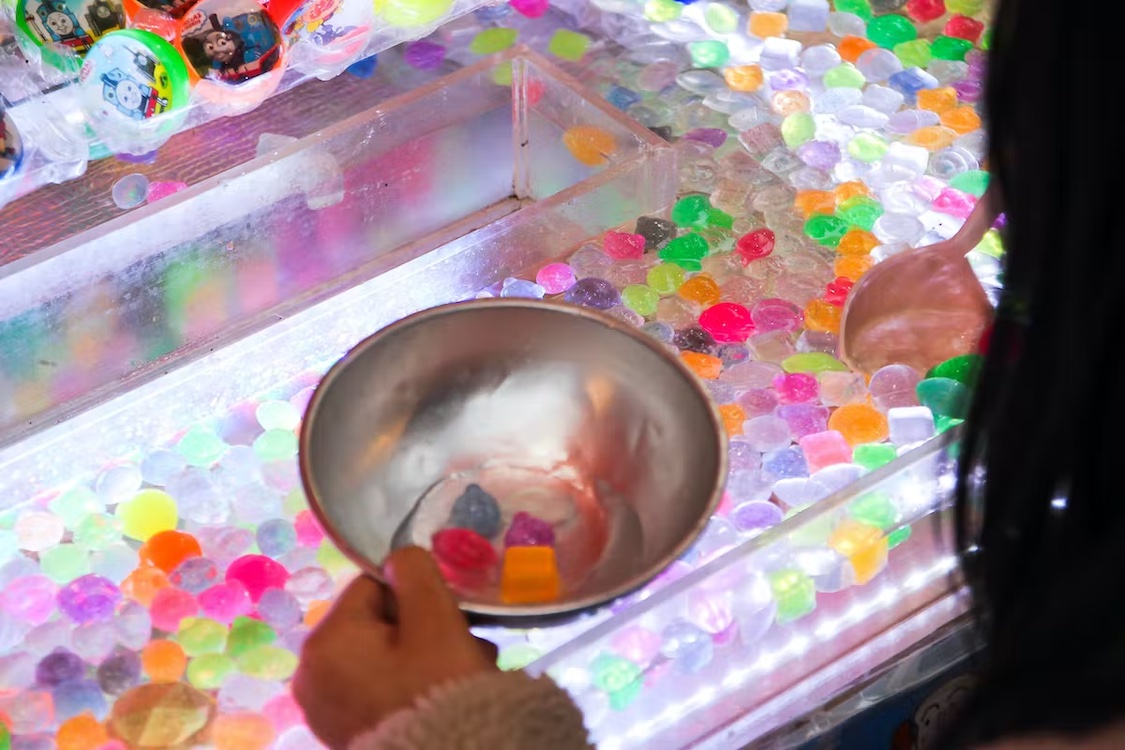
Next is the ball scooping. It is colorful and beautiful!
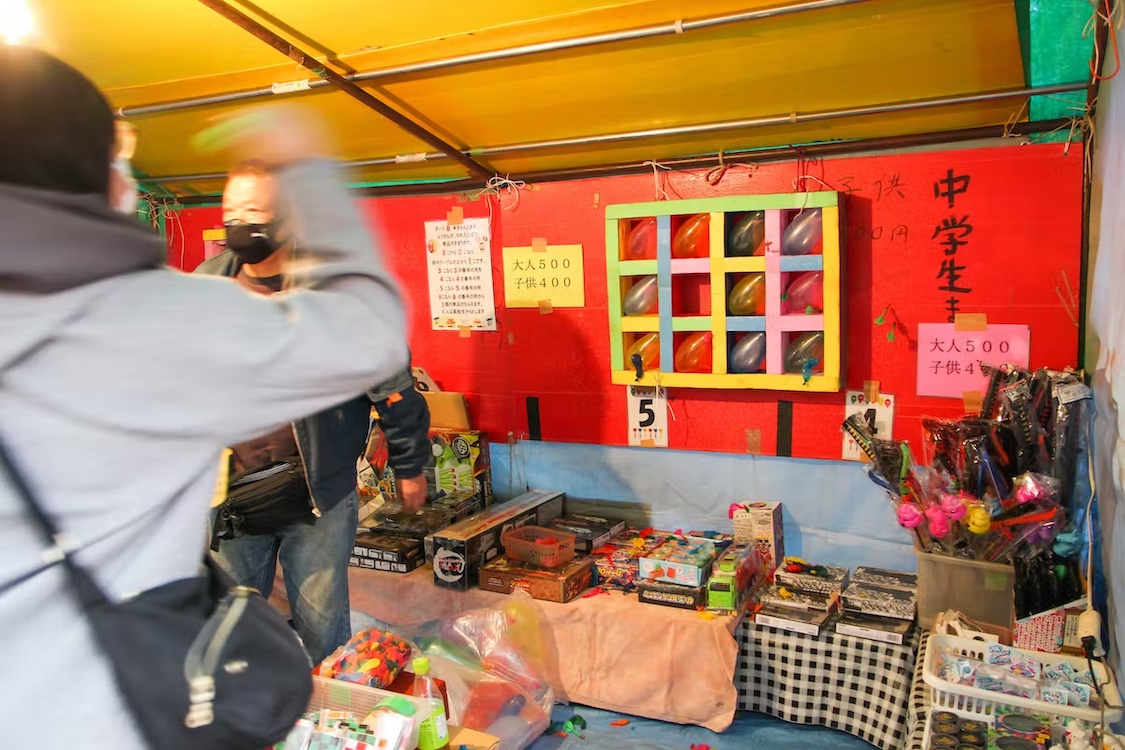
There was also a game called “Balloon Target Hitting. This is a game in which you throw dart arrows at balloons and hit them!
Speaking of enthusiasm, goldfish scooping is also a passion of mine! You want to challenge yourself to see how many you can catch.
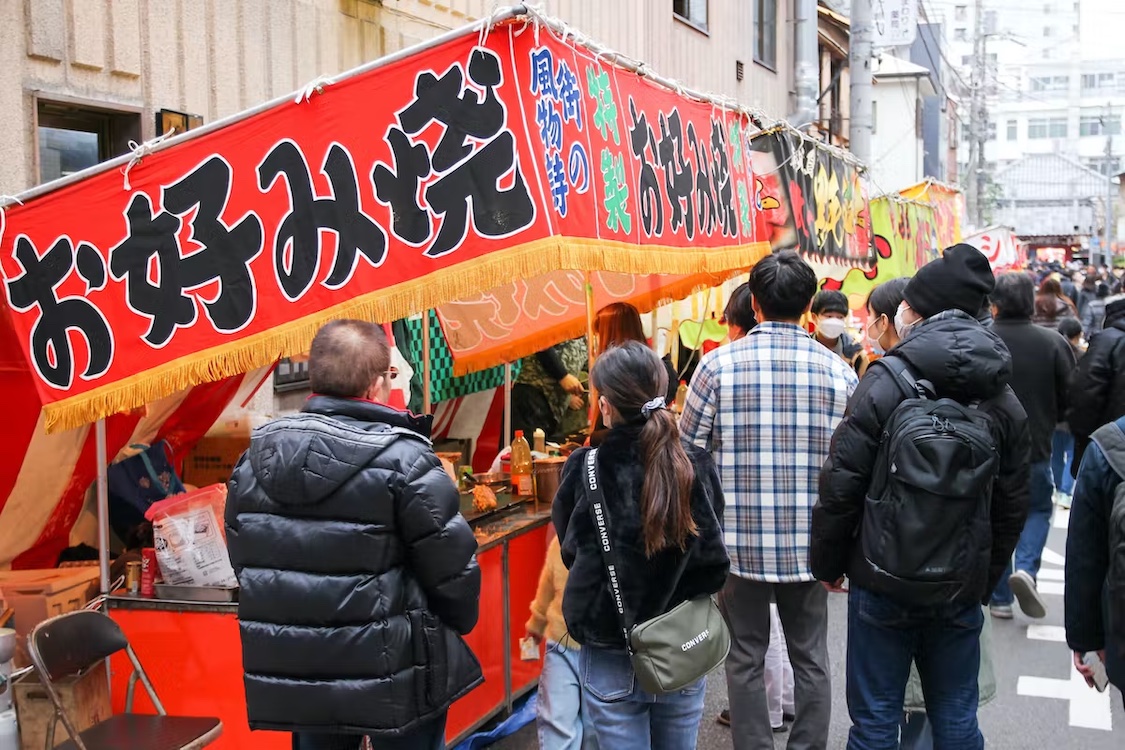
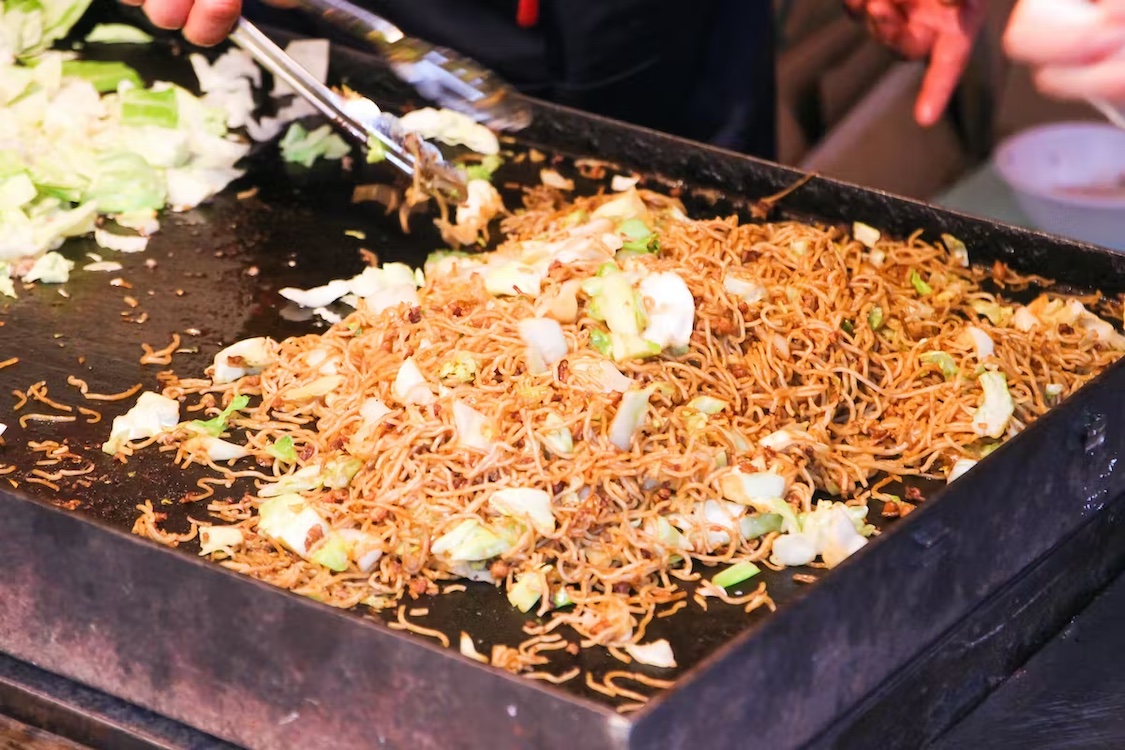
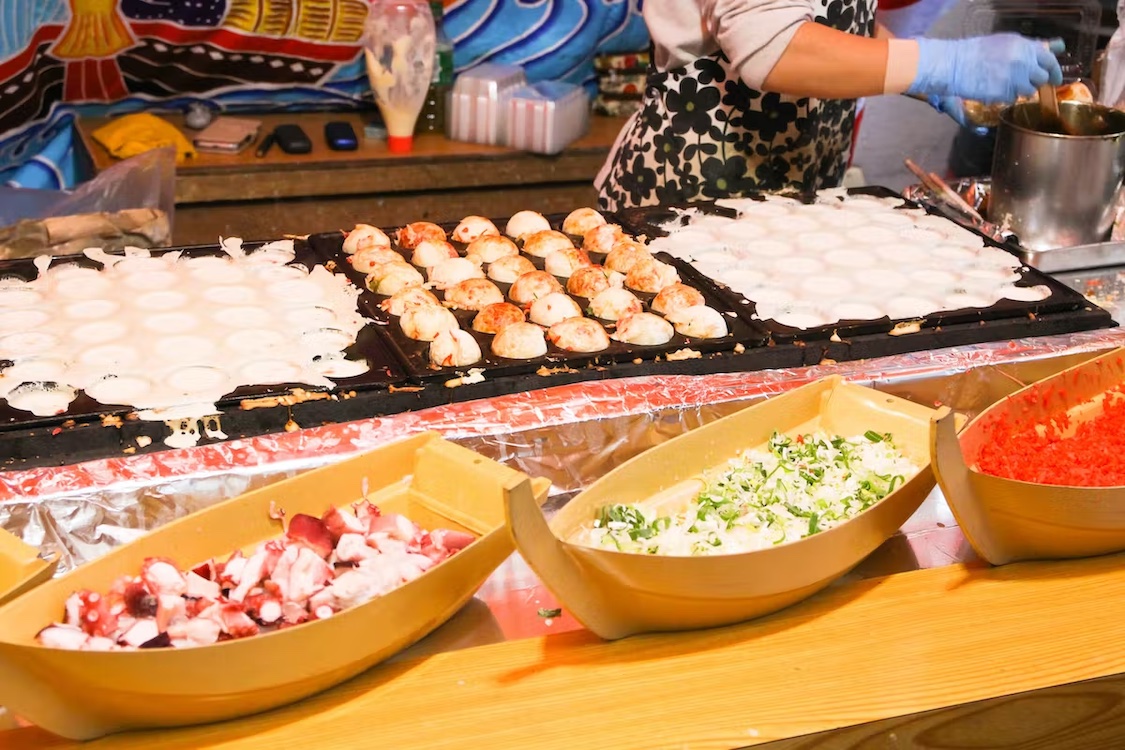
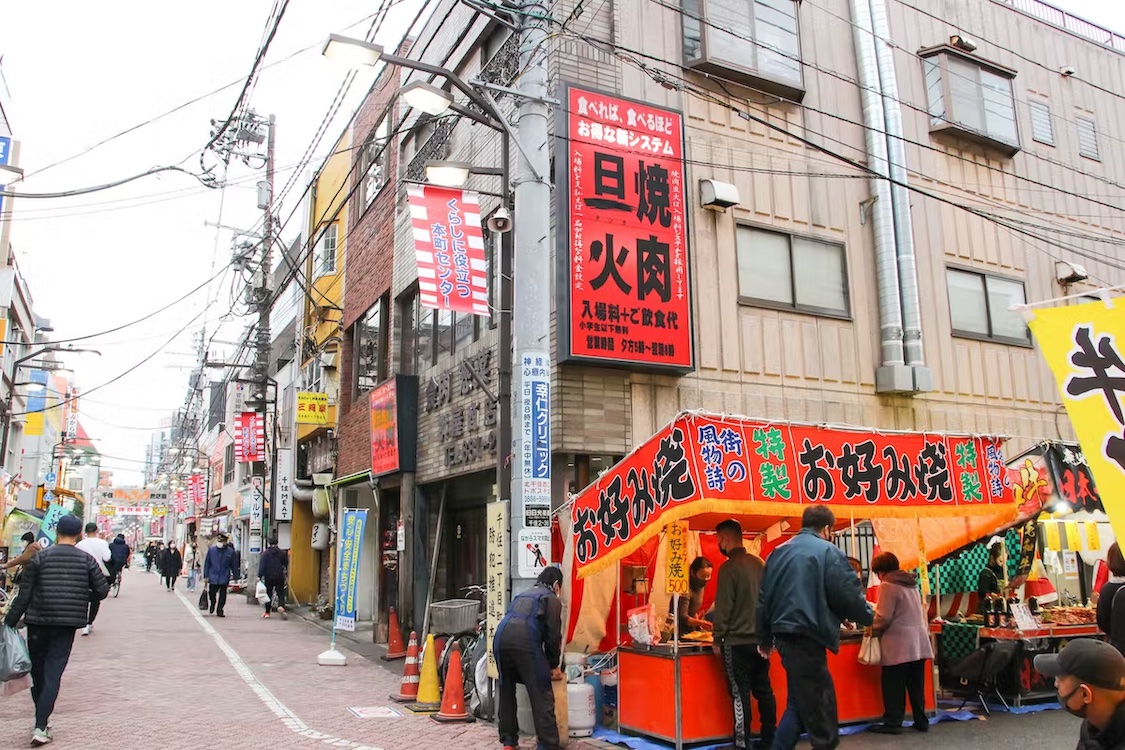
Moving to the approach to the festival, here you will find a line of stalls offering festival delicacies. You will find the standard okonomiyaki, yakisoba, takoyaki, and more!
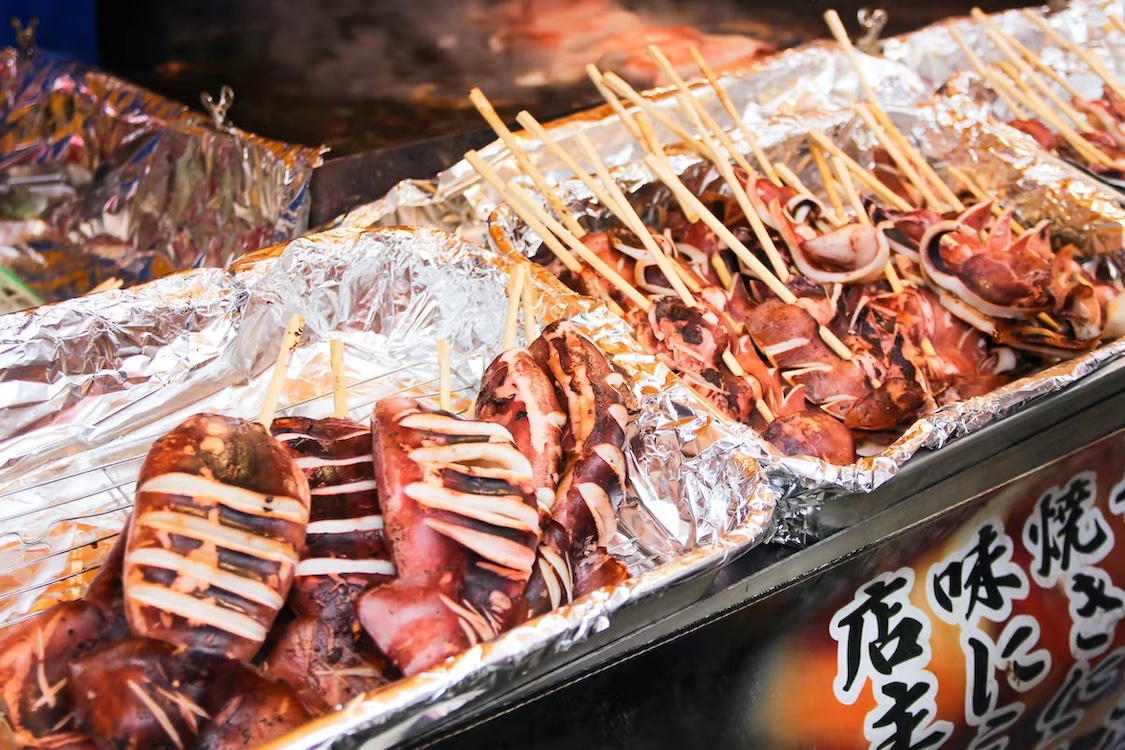
What is ready with a savory smell is ikayaki! This is very appetizing.
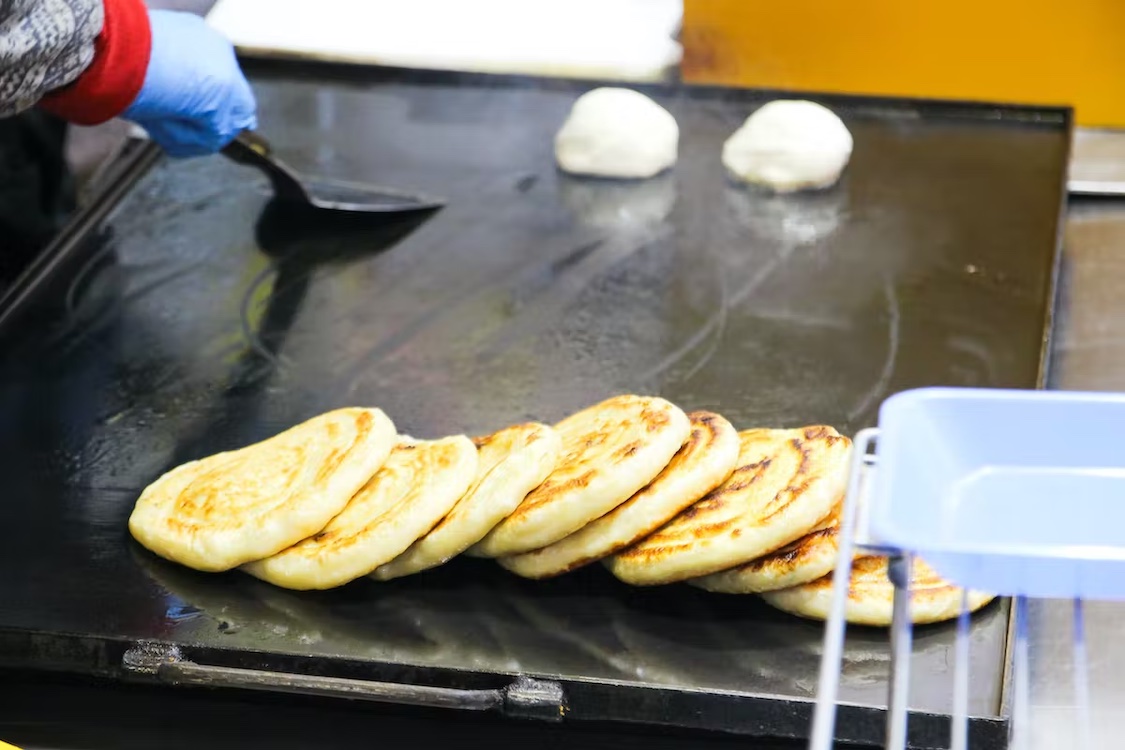
The most distinctive feature was the Sha Ping. It is a Chinese-style snack, but there were several outlets!
The aroma of the baked goods is irresistible!
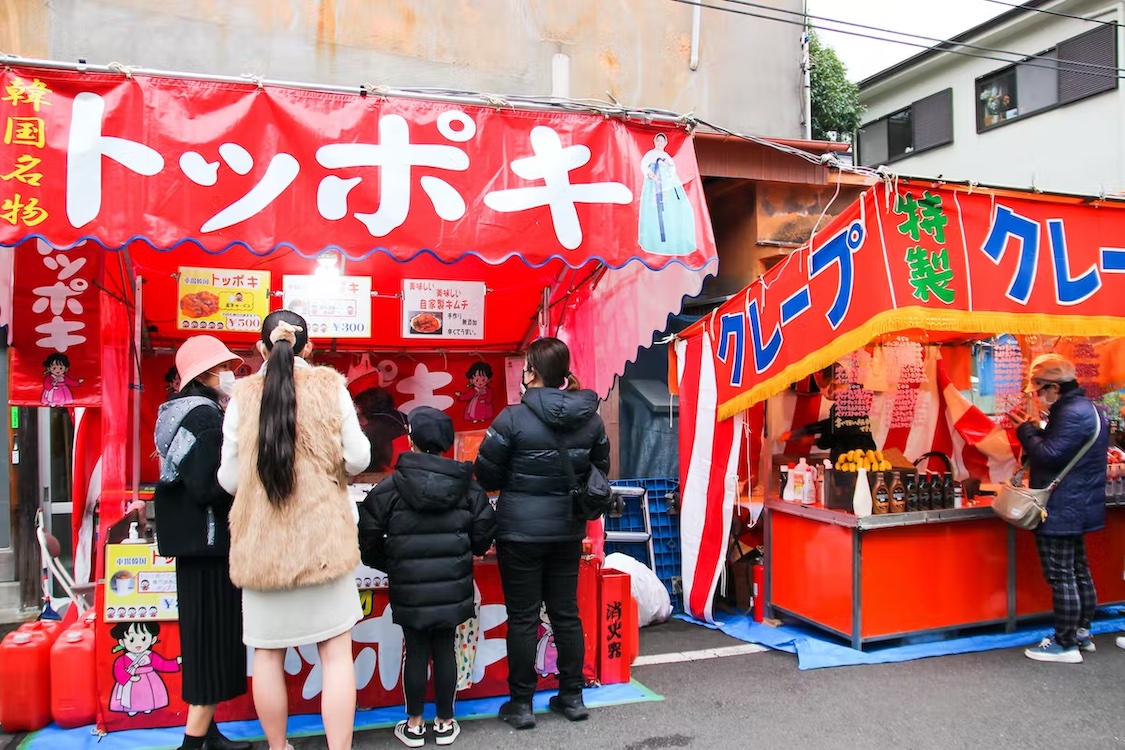
Some stalls sell tteokbokki, a Korean dish! Tteokbokki is increasingly seen at stalls at rooster fairs and other events, and its spicy flavor may be good for this cold season.
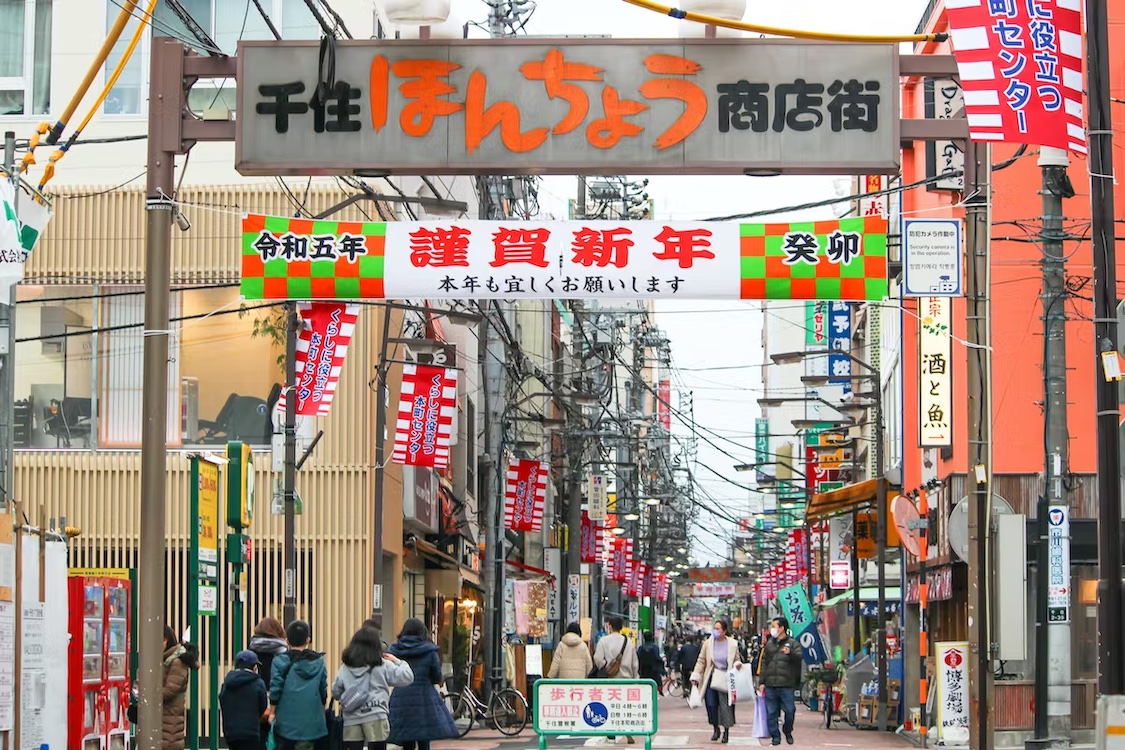
After passing through the approach, you will come to the main street of Senjujuku, the street of Nikko Kaido and Oshu Kaido.
Along this street, there are also soba noodle shops, eel shops, and other long-established restaurants offering menus associated with Enma (such as Jigoku-soba and Enma Sour), so be sure to make the rounds!
Access to Shosenji Temple
4 minutes walk from West Exit of Kita Senju Station
Source:
Festival OutlineOutline
| address (e.g. of house) | 2-11 Senju, Adachi-ku, Tokyo |
|---|---|
| Access | 5 minutes from JR Kitasenju Station |
| phone | 03-3881-2358 |