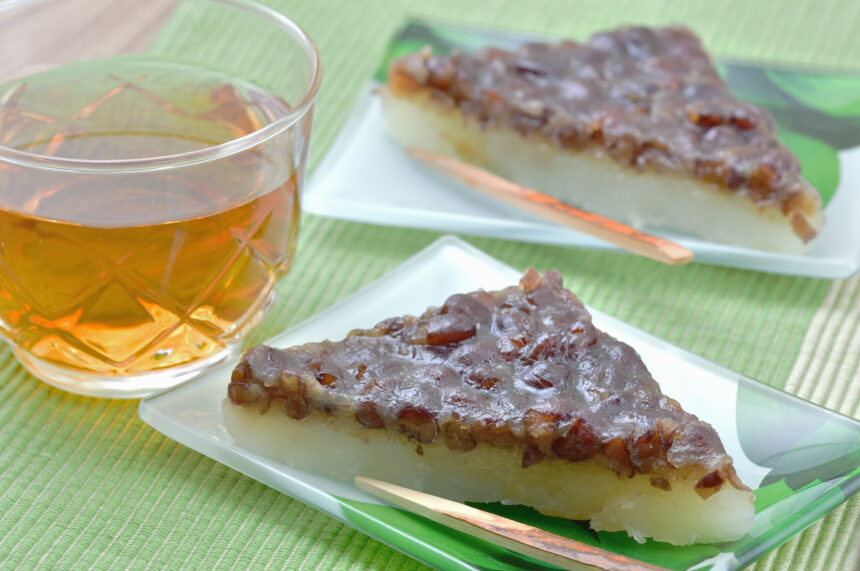
triangles of sweet rice jelly topped with adzuki beans (eaten in the sixth month)

Japanese confectionery

triangles of sweet rice jelly topped with adzuki beans (eaten in the sixth month)(Minazuki)

warding off evilsummerEdo-period herbal medicine (used as an antitussive and a breath freshener)adzuki beans

A Japanese confectionery made of white dough (uiro), sprinkled with azuki beans, and cut into triangles. It is named after “mizunatsuki,” which means June in the lunar calendar, and is eaten mainly in Kyoto on June 30, the day of “Natsukoshi-no-harae” (purification ceremony to purify the body over the summer). Natsukoshi-no-harae” is an event held at shrines to purge the impurities of the first half of the year, and this sweet is eaten to pray for good health for the remaining six months of the year. Some people believe that the triangular shape of the sweets is made to resemble ice, while others believe that the triangular shape is made by cutting a square in half to represent half of the year. The red color of the azuki beans is also believed to ward off bad luck.

新着・おすすめ情報

  1. A Walk in Edo with Old Maps] No.4: Was the Yoshiwara brothel located in Ningyocho? A play by day, a brothel by night. A Journey to the Ruins of a Former Pleasure Spot

  2. Otomeyama Park (Takadanobaba, Tokyo)

  3. Founded in 1877, “Ningyocho Shinota Sushi” is a famous inari sushi restaurant. The secret of the long-loved taste

  4. A Walk in Edo with Old Maps] No.3: Once the Best Shopping Zone in Edo. Tracing the Traces of a Fish Market in Nihonbashi

  5. Nogi Shrine (Akasaka, Tokyo)

  6. A Walk in Edo with Old Maps] No. 2: Kyobashi and Ginza from the Edo Period to the Heisei Era Traced by Rivers

  7. sweet half sake

  8. 【第11回】江戸時代に生まれた「かけそば」の起源

  9. Shimbashi Tamaki-ya has been in business for 240 years, and serves everything from tsukudani (food boiled in soy sauce) to glaces to add color to Japanese and Western dining tables with its “Hikiku, Gentle, and Warm” service.

  10. lay or stretch out to dry

  11. What is the meaning behind the three colors of “Hishimochi”? Hina Doll Decorations

  12. We don’t stick to tsukudani alone. They are also introducing Western flavors and expanding their sales channels. The Challenge of Shimbashi Tamakiya

  13. fried dough cake

  14. 【第2回】美味しい蕎麦屋を見分けるコツは、お客様の「姿勢」を見ること

  15. Matsui Sake Brewery once closed. A closer look at the creative sake brewing process at the revived brewery.