

Shibuya, Daikanyamatea ceremonytea utensils
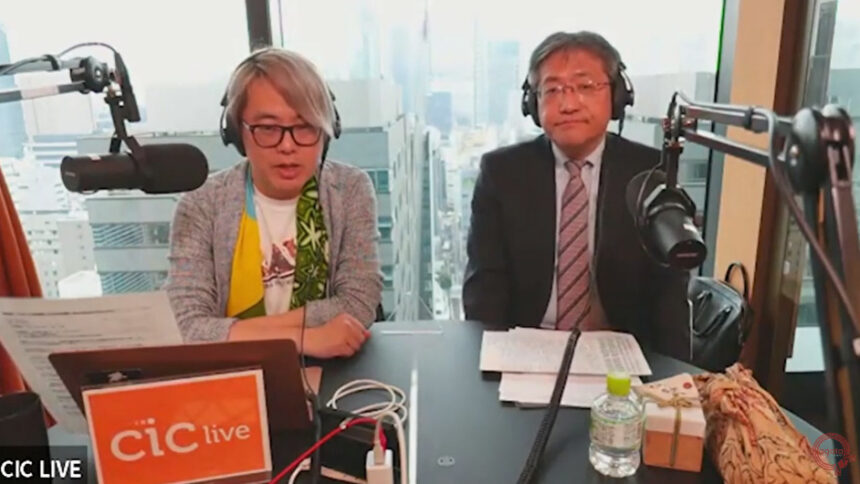
Gyokuho-Do handles tea ceremony utensils on Minami-Aoyama Kotto-dori. Gyokuho-Do is a long-established store that has been dealing in masterpieces since 1895 and has been trusted by famous families such as the Unshu-Matsudaira and Omotesenke families. We asked the fourth generation head of the company, Takahisa Yamada, about the spirit of the tea ceremony and the history of innovation, while viewing the precious tea utensils handled by Gyokuho-Do in front of us.
〜first partcontinued from
This is a photo of an exhibition of Japanese art held by the Tokyo Art Club in 1964 for foreign visitors to the Olympic Games.
Japanese art of the highest rank at the time was presented in a form suitable for foreign visitors. The couple in the foreground, the man is His Imperial Highness Prince Mikasa and the lady next to him is Her Imperial Highness the Princess. The foreigner on the right is Avery Brundage, then president of the International Olympic Committee (IOC). He was also an art collector.
And the man with glasses between His Imperial Highness Prince Mikasa and Mr. Avery Brundage is my grandfather. So my grandfather was the chairman of the executive committee of this special exhibition.
I understand that you were the organizer of this exhibition event.
Yes, this was the first event, and I thought that they wanted to transmit Japanese art from here.
It is our desire to make tea known to people overseas.
Even now, the number of tea drinkers is decreasing, so I would like to make an effort to increase the number of tea drinkers once again. You also make tea, don’t you, Mr. Hayashi?
Yes, I am. I like the side of the lower hand.
No, I was happy. People think that tea is just for drinking, but there are many ways to drink, enjoy, and behave, and tea brings people together. I think tea can be enjoyed in many different ways by many different groups.
For my part, I would like everyone to know a little more about tea and to give it a try.
So this exhibition was one of your efforts to find a way to create an entry point.
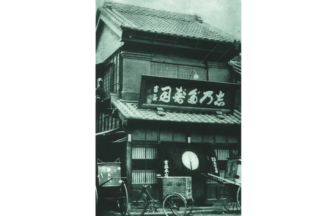
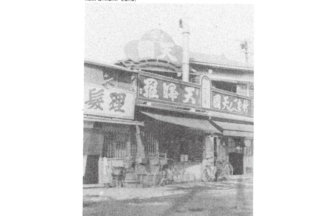
This is a picture of the store I inherited from my father. Do you see “Seiei” on the frame on the right side?
This plaque was given to my father by Sokuchusai Sosho, the previous headmaster of Omotesenke, when he opened this store. Since then, I have always hung this plaque no matter what.
And what is next?
This is a show window at the entrance. This is a hoshu on a shaft, and below it is a Bizen. I wanted to keep my favorite tools on display. I wish I could have displayed flowers as well.
The tea ceremony is also called a comprehensive art form. Now, please tell us about your attempts in relation to innovation up to the fourth generation.
It is important to continue to search for ways to fit the times.
Looking back over the generations, the nature of our work and the environment in which the tea ceremony is placed have changed. In such a situation, I think we need to do things in a way that fits the current situation. I welcome online sales, but I would like people to see the actual product first. I think that more and more people will actually see the product, think it over, and then purchase it.
Yes, that’s right. In terms of specific innovations, the first generation was the first to start a business. What episodes can you tell us about the second generation?
My grandfather was president of the Tokyo Art Club for a while. He told me that during the postwar economic boom, he lobbied to have the excise tax, which is equivalent to the consumption tax today, not applied to art works.
I understand that in the second generation, you worked hard on new lobbying and other activities.
In the third generation, we began to deal more and more with the tools of Omotesenke and other teachers in town. Commercially, I think we did quite well as the economy continued to grow. I hope that my generation will carry on the tradition and handle not only tea ceremony utensils but also other things that I think are good. Also, I am always thinking about how I can help the younger generation understand the merits of tea ceremony.
The fact that you have started an e-commerce site is also a new experiment for the fourth generation, isn’t it?
E-commerce sites will really become mainstream from now on. I think it is a great idea to buy and try Japanese culture, not only tea, on e-commerce sites.
As you mentioned earlier, it is good to buy on e-commerce sites, but it is also important to see the actual product in the store.
I think you can buy the second one or later on the e-commerce site, but I strongly recommend you to buy the first one with your hands. We will explain to you exactly what it is.
I would like to invite everyone to visit our store first. What is the origin of the name Gyokuho-Do?
According to the customer, the name was given to us from somewhere, but we are in the process of confirming this. I am trying to find the documents, but after all, the store was once burned down in the Great Kanto Earthquake.
There is a popular manga called “Kingdom,” and one of the main characters leads a unit called the Jade Phoenix Corps. When young people hear the word “Jade Phoenix,” they may think, “Whoa! I would be very happy if young people can find their way to Gyokuho-Do and enter the world of tea ceremony and traditional Japanese culture.
First, see tea utensils in person at a store. Then, use the e-commerce site to make a purchase. Gyokuho-Do offers a way to deliver good products to customers while keeping a sharp eye on the changing times. Perhaps that is what it means to “continue to protect” traditional Japanese culture.
*If you would like to see this dialogue on video.here (place close to the speaker or where the speaker is)