

Shibuya, Daikanyamatea ceremonytea utensils
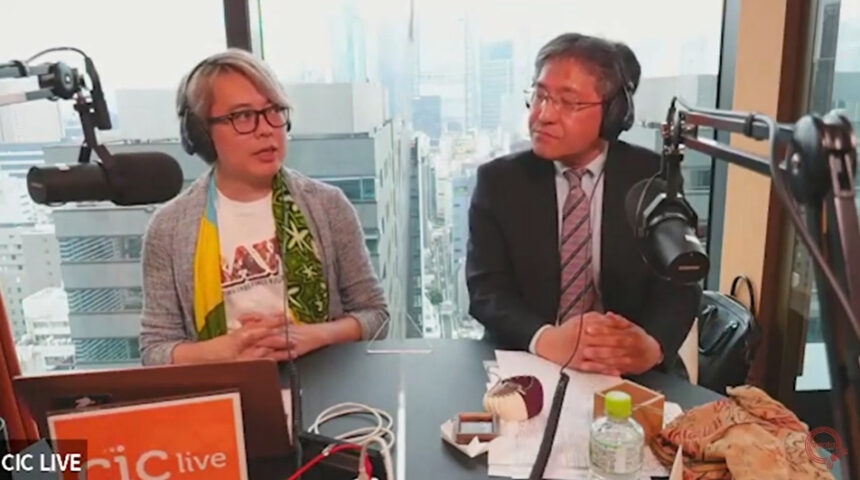
Gyokuho-Do handles tea ceremony utensils on Minami-Aoyama Kotto-dori. Gyokuho-Do is a long-established store that has been dealing in masterpieces since 1895 and has been trusted by famous families such as the Unshu-Matsudaira and Omotesenke families. We interviewed the fourth generation head of Gyokuho-Do, Mr. Takahisa Yamada, about the spirit of the tea ceremony and the history of innovation, while actually seeing the precious tea utensils handled by Gyokuho-Do before our eyes.
We are pleased to welcome Mr. Takahisa Yamada, the fourth generation head of Gyokuho-Do. Could you please introduce your store?
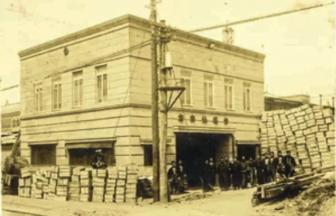
In 1895, my great-grandfather came out from Nagoya and started a business on Naka-dori Avenue in Nihonbashi, which was the beginning of Gyokuho-Do. There, Count Naoaki Matsudaira, the head of the Matsudaira family of Unshu, came to visit us and when we served him matcha tea, he liked it very much, and he became a guest of the Matsudaira family.
You are a descendant of the Unshu Matsudaira family.
The Matsudaira family has had very nice tea ceremony utensils since the Edo period, but they are not easily accessible to the general public, and I think my great-grandfather tried his best to approach them. But then the Great Kanto Earthquake struck, and the house burned down once.
When it comes to tea utensils, they are basically burnable except for tetsubin (iron kettles) and the like.
Yes, I did. Afterwards, when Count Naoaki asked me what I was going to do, I told him that I would like to continue working, and he gave me a tea ceremony utensil (a Bizen Kyaran incense container) and told me to do my best with it.
It’s wonderful.
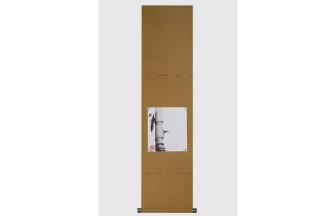
The artist’s seal (*) has been painted here.
Kao (flower stamp)*…… a patterned signature used in the Warring States period and elsewhere as a substitute for one’s own signature.
When Date Masamune was questioned by Toyotomi Hideyoshi, “You see Date’s haseki on the secret book,” he replied, “No, the real haseki has a needle in the eye of a wagtari (wagtari). I have a hanaseki myself.
After that, I was fortunate enough to have this opportunity to visit the Unshu-Matsudaira family. This is a bit of a tangent, but during the Taisho and Showa periods, I worked with Takahashi Soan, a leading researcher and collector of tea ceremony utensils in the modern era, to produce a book. After the Great East Japan Earthquake, I decided to leave something behind, so I produced about 10 books.
I see.
This is a tea utensil called “Soroi,” which was given to me by the Matsudaira family and included in this book. I received a tea scoop as a gift from Mr. Broomstick as a thank-you.
It’s in a fine box again.
This was made by Mr. Broom-an himself. It is inscribed in his own handwriting, “Early summer, 1929.
In fact, last year I had the opportunity to exhibit this piece at the Nezu Museum in Aoyama for the Taisho Meikikan exhibition. At that time, I was able to hear many stories about the history of our store and the Taisho Meikikan, and I had the opportunity to study the story behind this exhibition with people from the museum and other organizations.
That is wonderful. Now that we have heard about the history of Gyokuho-Do, could you please introduce yourself, Mr. Yamada?
To have an “eye” that instantly recognizes tea utensils.
After graduating from university, I was trained at a well-established art gallery called Marueido. My grandfather and father had gotten to know the chairman and other people at the company well, and I was supposed to be there for five years, but my father’s health failed, so I returned home after less than four years to take over the company.
Does the Yamada family have a family motto?
When I was in high school, my grandfather and I were talking about the future and he asked me, “What’s so important about this job?” I asked him, “What is important in this job? He told me, “When you come in, you must immediately know what the tea bowl is.
It’s tough.
At that time, I wondered if I could tell, but he told me, “As you get older and older, you will ultimately become more discerning. Certainly, there is something certain about a teacup that you can tell when you deliver it to a customer and say, “This teacup is a zero. After that, my father opened a business on Kotto-dori in Minami Aoyama for about 50 years, and I took over the business and have been doing it for about 30 years.
Those who make food inherit the skills to do so, but in a profession like ours, I think we have to have an eye for seeing things and judging whether they are good or bad. I think this job is all about choosing good things and bringing out the customer’s face saying, “I wanted something like this. When I examine it in that way, I find that only about 5 out of 100 items meet my criteria.
If there is an opportunity to see 100 items, does that mean that Gyokuho-Do will only stock 5 items?
Sometimes we have five, sometimes we don’t. On the other hand, we will stock 10 or 20 pieces if they meet our requirements. In selecting the best products, we do not want to compromise. This leads to customer satisfaction as a result.
It’s not easy to combine the two. Is there a family motto like “5 out of 100”?
I think I naturally come to think that way when I am doing this job. What would normally take a normal person one or two minutes to look at, would take two to three minutes, sometimes even 10 minutes, if I have to change angles, determine what is good and what is bad, and various other things such as minor scratches.
What are some of the other family precepts?
In summary, I think it means “be a connoisseur. That’s not what I was told directly, but that’s what I ended up doing.
What is needed to handle tea ceremony utensils is the “power of connoisseurship. It is precisely because of this that Gyokuho-Do has been trusted by customers to this day.
⇒latter part(temporal or logical sense) follow …
*If you would like to see this dialogue on video.here (place close to the speaker or where the speaker is)