Walking with the owner of a long-established business and an intellectualturf
Part 1: Tracing the history of Shibadaimon with the 7th generation owner of “Shibadaimon Sarashina Nunoya
Zojoji TempleTemples, shrines, and Buddhist templesTokyo TowerHistory
This is the first in a series of town tours in which we will ask the owners of long-established shops, tourist guides, and other people familiar with the area to show us the highlights of the area. This time, we will visit the town of(1791(Year)The owner of Sarashina Nunoya, a soba store that has been in business in front of Zojoji Temple since 1913.Eiichi Kaneko, a.k.a. Mankichi the Nunoya, gave us a tour of the Shiba Daimon district.
Time Travel in Shiba Daimon! Historical tour with the owner of a long-established soba restaurant
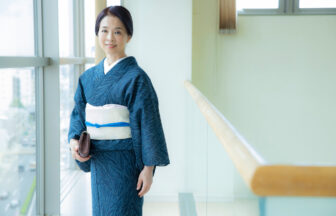
As we climbed the stairs of Daimon Station, Sarashina Nunoya (Map 1), a nostalgic old soba restaurant, was just around the corner. Welcome! Eiichi Kaneko, the seventh generation owner of Sarashina Nunoya, greeted us in front of the shop. He is a genuine Edokko who will be navigating us around the Shiba Daimon area today. Hello, Eiichi!
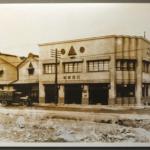
Sarashina Nunoya has been in business for more than 230 years. The company has been attracting many fans over the years by maintaining the taste that has been passed down from generation to generation and by using a milling method that brings out the full flavor of each individual buckwheat seed. Mr. Kaneko was born and raised in Shiba Daimon. Although the area is now a business district, “50 years ago, it was a very different landscape,” he says.There used to be a hanayanagi area around here. It was a chic place with a downtown atmosphere, a bit like Asakusa. At festivals, there was a “mikoshi,” a portable shrine carried by geisha, and it was very festive.It is surprising that at that time, the streets were crowded with small stores such as kimono shops and fan shops, and rickshaws drove in front of them in the busy downtown area.If you go further back in time, this area has been inhabited for 1,500 years. If you spend two hours here, you will be able to enjoy time travel to various eras. Today, let’s visit four historical sights loved by the people of the past,” says Kaneko.Now it’s time to embark on a wandering historical tour with Mr. Kaneko, who knows this town inside and out!
Shiba Daimon Sarashina Nunoya
1-15-8 Shiba-Daimon, Minato-ku, Tokyo
03-3436-3647http://www.sarashina-nunoya.com/
*For more information about the store, please contactthis way (direction close to the speaker or towards the speaker)
A big fight among popular people in the precincts of the shrine! Shiba Daijingu Shrine, built in the Heian Period
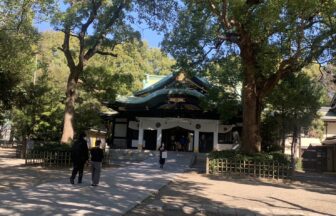
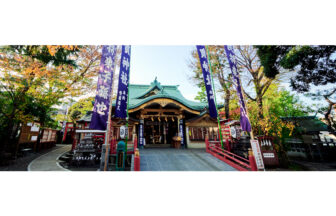
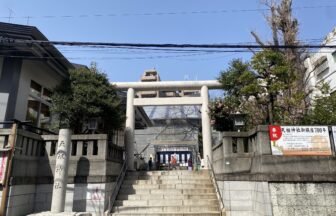
It’s a one-minute walk from the front of the Sarashina Nunoya store. In no time at all, we arrived at the first spot. This is the austere shrine “Shiba Daijingu” (Map 2), which was built in 1005.
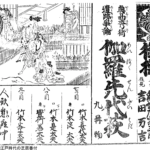
In the Edo period (1603-1867), there was an altercation between the “Megumi” steeplejacks, who were town fire extinguishers, and Edo Sumo wrestlers. This is what is known as the “Megumi no Kenka” (fight of the Megumi)! In those days, “megumi” and sumo wrestlers were very popular in town. The big fights in which they clashed have become a popular performance in Kabuki and other theaters,” says Mr. Kaneko.At the time when the fight broke out, the half-bell of Megumi, which signaled a fire, was struck, and a large number of Edo residents gathered, leading to a great uproar up and down the street. After the riot, the magistrate’s decision was made and the two who started it were punished by being banished to Edo, but the heaviest punishment of all was that they were banished to the island for ringing the half bell that had caused such a commotion. The most serious punishment of all was the “ringing of the half-bell,” which caused a sensation in the world,” said Mr. Kaneko with a laugh.
The guilty party was exiled to Miyakejima Island, but was released during the Meiji period (1868-1912), and is now kept at the shrine. It is unveiled at the “Megumi Hanbonge Festival” held every February before the Setsubun Festival, and at the local festival “Dara Dara Festival” held every September.In addition, there is one more specialty that you should not miss. It is the “Chigibako,” a gift. It is said that it is said to bring good luck to those who carry it, as it is said to attract kimonos, which in turn means “to ride on the palanquin of a ball”, so that many Edo town girls got it. Even today, Kabuki actors and other people in the entertainment industry visit the shrine to receive the blessing.
Shiba Daijingu1-12-7 Shiba-Daimon, Minato-ku, Tokyo03-3431-4802http://www.shibadaijingu.com/html/access.html
A popular place of interest since the Edo period! Zojoji Temple, a family temple of the Tokugawa family
The next destination is Zojoji Temple (Map 3). Walking out from “Shiba Daijingu”, cross the pedestrian crossing with Route 1, the Tokaido Highway in the Edo period, on your left, and pass through the “Daimon” gate, from which the name of the town around here is derived.This gate is the main entrance to Zojoji Temple. At that time, there were many merchant houses along the Tokaido Highway, but the area beyond this gate was an area of temples and shrines. This is why there are many temples even today. In fact, the width of the road and the division of the town are the same as they were in those days,” says Kaneko.
Walking down a street that retains the atmosphere of Edo (old Tokyo), I saw a magnificent gate and Tokyo Tower. It is a strange sight to see the old and new buildings standing side by side in harmony.That gate is the Sanjikkaimon. I once climbed up there, and the view was like looking from the third or fourth floor of a building. For people in Edo, where one-story houses were the norm, this tower may have been like the “Tokyo Tower. At that time, the sea extended as far as JR Hamamatsucho Station, and from the top of this gate, you could see the whole Tokyo Bay,” says Kaneko.
Unfortunately, this gate may have an unroofed roof by the end of 2024, and will be in a repair period for 10 years after that. We would definitely like to see it while it is still here.Passing through the gate, you will see that this is indeed a family temple of the Shogun’s family! The scale of the temple is overwhelming. On the right side of the temple is a large bell that is said to have been heard as far away as Chiba when rung. Climb the stairs and pay your respects quietly in the main hall.
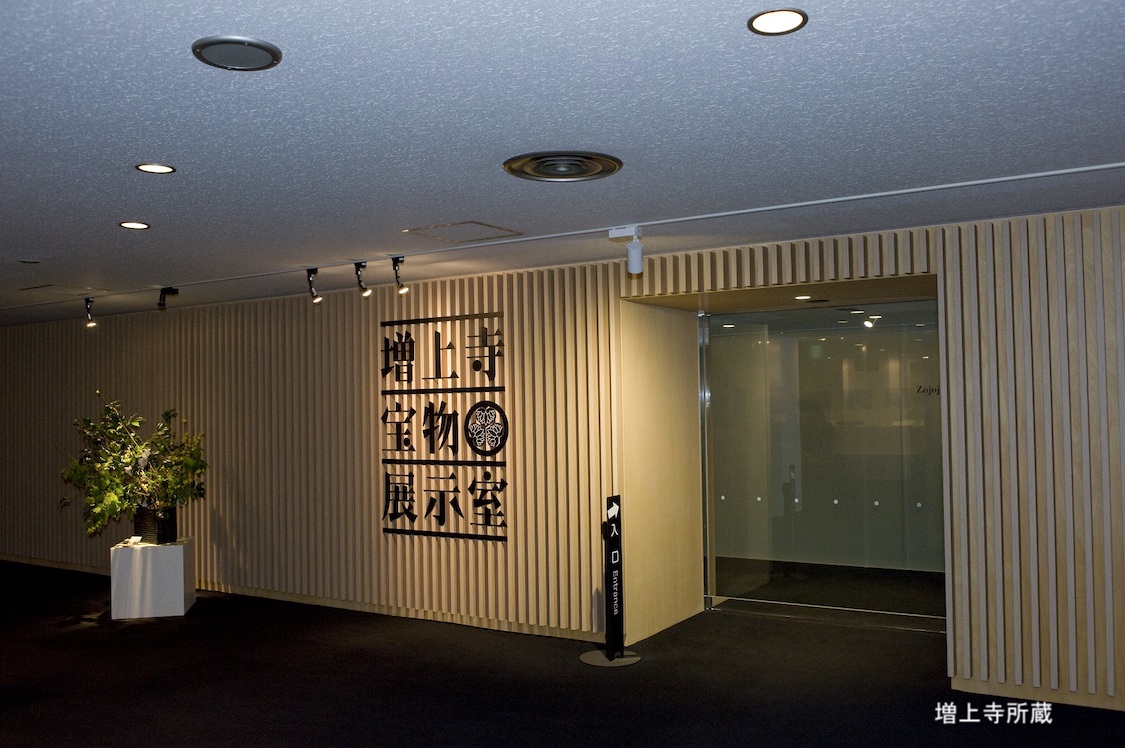
Now, leaving the main hall, Kaneko-san descends the stairs leading to the basement. What is this place?
This is the Zojoji Treasures Exhibition Room. The “Zojoji Treasures Exhibition Room” exhibits a model of the mausoleum of Daitokuin-den, which is owned by the Royal Collection in England. Daitokuin-den” refers to Hidetada Tokugawa, the second Shogun of the Tokugawa Shogunate. It is an impressive exhibit that should be visited as a set when you come to Zojoji Temple,” says Kaneko.The Daitokuin-den mausoleum was the original model for Nikko Toshogu, the Nikko Toshogu Shrine. Although designated as a national treasure, it was destroyed by fire during the war, and only this model remains today. It would have been nice to see the majestic architecture in actual size.Mr. Kaneko then went to the “Tokugawa Shoguns’ Family Cemetery” located at the back of the precincts of the temple. Unfortunately, it was past closing time that day, but inside the cemetery are the graves of six Tokugawa shoguns and their mausoleums. When I compared the tombs, I found that they were all a little different in terms of splendor depending on the age of the tombs. It’s interesting to see how the tombs really show the prestige of the Tokugawa family,” said Kaneko. I would definitely like to take a closer look.
Incidentally, Hidetada (2nd), Tsunashige (brother of the 4th), Ienobu (6th), Ietsugu (7th), Ieshige (9th), Iekei (12th), and Ieshige (14th) are buried here. Ieyasu and Iemitsu are buried in Nikko, Yoshinobu in Yanaka, and the remaining six generals are buried in Kan-eiji Temple, which was founded by priest Tenkai.It is mysterious in that there are very few fathers and sons in the room. There must have been political reasons, but perhaps the generals were not on good terms with the father and son (laugh)? It is a secluded cemetery that stirs various imaginations,” says Kaneko.
Daihonzan Zojoji Temple4-7-35 Shiba-Koen, Minato-ku, Tokyo03-3432-1431https://www.zojoji.or.jp
Long line to the Daimon Gate when it opened! Tokyo Tower, a symbol of the Showa era
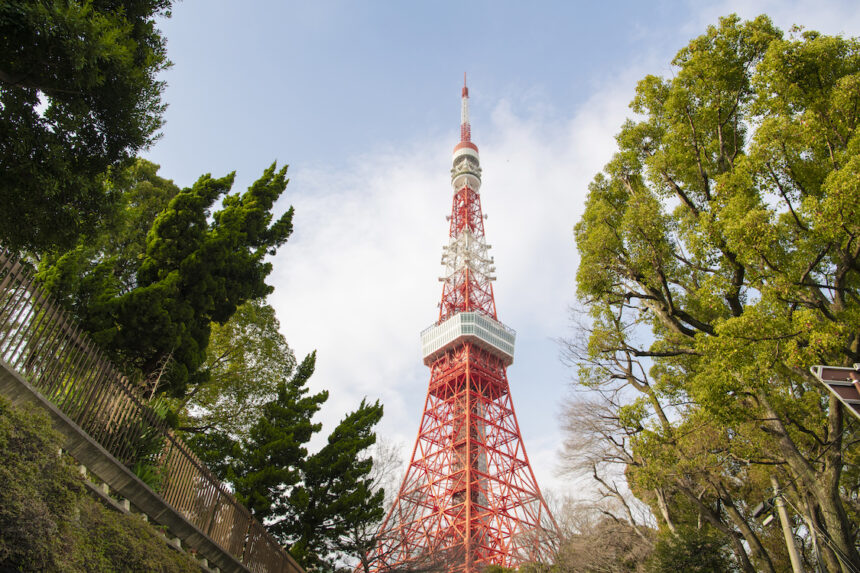
After worshipping at the Edo Period landmark, we will skip ahead in time to the symbol representing Tokyo in the Showa Period. This is “Tokyo Tower” (Map 4), which opened in 1958 as a general TV and radio tower for the Kanto region. At 333 meters tall, it was the world’s tallest freestanding steel tower when it was built.
It is amazing that such a huge structure was built in one and a half years. The highlight is the sense of scale! The Skytree is so masculine and stately, but the Tokyo Tower is warm in color and has a feminine silhouette, as if it were wearing a dress. When lit, it looks like a candle, giving it a warm impression, somewhat like a goddess,” says Kaneko.Kaneko was four years old when the tower was completed, and she still remembers people lining up by the main gate to climb it. There used to be a wax museum, an aquarium, and a bowling alley.From a buckwheat noodle shop’s point of view, Shiba Daimon is the perfect place for New Year’s Eve. You can eat New Year’s Eve soba at our restaurant, ring the temple bell at Zojoji Temple, and see the first sunrise at Tokyo Tower (laughs). Now that we have the Sky Tree, we can do the same thing in Asakusa! (Mr. Kaneko)
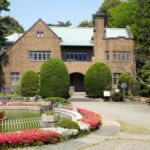
To capture the entire Tokyo Tower in a photograph, head from Momiji Valley to Shiba Park, where The Prince Park Tower Tokyo is located, passing by Benten Pond. From the park, or even on the way to the park, you can look back from time to time to get a panoramic view of the towering Tokyo Tower.As the name “Momiji Valley” implies, this area is famous for its autumn leaves, and in the Meiji period (1868-1912), there was a luxury Japanese-style restaurant called “Momijikan. After the Western-style “Rokumeikan” disappeared after only seven years, “Momijikan” became a salon for politicians, soldiers, businessmen, and literary figures. It was located here from 1881 until it was destroyed by fire in an air raid during World War II, and Tokyo Tower was built on its vast site.In fact, Momiyo Ozaki, author of the novel “Golden Yasha,” took her pen name from this ryotei.“Well, how about finishing off your retro tour with a delicious “monaka” (sweet made with bean paste)? There is a long-established Japanese sweets shop nearby that serves “monaka” (a type of sweet made with bean paste) related to Momiji Ozaki,” says Kaneko.
Tokyo Tower4-2-8 Shiba-Koen, Minato-ku, Tokyo03-3433-5111https://www.tokyotower.co.jp/
Search for sweet and cute souvenirs at “Shiba Shinmei Eitaro,” established in the Meiji era (1868-1912)
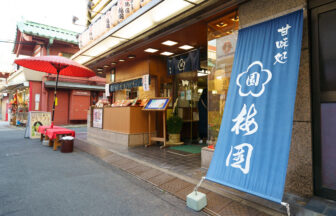
The last spot Mr. Kaneko went to was the long-established “Shiba Shinmei Eitaro” (map 5), which was established in 1885. It is a Japanese confectionery store that inherited the goodwill from “Eitaro Sohonshiki” in Nihonbashi. It also delivers sweets to Zojoji Temple and has a close relationship with the Kabuki world.When I visited, I was greeted with a smile by the fourth generation owner, Mr. Yoshihiko Uchida. Mr. Uchida, what is your specialty here?The signature confection is the “Enoshima Monaka,” which consists of five different seashell motifs, each filled with a different type of red bean paste. It is said that the godfather of this cake was Momiyo Ozaki, and when the founder visited Momiyo with this cake, his wife was playing the koto (Japanese harp) and played a piece called “Enoshima. That was the origin of the name,” says Uchida.
Since then, this middle of the day has become a favorite of the great writers. There may have been days when they were nestled next to his manuscripts as an accompaniment to his writing. Seasonal wagashi, sold in limited quantities each season, are also popular. In spring, the yozakura mochi (cherry blossom cake) with brown sugar is a hot seller.
If you visit Eitaro, be sure to take a look at the signboard on the eaves of the building. This unique character was created by Taro Okamoto, an artist who was a comrade-in-arms with the predecessor. You can see the fun of a long-established shop that has continued to grow over the years in this interesting place.
It has always been an old town, so there are many stores that are rooted in the local community. That’s what’s good about this town,” say Uchida and Kaneko.Speaking of the local area, there is a custom among long-established soba shops to call each other by the name of the area, rather than by the shop name. Other stores are not called by their shop names, such as Yabu-san or Sunaba-san, but by their place names, such as Renjakucho-san or Tomoe-machi-san. I guess that’s why old family businesses have always had a strong image of being closely connected to the local community,” says Kaneko.It’s true. We also have “Shiba Shinmei” at the beginning of our store name, and we cannot do business if we leave this town, which has been rooted in our ancestors for generations. However, the name of the area is changing rapidly, and the number of stores with “Shiba Shinmei” in their name has decreased considerably…. It is a little sad, but I think that if we continue to operate our stores from now on, we may be able to preserve the name of this town as it once was.The history of a store is the history of the town itself. It is interesting to see a long-established shop.
Shiba Shinmei Eitai Seikatsu1-4-14 Shiba-Daimon, Minato-ku, Tokyo03-3431-2211http://www.shiba-eitaro.com/
After returning home. While enjoying the afterglow of my walk, I opened the package of “Enoshima” I brought back from Eitaro. Abalone, oysters, scallops… The small shells are so cute, it looks like an Otome’s collection.When you bite into one, the sweetness of the clean and elegant red bean paste is soft and fluffy. The crispy and savory mochi rice skin was irresistible, and I found myself reaching for one and then the other.Sarashina Nunoya has taken root in the town of Shiba Daimon over a long period of time. Touring the town with Mr. Kaneko, the owner of Sarashina Nunoya, was like an adventure that took us from the surface of the town to its hidden depths. Please come and experience the flow of history in this unique town.
Interview and text by Ayaha YaguchiPhoto: Miharu Saito
This time, a city tourOutline
Shiba Daimon Sarashina Nunoya
| address (e.g. of house) | 1-15-8 Shiba-Daimon, Minato-ku, Tokyo |
|---|---|
| Access | Short walk from Exit A6 of Daimon Station on Toei Subway Asakusa Line and Oedo Line, 3 minutes walk from Hamamatsucho Station on JR Yamanote Line, Keihin Tohoku Line and Tokyo Monorail. |
| phone | 03-3436-3647 |
| External Links |