Walking around Edo with old mapsIidabashi/Kagurazaka
Part 5: Traces of the Edo Period Remain Strong in “Differences in Elevation” and “Town Names” in Ushigome and Ichigaya
Kiyomasa KatoOkubo StreetTenso Shrine (the outer shrine of Ise Shrine)Michio MiyagiCount Ogasawara ResidenceKoukokuji Templepavilion housing the historical archives (in Heian Palace)
Tokyo is a city that has been transformed in the past year, half a year, or even a week. While new buildings are being constructed and new stores are opening, it is surprising that traces of the past remain, or in fact, are still the same as they were in the Edo period.
The “Edo Walking with Old Maps” program allows visitors to enjoy such evidence of the times based on old maps. Guided by Ms. Tae Hoshino, a guide from “Walking Trip Ouensha,” a pioneer of old maps walking tours, we will discover Edo by walking around present-day Tokyo. This time, we will travel from Ushigome to Ichigaya.
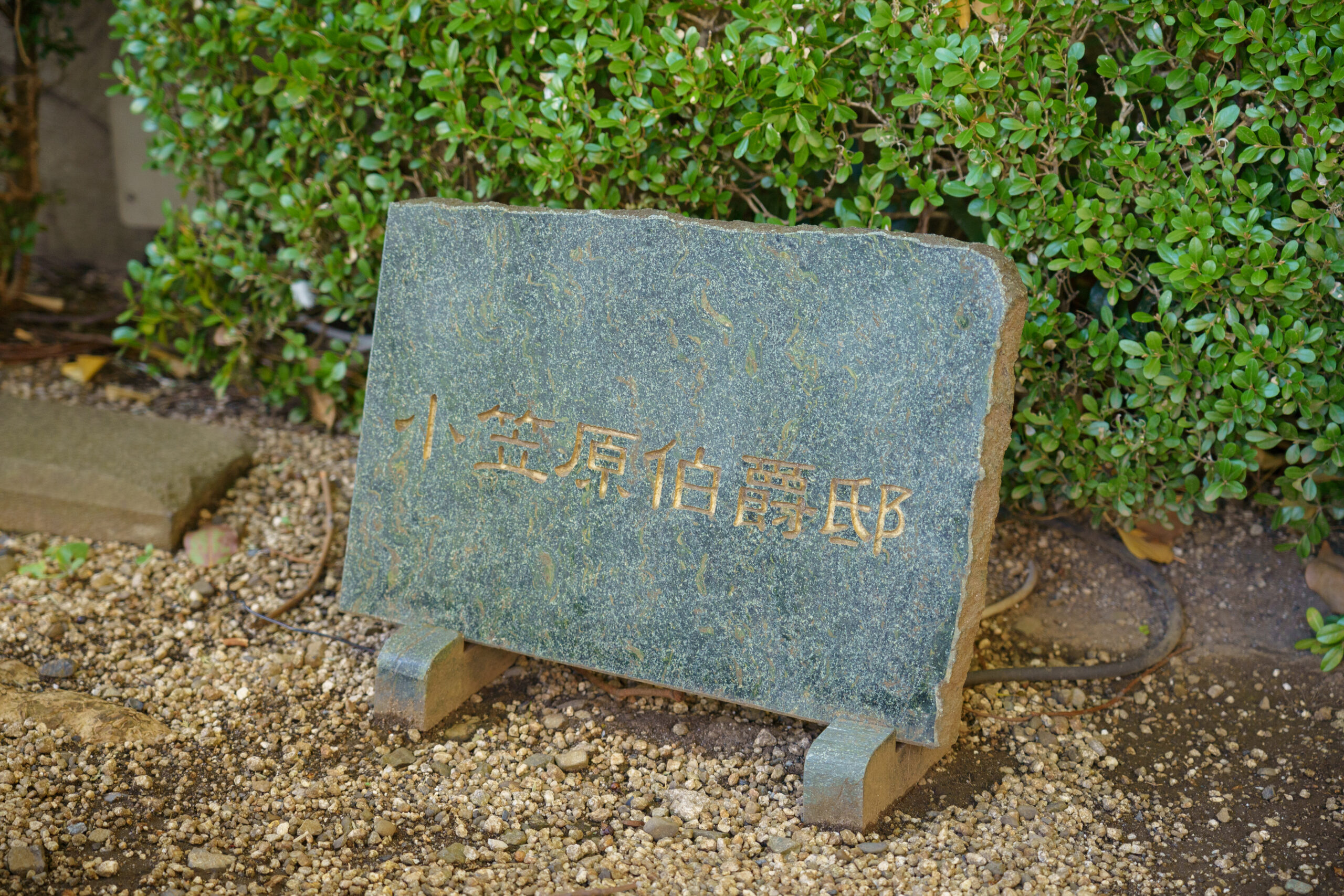
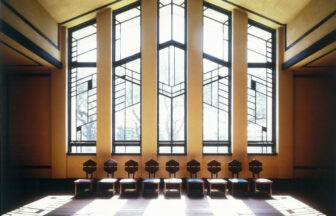
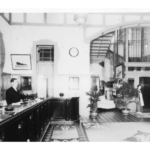
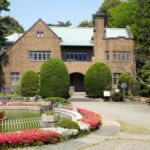
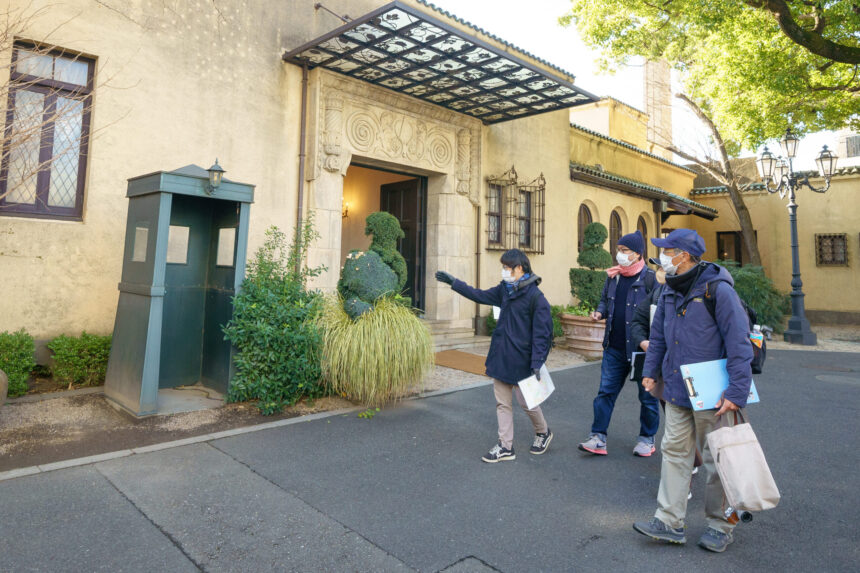
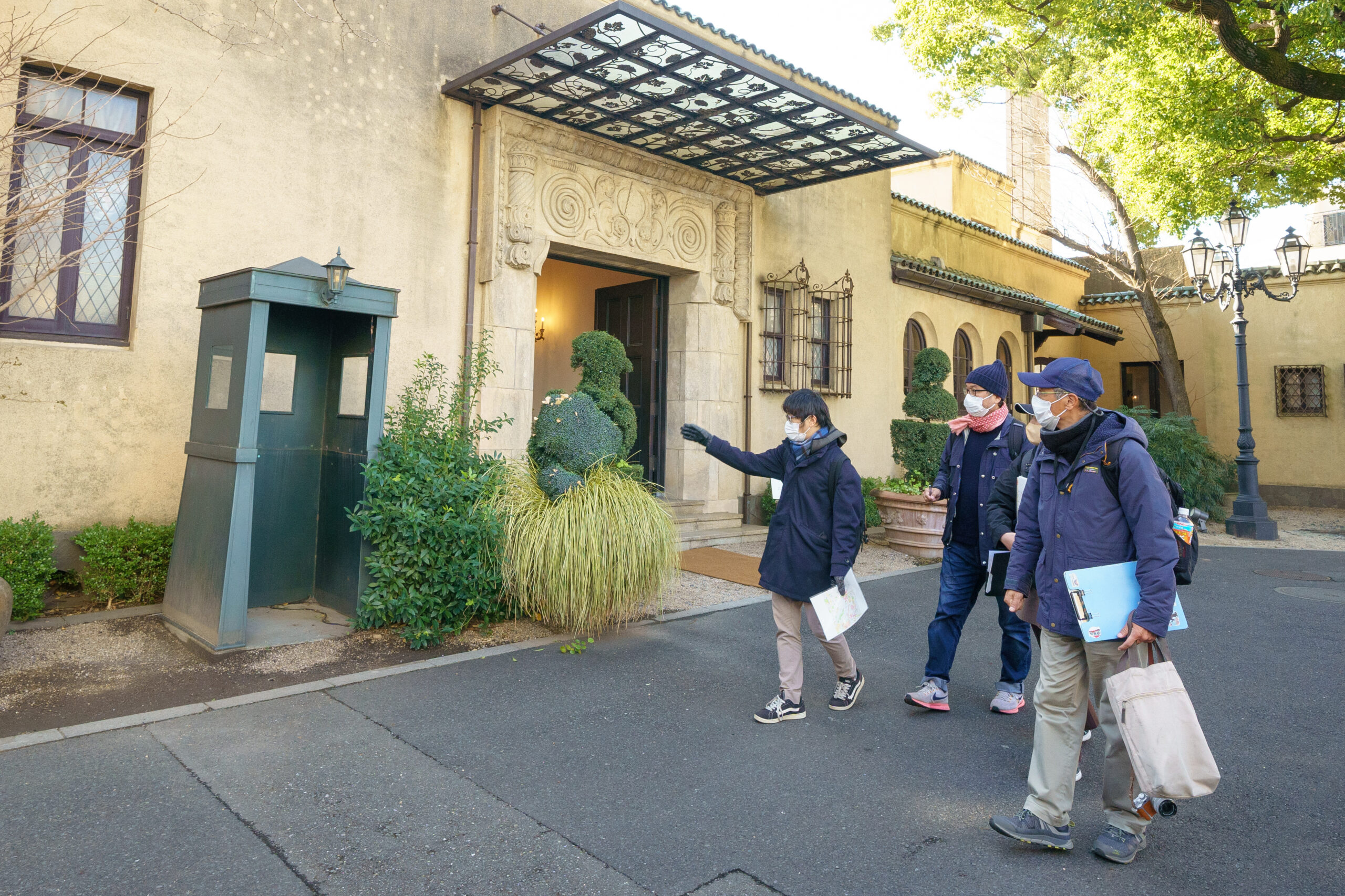
The trip starts at the restaurant “Count Ogasawara’s Residence,” an eye-catching modern Western-style building.
The starting point for this visit is the Kawada Exit of Wakamatsu Kawada Station on the Toei Oedo Line, just above ground level. The name on the old map is “Sakyo-taio Ogasawara,” but in fact this place is still “Ogasawara” today. Restaurant “Count Ogasawara’s Residence. Starting here, walk from the Ushigome area toward Ichigaya and Kagurazaka.
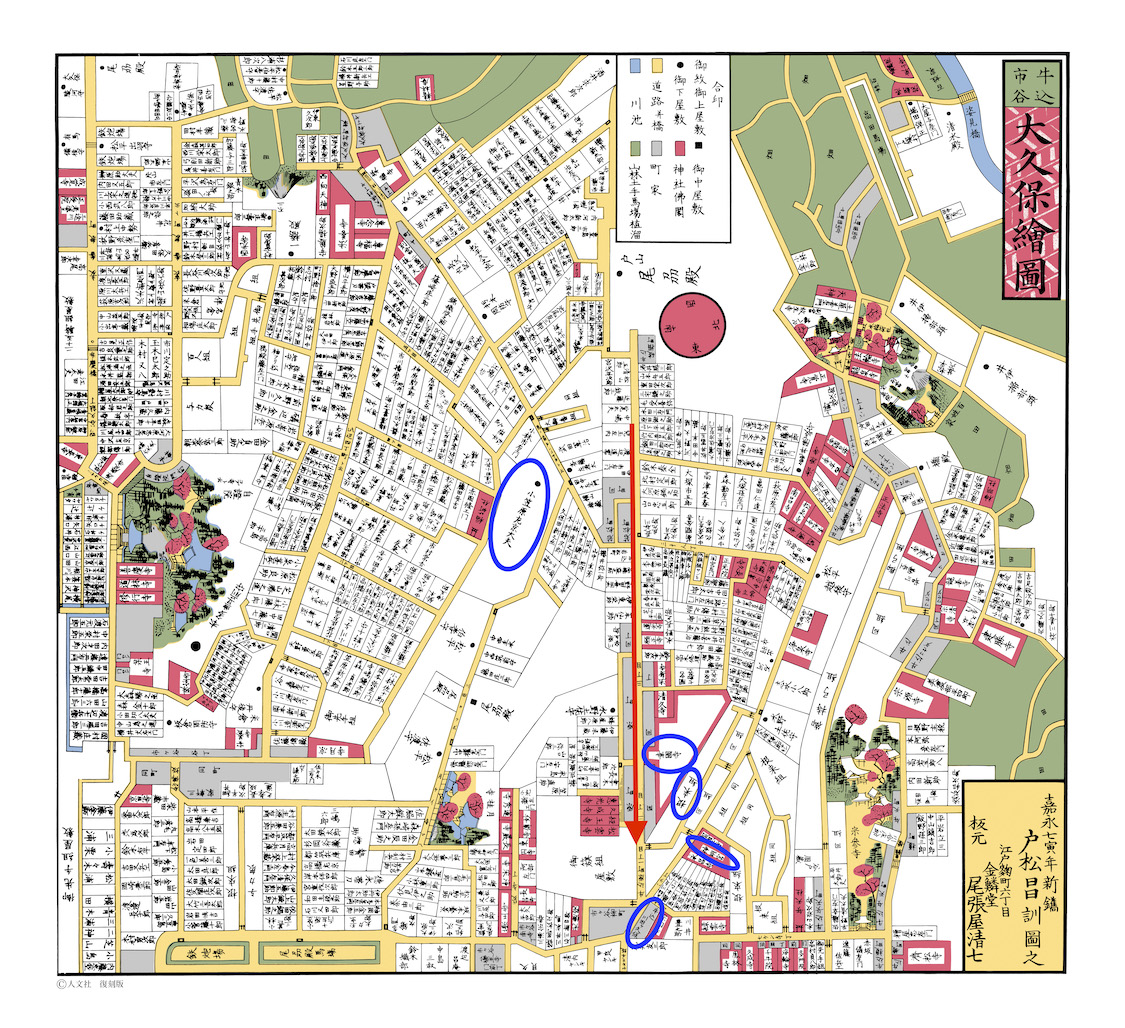
This is the route as seen on an old map. The red line is the journey, and the blue oval is the historical spot that awaits.
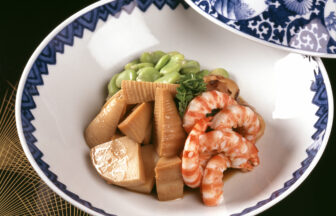
The starting point, the Count Ogasawara’s Residence, is a restaurant serving modern Spanish cuisine.
The Ogasawara school is said to have its origins in the Muromachi period (1333-1573), and is the official etiquette of the Tokugawa shogunate, including archery, horsemanship, and various ceremonies and manners of the samurai community. The Ogasawara family, the lords of the Ogura domain, were in charge of this school, and this is where their residence was located,” says Hoshino. The Ogasawara family continued to own the building after the Meiji period, and the current building was built in 1927, designed by Sone Tatsuzo.
The facade is simple but very elaborate, with flat glass and steel eaves. According to Mr. Hoshino, the eaves were designed to resemble a grapevine trellis. The life-like design of leaves and vines was discreetly applied. The building is also famous as a location for TV dramas and magazines.
Walking through bumpy alleys and feeling the difference in elevation of the Ushigome plateau
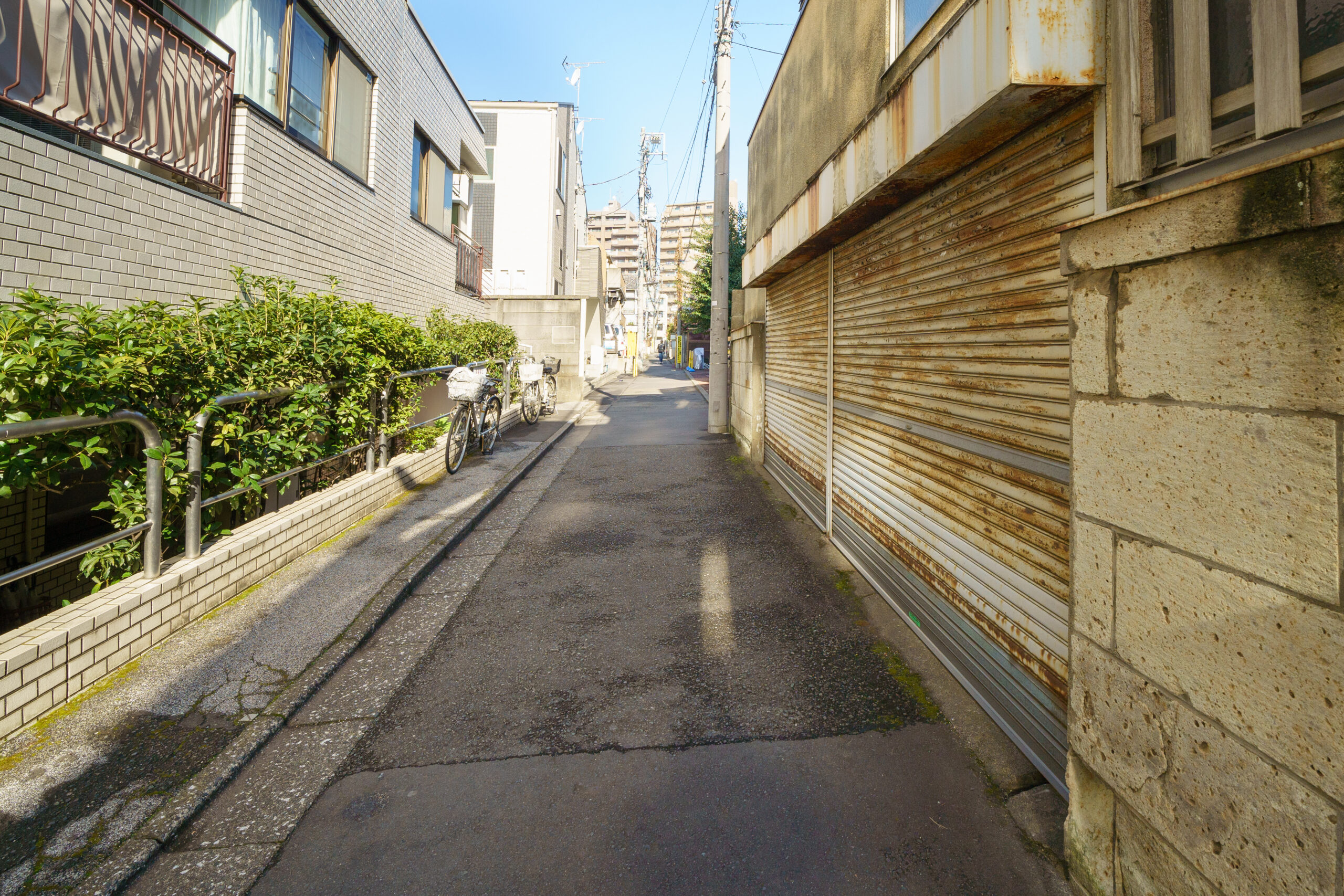
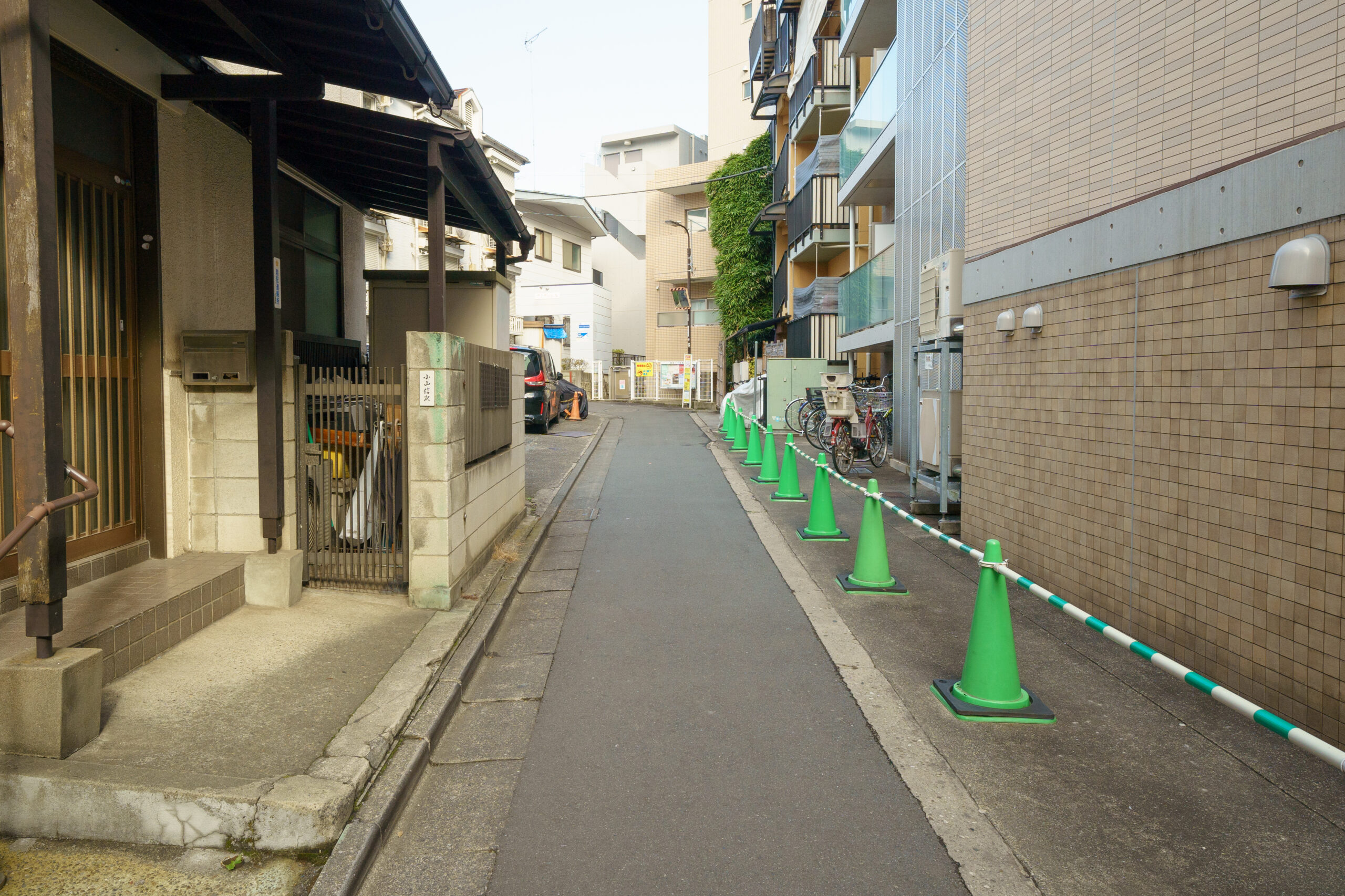
Crossing the street, we entered a narrow, key-shaped street. This area is said to have been home to the “Oobangumi Kumiyashiki. The Oobangumi was in charge of guarding Edo Castle and the city of Edo. They also took turns guarding Osaka Castle and Nijo Castle in Kyoto.
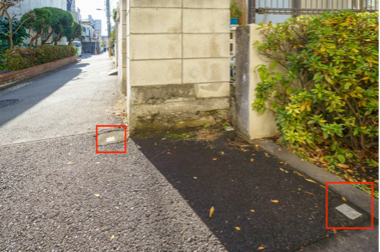
But now, as you can see. There are no traces of the Kumiyashiki at all. What is noteworthy here from an old map perspective is the “width of the road. If you continue on this road, the road will look like this.
In the Edo period, the width of roads was probably about 1.5 meters. In 1950, the Building Standard Law was enacted, and after that, “roads” had to be at least 4 meters wide. Buildings that existed before that time were allowed to have a narrower road, but after that, when a building was torn down and rebuilt, the 4-meter width had to be guaranteed. That is why the road width is bumpy like this” (Mr. Hoshino, same below).
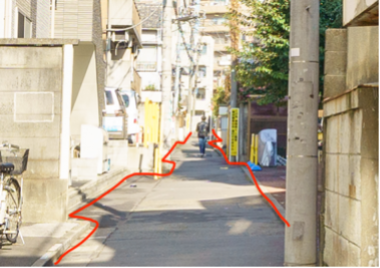
Incidentally, the “boundary” between the road and the building is marked by the red line. The newer the building, the more the land is gouged. In an area lined with cozy private houses, the road is bound to be a bit of a mess. As you may know, it is quite fun to walk along the alley while looking at the “boundaries” of the area.
Then we come to the main street of this course. We will exit onto Okubo-dori Street, which runs east-west from Nakano to Iidabashi, and head in the direction of Iidabashi.
The area around here is a plateau called the Ushigome Plateau, and Okubo Street is the ridge of the plateau.
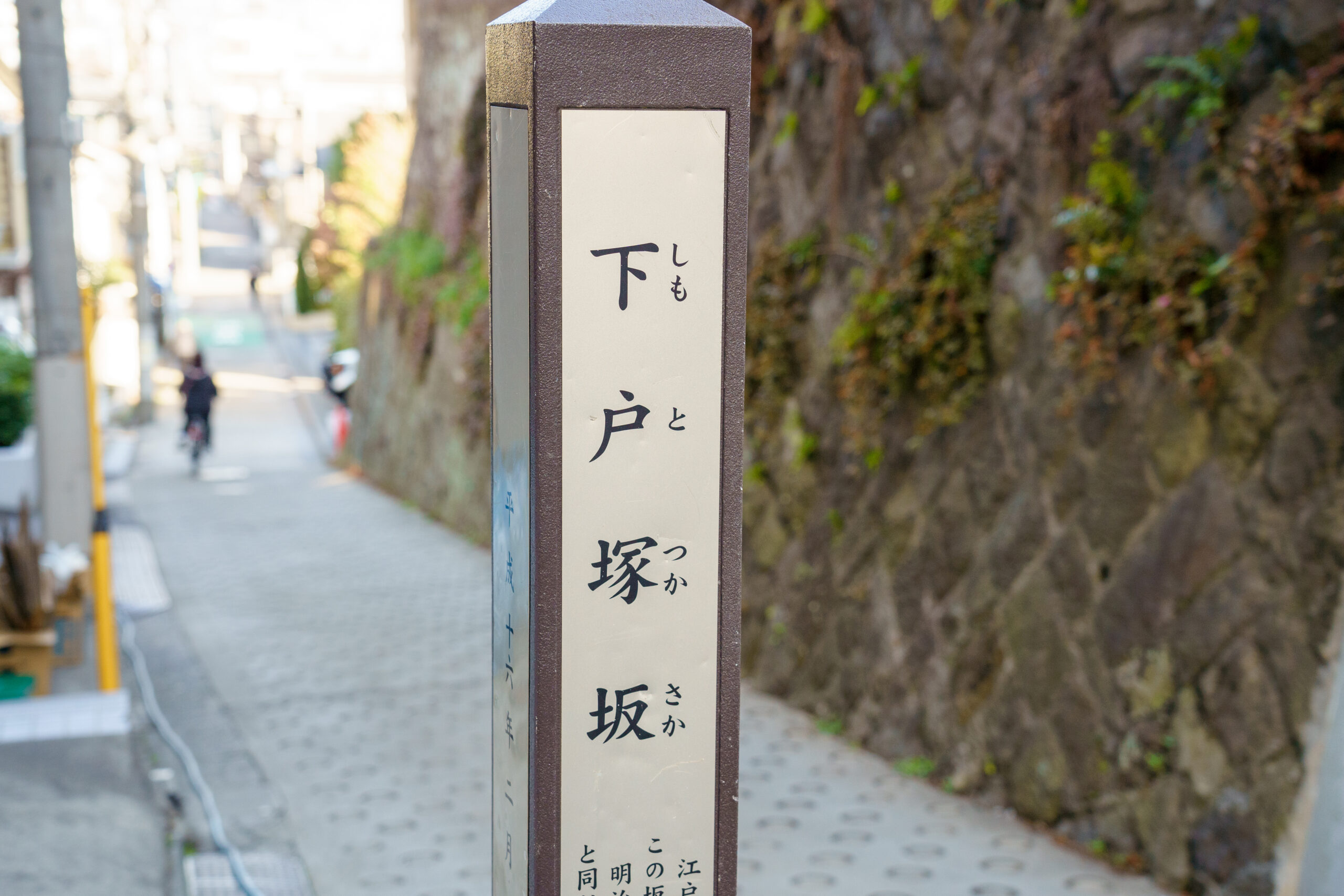
If you are not aware of it, it is difficult to see the difference in elevation of the land. This is even more so if you start from the subway. Although I did not feel that I had climbed much, I could clearly see that the land to the north of the Okubo Street was lower than the Okubo Street. Then, I came across “Shimotototsuka-zaka,” which means “Shimotsuka slope” in Japanese.
This slope is also found on an old map from the Edo period, but it is not named.
He said, “This area was a town of samurai residences, so there was no town name in the Edo period. The samurai residences themselves served as landmarks, so there was no need to have a town name as an address.
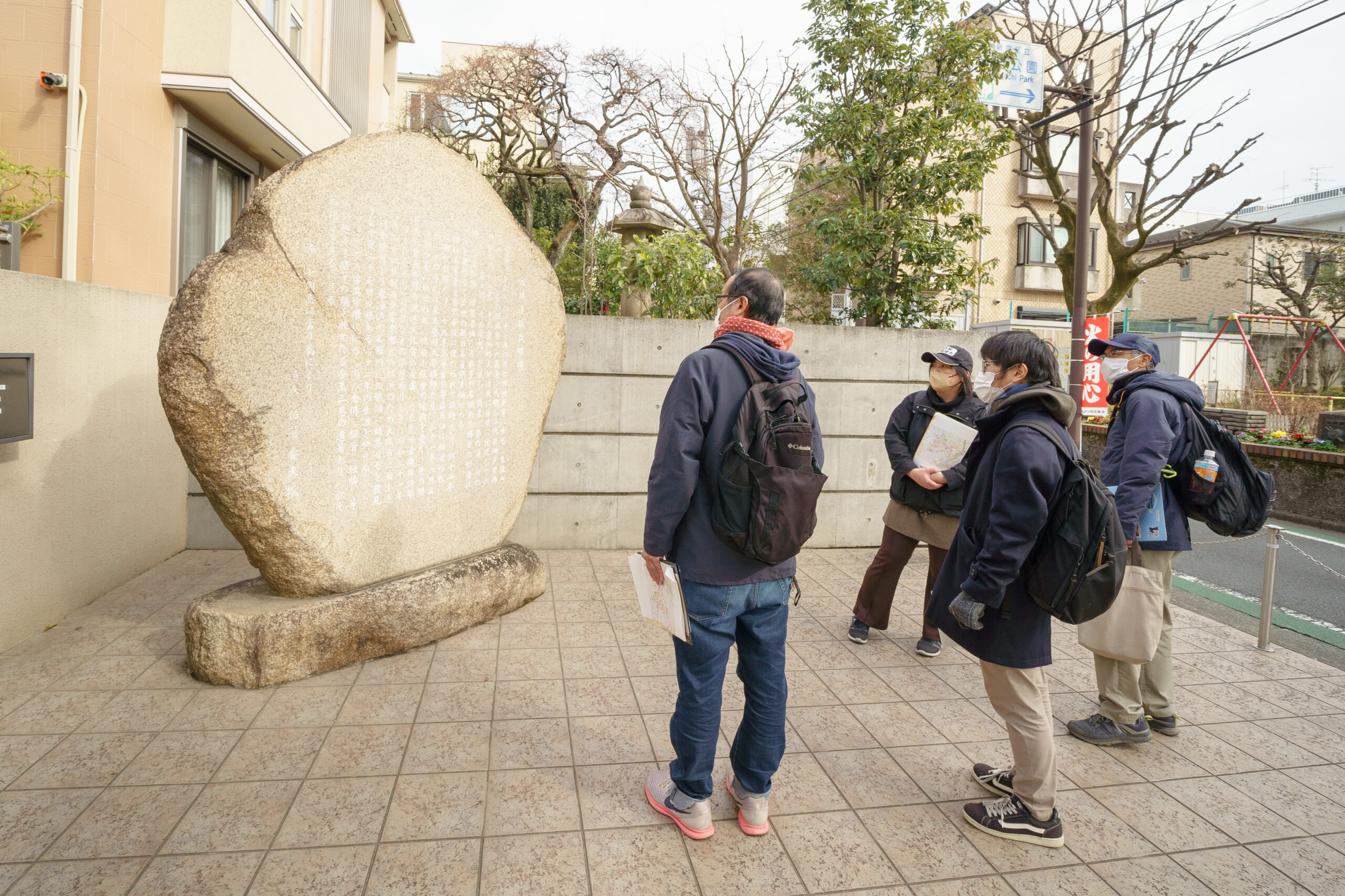
According to this information board, the name Shimotototsuka-zaka was given after the town was renamed Shimotsuka-cho in 1872. Incidentally, “Natsume-zaka,” which connects Okubo-dori and Waseda, also appears ahead, but it too was named during the Meiji period (1868-1912). Mr. Hoshino says that Naokatsu Natsume, a local feudal lord, named the slope in front of his house “Natsume-zaka. The fifth son of this family would later become famous as Soseki, but that is another story.
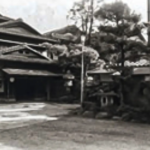
Continuing on Okubo Street, a small shrine called “Horoku Inari” appears on the left. We paid our respects here and continued onward.
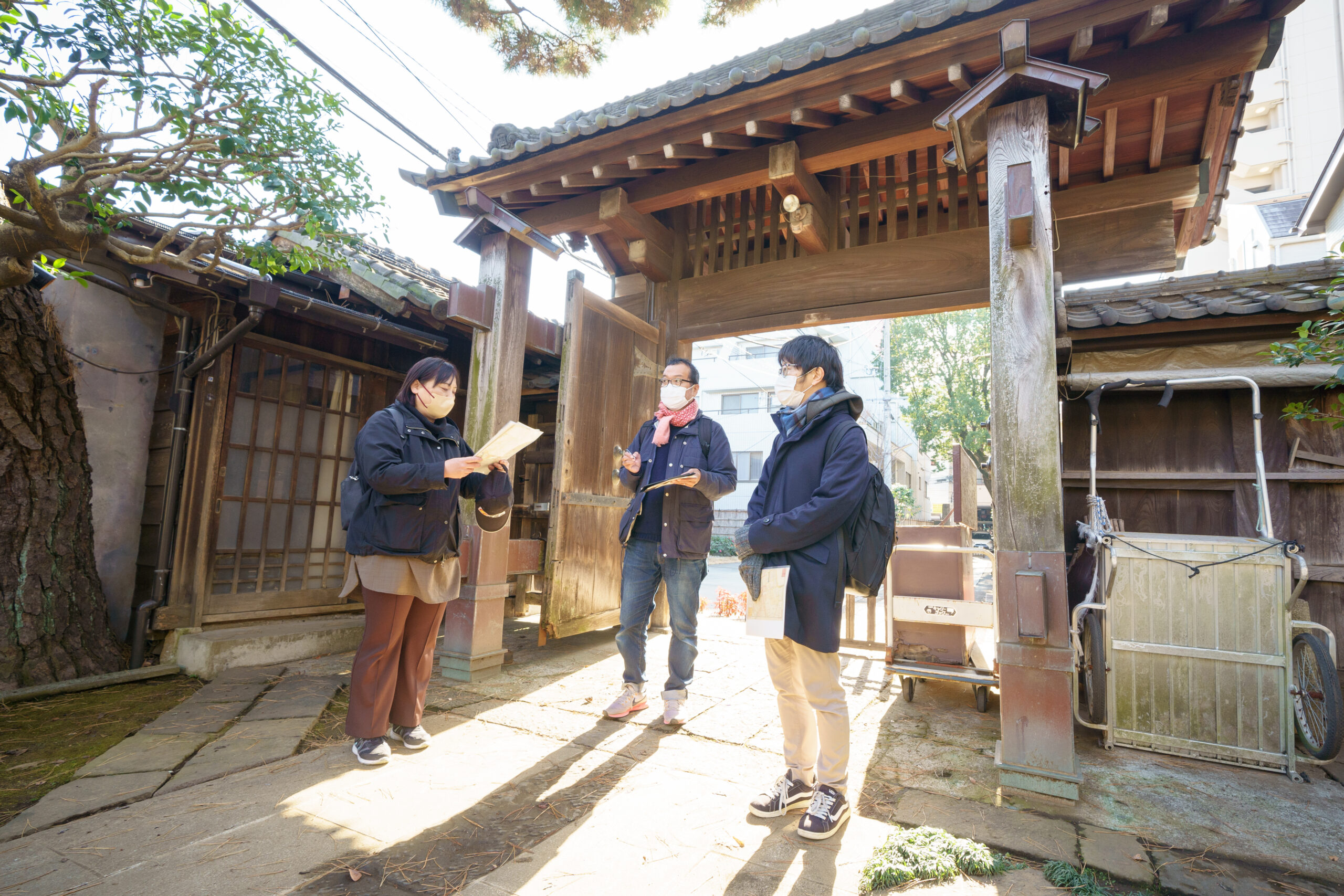
Koukokuji Temple, located on the site of the former residence of Lord Kiyomasa Kato, is full of attractions.
Okubo Street, the ridge of the Ushigome Plateau we have been walking on, has branched off along the way like this. Now, the street on the right is the continuation of Okubo Street.
However, during the Edo period, the street to the right was not yet in existence and was lined with samurai residences. The street was connected to a narrow path to the left, which is now marked as a no-entry road. And at the end of the street is Koukokuji Temple, which was opened on the site of the former residence of Lord Kiyomasa Kato.
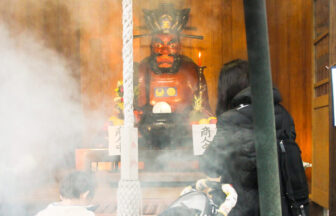
The temple was specifically built in 1630, after Kiyomasa’s death. His son, Tadahiro, enshrined the Yakuyakuyaku Nunobikisoshi as the principal deity, and many people turned to the temple whenever an epidemic spread through the city of Edo.
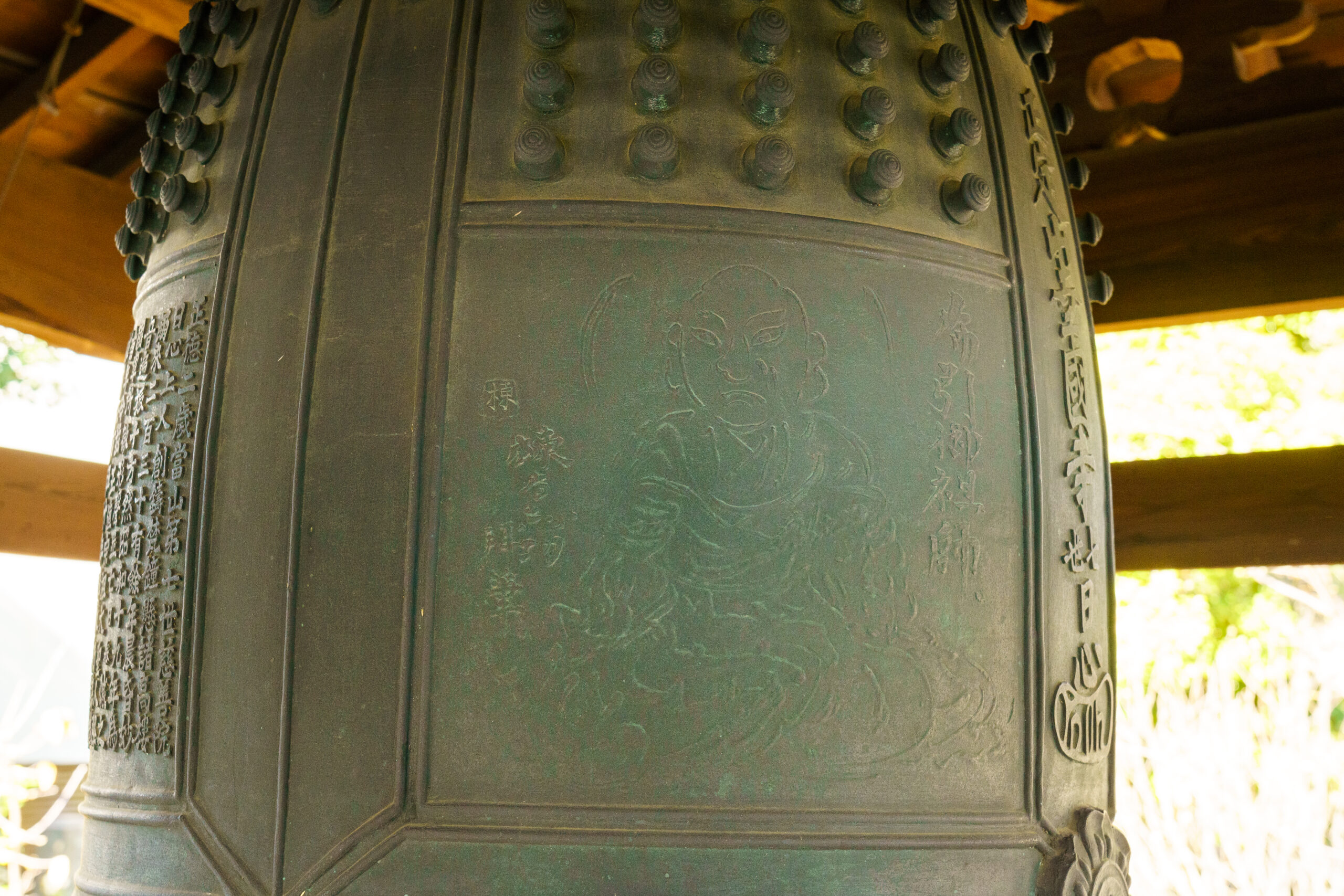
There are many things to see at this temple. The temple gate was originally built in the late Edo period in the residence of a feudal lord, and the Nagashima family, a parishioner of the temple, donated and relocated the gate. The temple bell is inscribed with the main image by Munakata Shiko. The bell, which was originally delivered in 1712 (Shoutoku 2), was offered during the war and once lost, but was later restored in its present form in 1971.
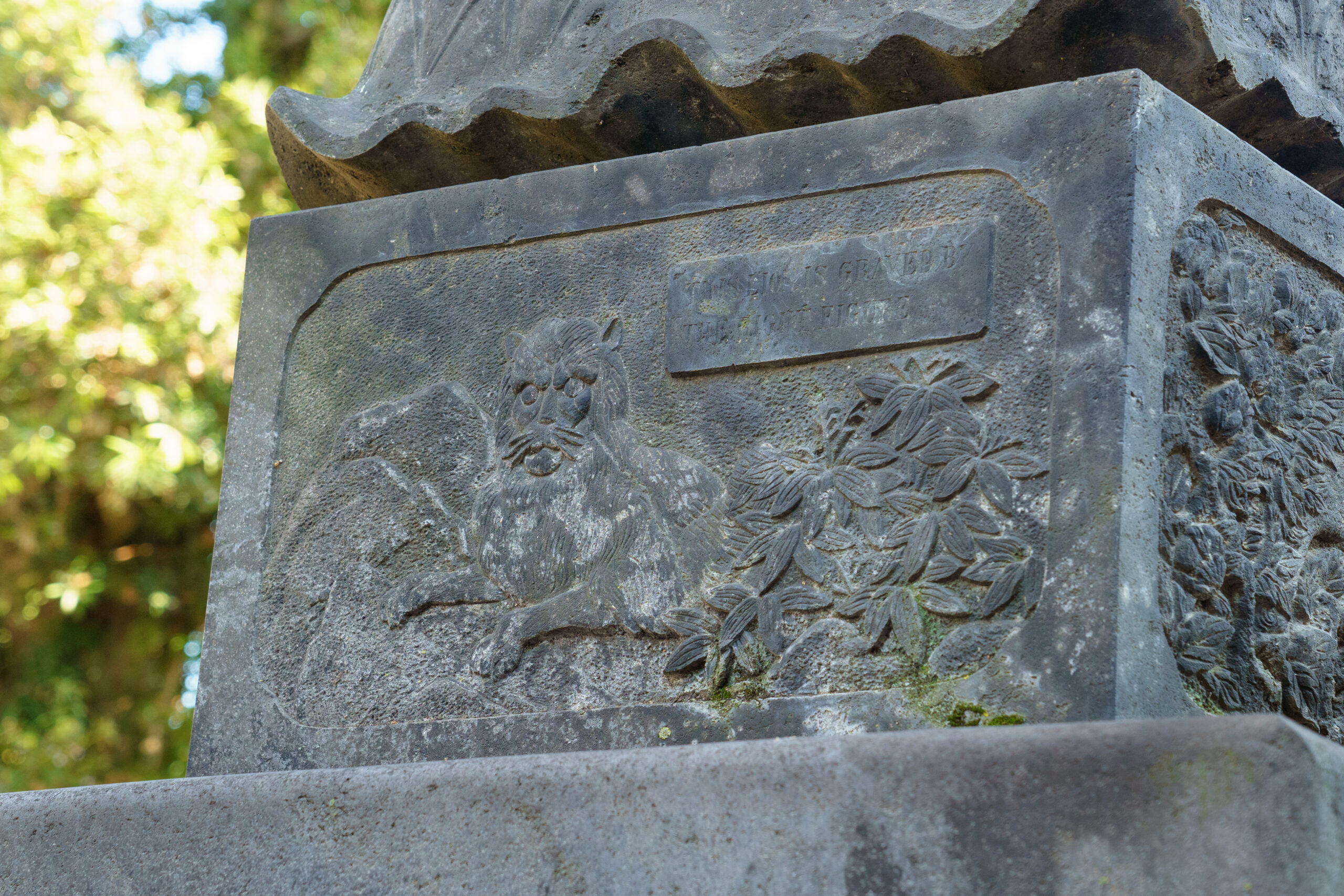
The tower was built about 150 years ago by Iseya, a wealthy merchant in the Edo period. It depicts a Chinese lion and a lion, and the lion has an inscription in English. It is said that Iseya, who was an influential merchant, built this pagoda to boost the morale of his store.
The temple is a very pleasant place, well-maintained to the last detail, and is a relaxing place watched over by a large ginkgo tree estimated to be 500 years old, which is said to have been planted by Lord Kiyomasa himself.
There was also a Negoro-gumi clan residence in this town. On the map, the words “Negorigumi” can be seen on several blocks just adjacent to “Koukokuji Temple. Part of it now looks like this.
The Negoro-gumi was one of the “Hyakunin-gumi” in the Edo Shogunate, a fighting group consisting of 100 men of the same rank who fought with guns. Ieyasu promoted the Negoro-shu, who were priest soldiers of Negoroji Temple in Kii. In old maps, several blocks in this neighborhood are marked “Negoro-gumi” and “Dou-gumi,” but the structure of the houses was a group of row houses, each with its own entrance, surrounded by a wall,” said Ieyasu.
The structure of a tenement house was a group of tenements, each with its own entrance and surrounded by a wall. Each rectangular house was one room. It looks like a one-room apartment, but there were about three bedrooms in the house,” he said.
The area was also known as “Ushigome Negoro-cho” in the olden days. In the Edo period, there were three other groups of 100 persons: the Iga group, the Kouga group, and the Twenty-five Riders group.
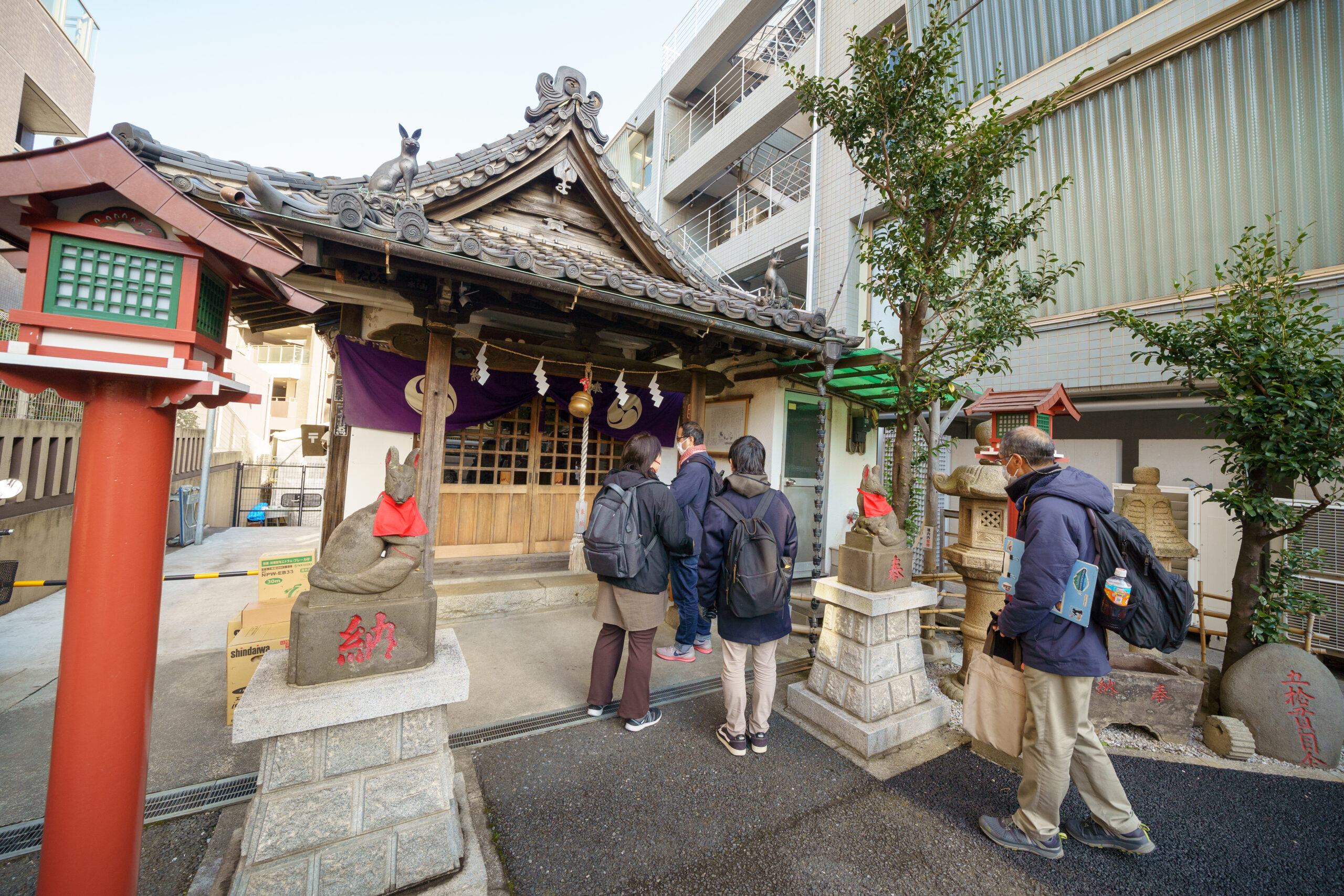
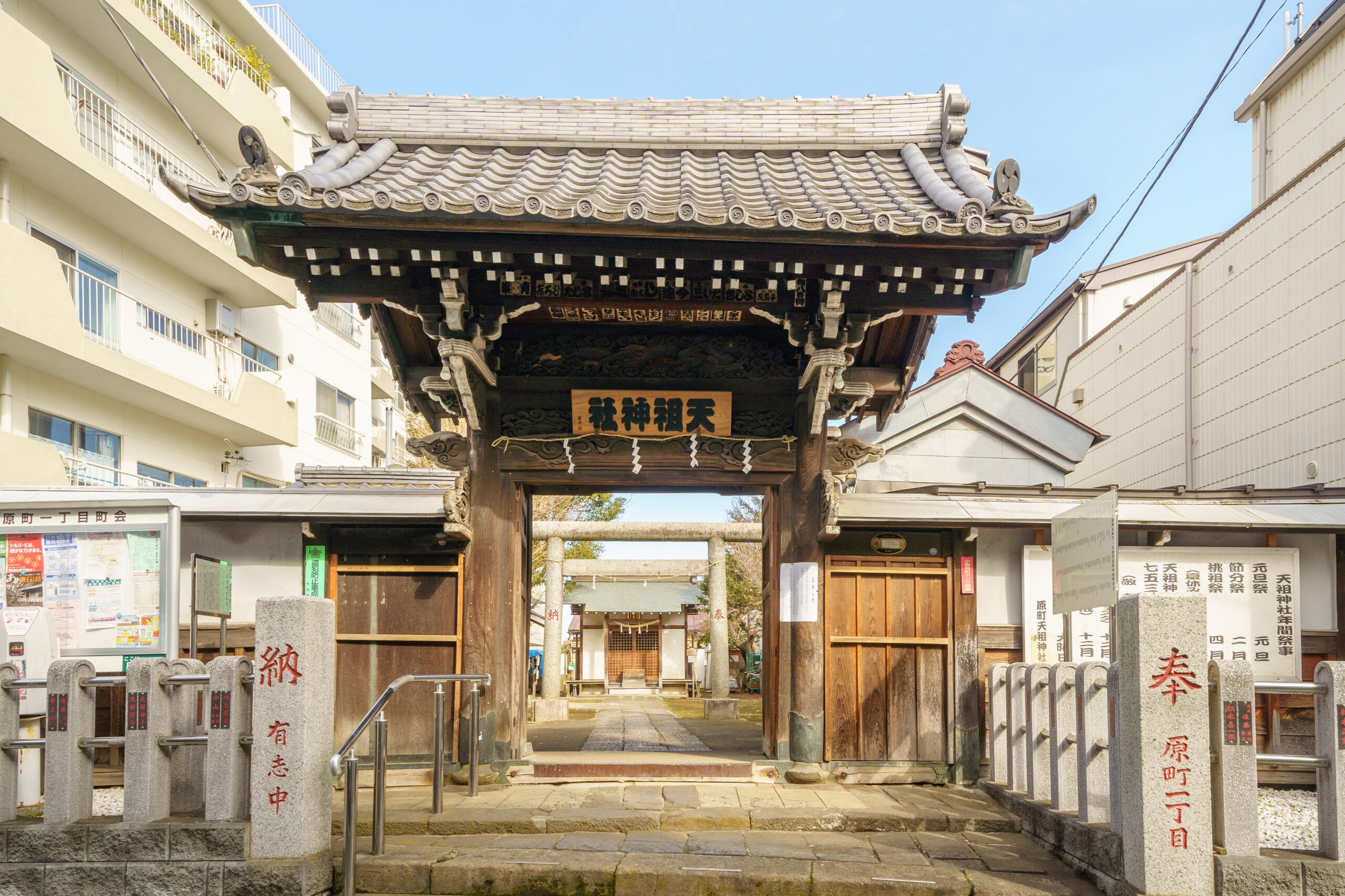
There is no trace of the Negorigumi clan’s mansion, but the Tenzo Shrine, which is marked on old maps as “Shinmei-gu Shrine,” is still there.
The deity enshrined is Amaterasu Omikami, the deity of the Ise Jingu Shrine. As you know, he is the deity of Ise Jingu Shrine. It has been a custom since the Kamakura period (1185-1333) that if a samurai donated his land to Ise Jingu and enshrined Amaterasu-Omikami, he would not be taxed.
According to the information board on the shrine grounds, the shrine was built during the Keicho era in the early Edo period (1603-1868). Kami odori (dance of the gods) was popular in many countries, and it also flourished in the village of Ushigome, especially among a villager named Chobei, who dreamed five nights in a row that God told him, “I will live here and save everyone from suffering! A villager named Chobei, in particular, prayed fervently after seeing a dream five nights in a row in which God told him, “I will live here and save everyone from suffering!
The shrine gate was rebuilt in 1845 (Koka 2), and the mizuya, main shrine, torii gate, etc. date from 1923 (Taisho 12), but it is a wonderful shrine that gives the appearance of Edo.
Going down the Ushigome Plateau, you will come across a town name derived from Koura Yashiki.
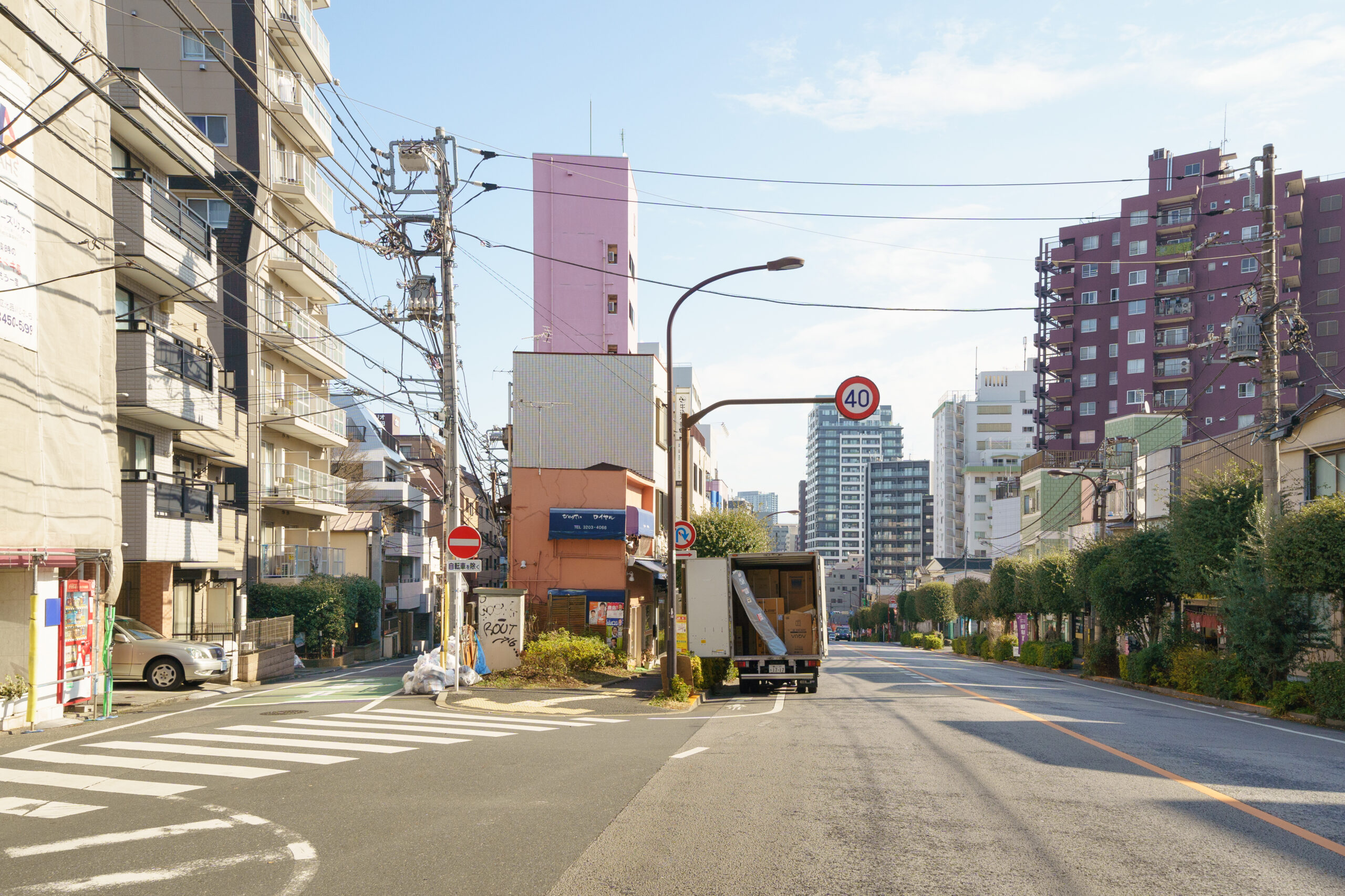
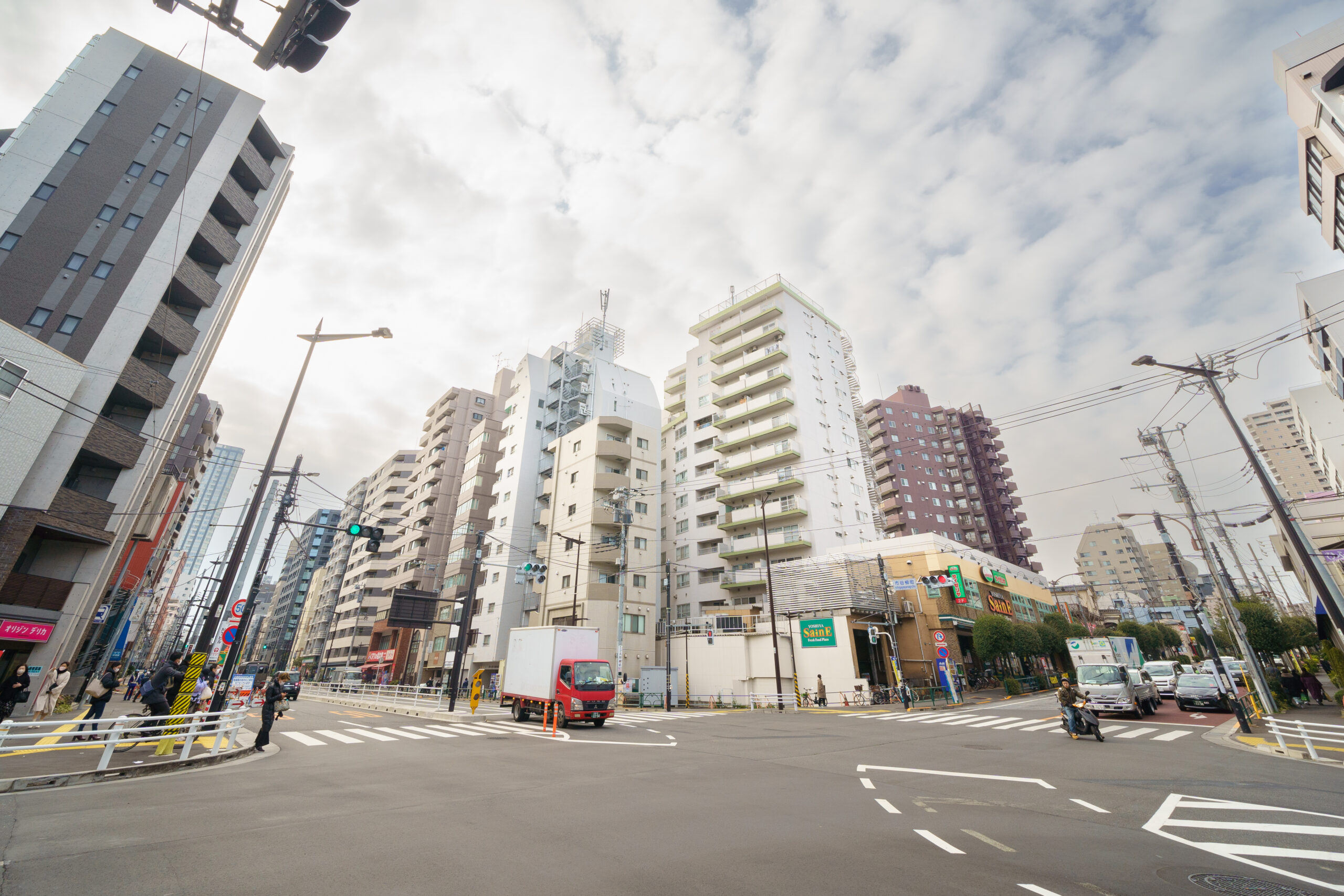
We then returned to Okubo Street and arrived at the bottom of the old map we referred to this time, the most easterly point in terms of direction. This is the Ichigaya Yanagicho intersection.
The old map shows “Ushigome Kawada Kubo. Mr. Hoshino explains that “Kubo” means a depression, or land with a hollow in it.
The “ridge” of the Ushigome plateau we had been following was gradually decreasing in elevation. We turned around and saw that we were going uphill a little bit. We passed an intersection, and Mr. Hoshino led us to a back road. In fact, this location was no longer on the old map.
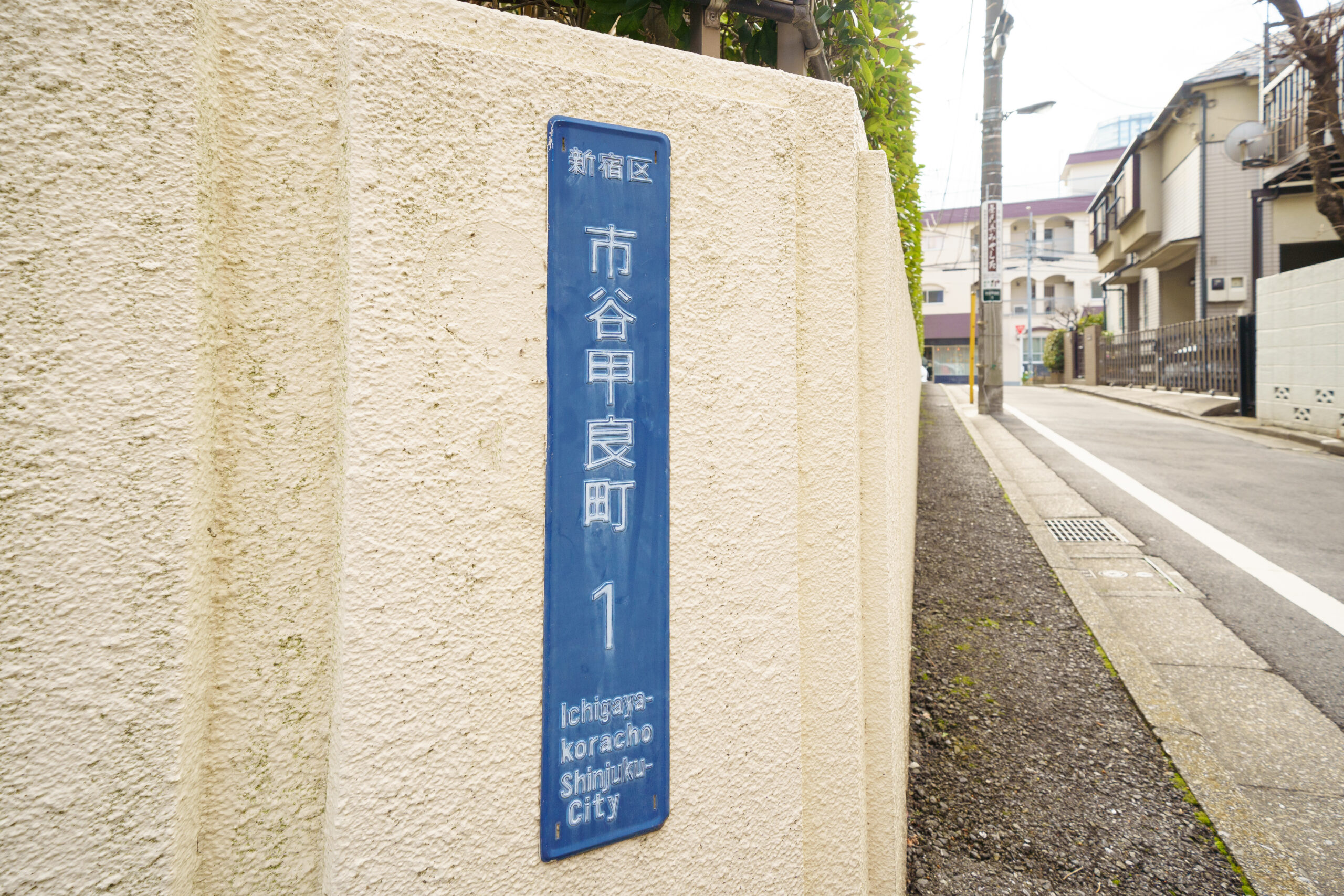
Passing through “Kawadakubo,” which is marked as “Kawadagakubo” on another old map, and taking a back road, you will find Ichigaya Koura-cho at the current address. The name derives from the name of a place in Edo.
The Koura family from Omi received land here. They were a family of carpenters who were in charge of important Shogunate constructions such as the Kamakura Hachiman Shrine, the Daitokuin Reiya of Shiba Zojoji Temple, and the renovation of Nikko Toshogu Shrine, and served as ‘shogunate Sakugiho Daitouryouji’ for generations.
Not only did they build the mansion, but they also leased the land to the townspeople, and the area became quite prosperous as an urban district,” says Hoshino. So, the Koura house was located in …….
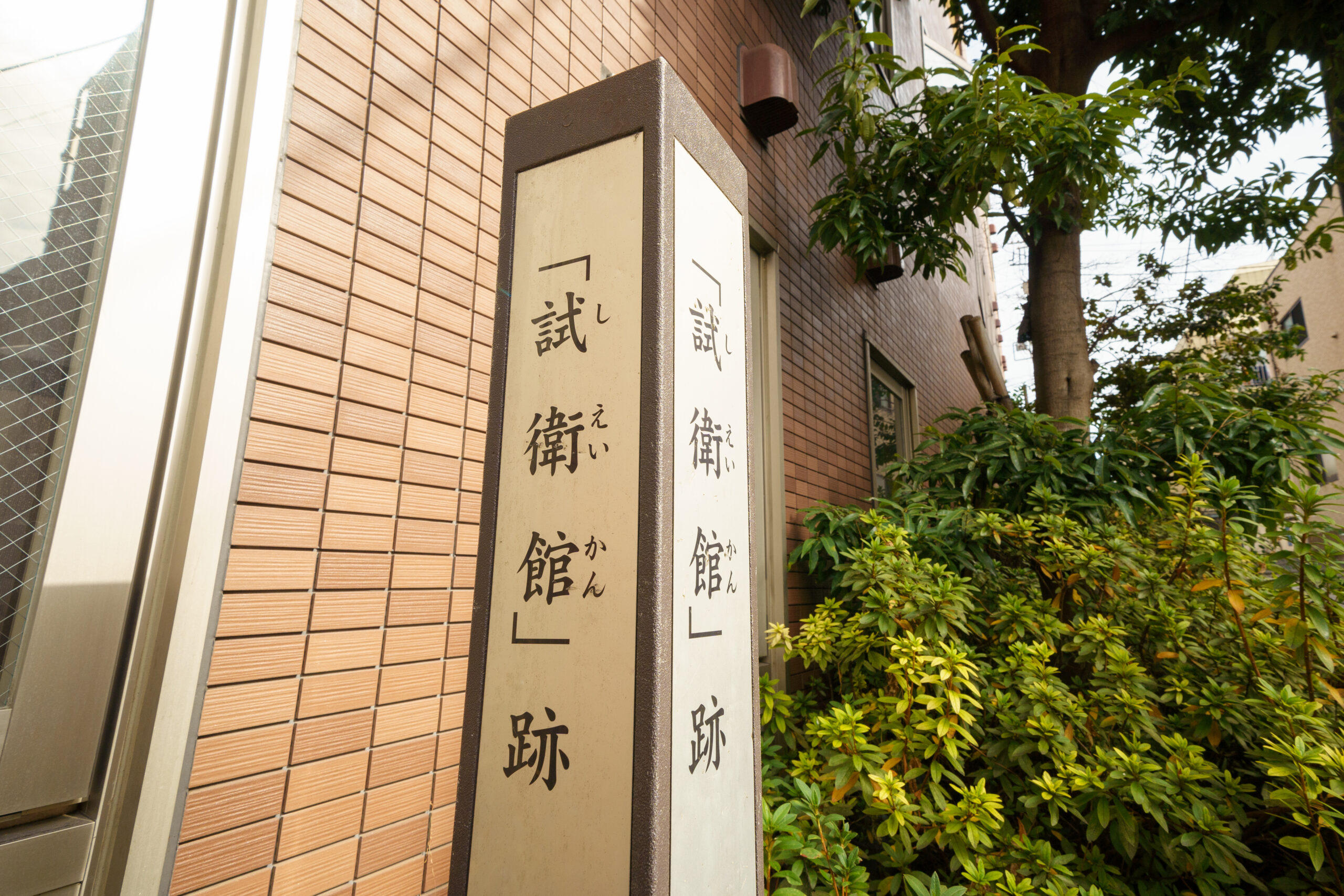
This is the “Shinsengumi’s dojo, Shuseikan,” where Isamu Kondo, the head of the Shinsengumi, honed his skills from the time he was young. This is where famous commanders such as Hijikata Toshizo and Okita Soji honed their skills from their youth.
Although there is now only a sign by the side of the elegant nursing home, the fact that it used to be the Koura residence remains as the address. Many of the names of places in this area have their origins in the Edo period.
Ichigaya-Yamabushicho”, “Nodo-cho”, “Nijuki-cho” …… Remnants of Edo in the names of towns
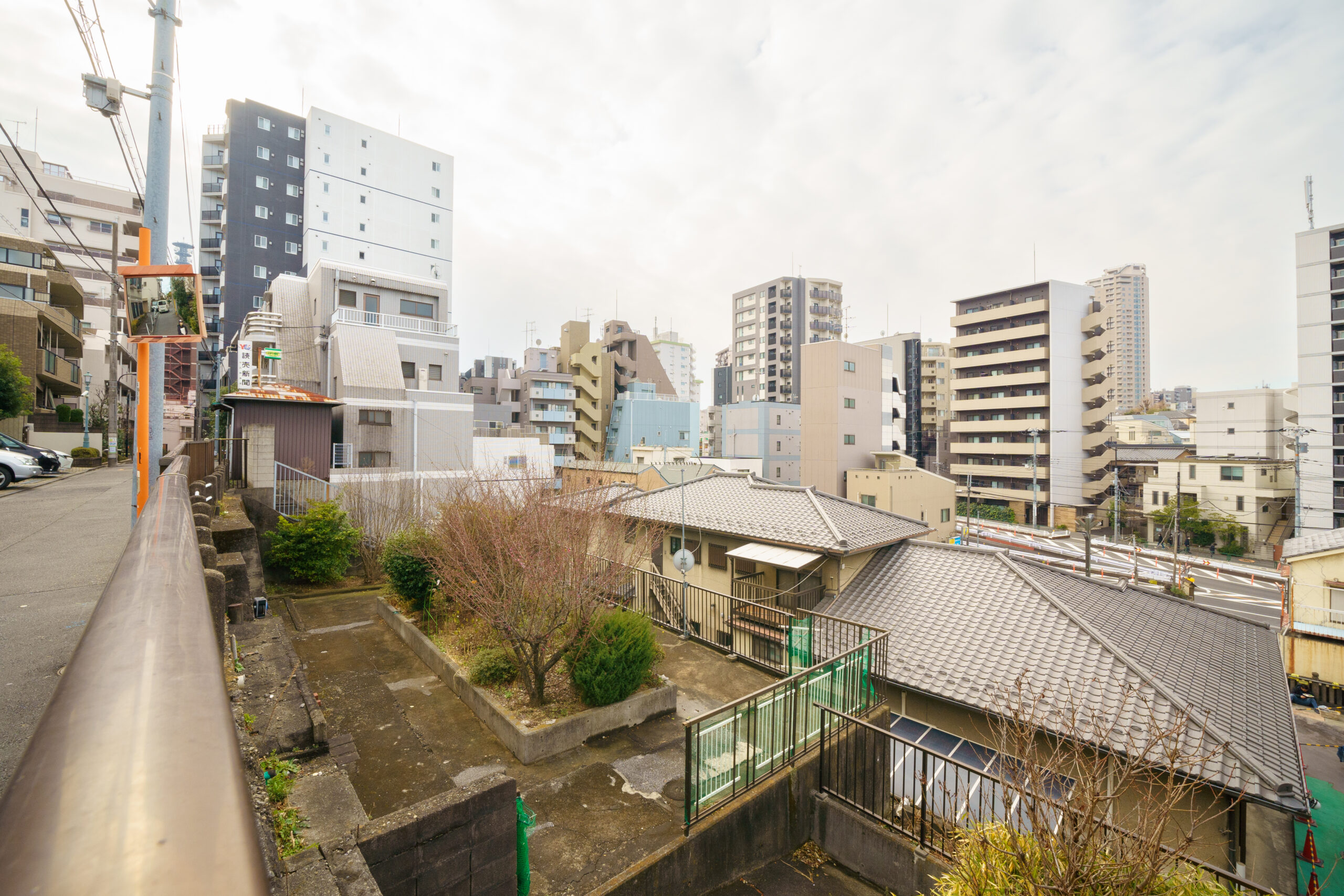
The next place we visited was a short walk up the hill from Koura-cho. And looking down is the Ichigaya Yanagicho intersection ……, “Kawada Kubo” in the Edo period.
From here, you can clearly see the depression because of the difference in elevation.
The center of the photo is the Ichigaya Yanagicho intersection. Looking down from here, you can clearly see that “Kawada Kubo” is indeed a depression.
In addition, the area looking down from the photo still retains the name “Ichigaya Yamabushi-machi” because many yamabushi (mountain priests) and shugenja (ascetic practitioners) lived in the area in the early Edo period. In fact, however, it was not always called “Yamabushi-cho,” as the residents were relocated to Shimotani after the great fire of 1723.
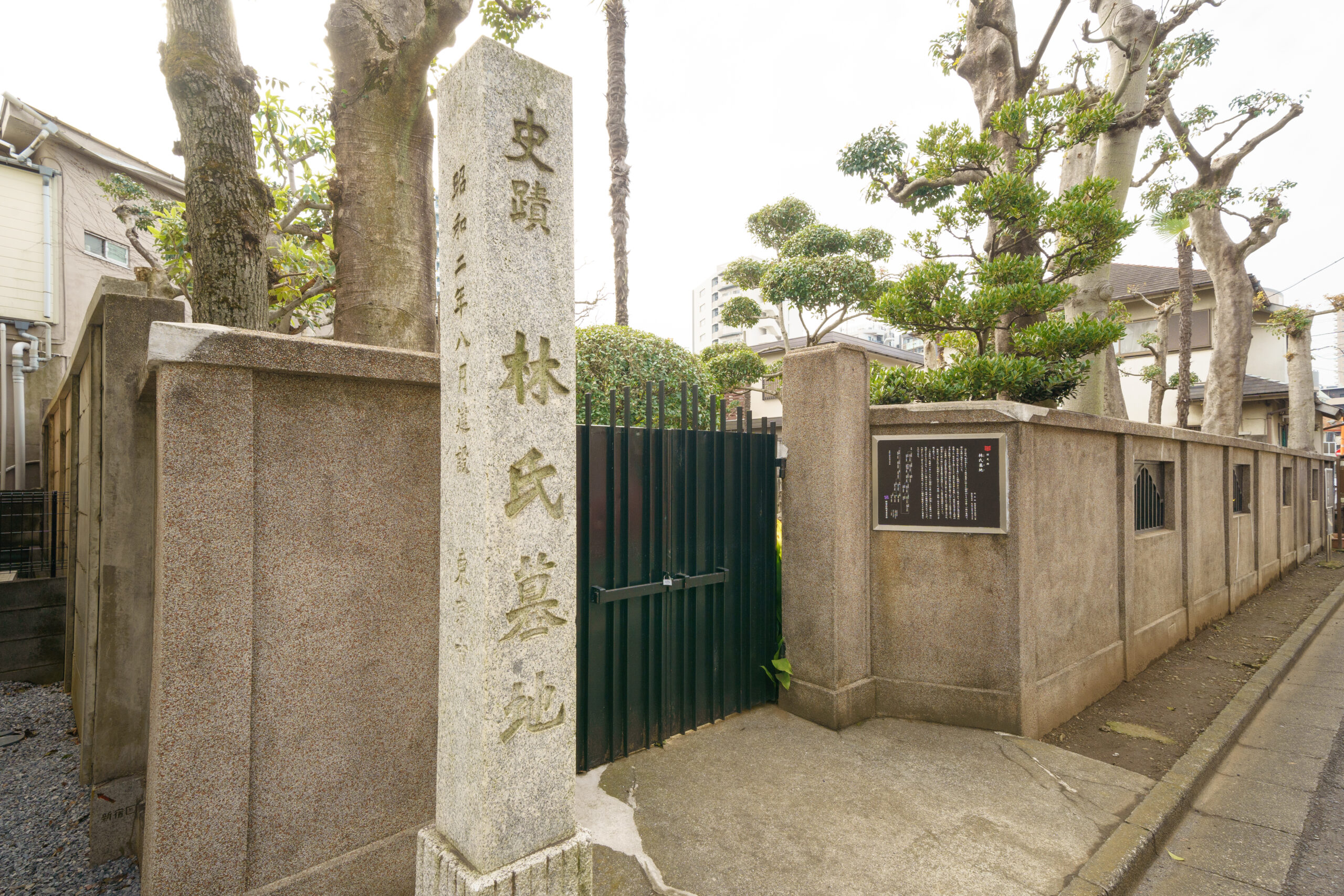
Rather, it was the “Hayashi Clan Cemetery” that has been in this town ever since. It is the grave of Hayashi Razan, a Confucian scholar who served the Tokugawa Shogunate, and his family. Although there are only graves now, it is said that there was originally a mansion here as well.
Razan Hayashi had a villa in Ueno, and his family was buried there, but when he received the estate in 1698, the cemetery was moved to the Ushigome estate.
It is said that the mansion was much larger, but after the Meiji Restoration, it was downsized, and now only the graves remain. This time, I visited the graves on my way to the site, peeking in from outside.
There are 81 gravestones standing today, but only four remain in the Confucian style, from Rin Shusai VIII to Fusai XI,” Mr. Hoshino said. According to Mr. Hoshino, the existing Confucian burial tombs are very valuable. Each of the rectangular graves surrounded by stones and each planted with trees, the graves were a sight unlike any other I had seen.
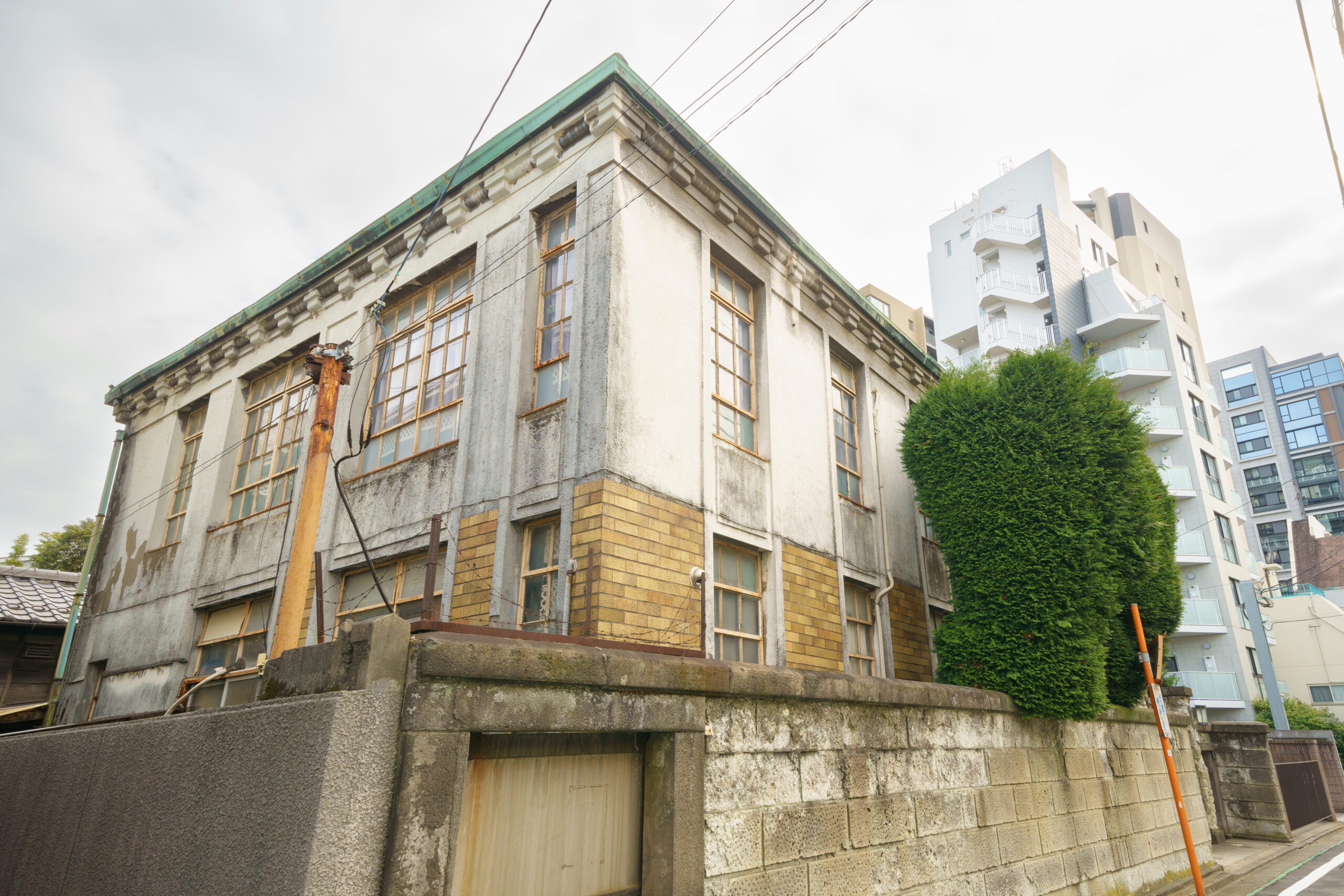
Although from a completely different era, the “main house of the Arai Family Residence,” a registered tangible cultural property, can be seen near the Hayashi Family Cemetery, which also blends easily into the scenery of the town.
The fact that there is a large private cemetery (about 360 square meters, according to my research) in a residential area, and a cool Western-style house from the early Showa period has been well preserved, gives a sense of “town feeling” to the area.
We then walked further with our backpacks and maps in hand through the residential area, which seemed very quiet and comfortable to live in despite being in the heart of the city. There were no stores, theaters, or super-public bathhouses, and only residents, their friends, or delivery people seemed to visit this town. Walking through such an “unknown town” with a map in hand, I was reminded once again of the strangeness and fascination of photographing address signs.
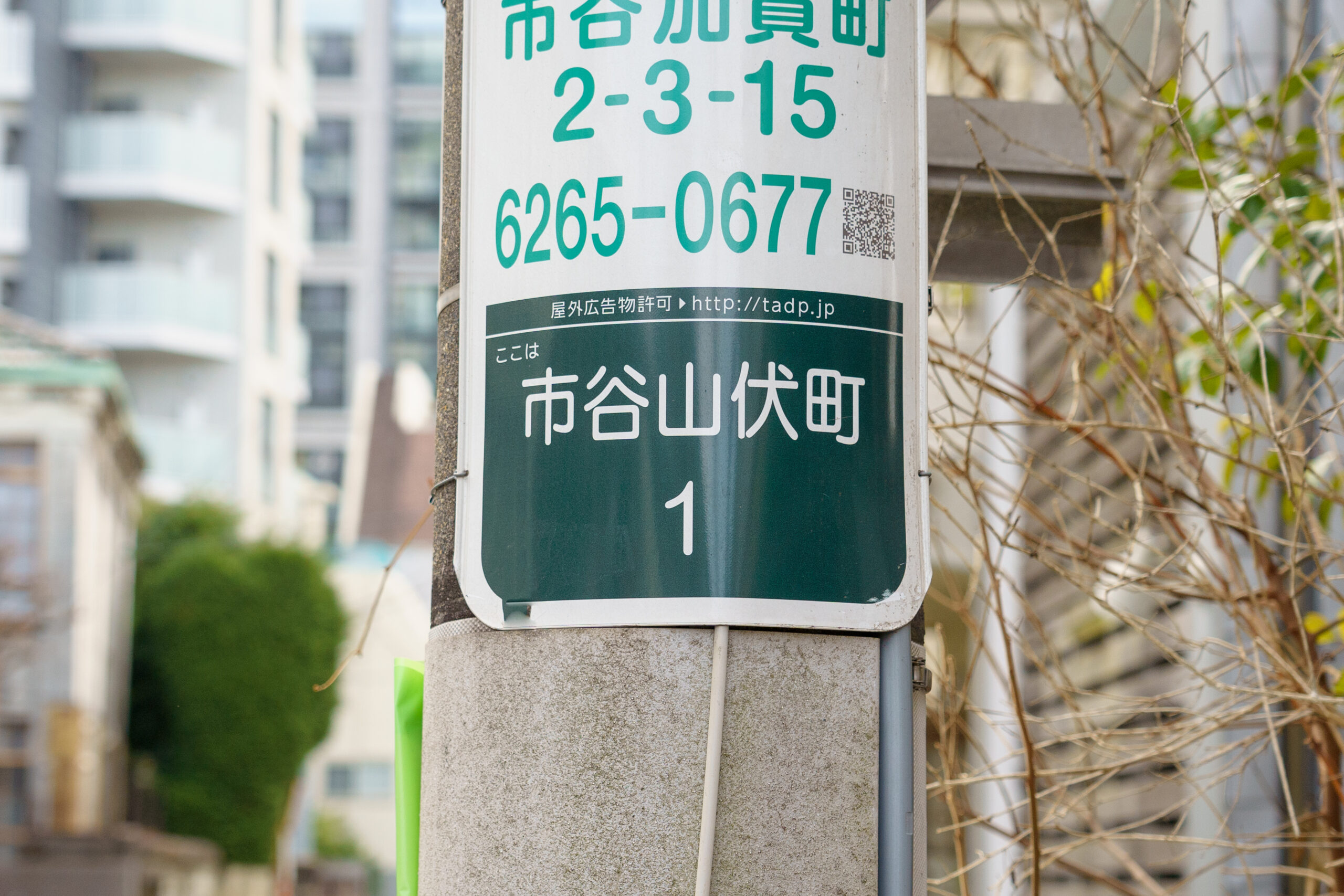
The reason why I am taking pictures is because the name of the place is derived from Edo, after all.
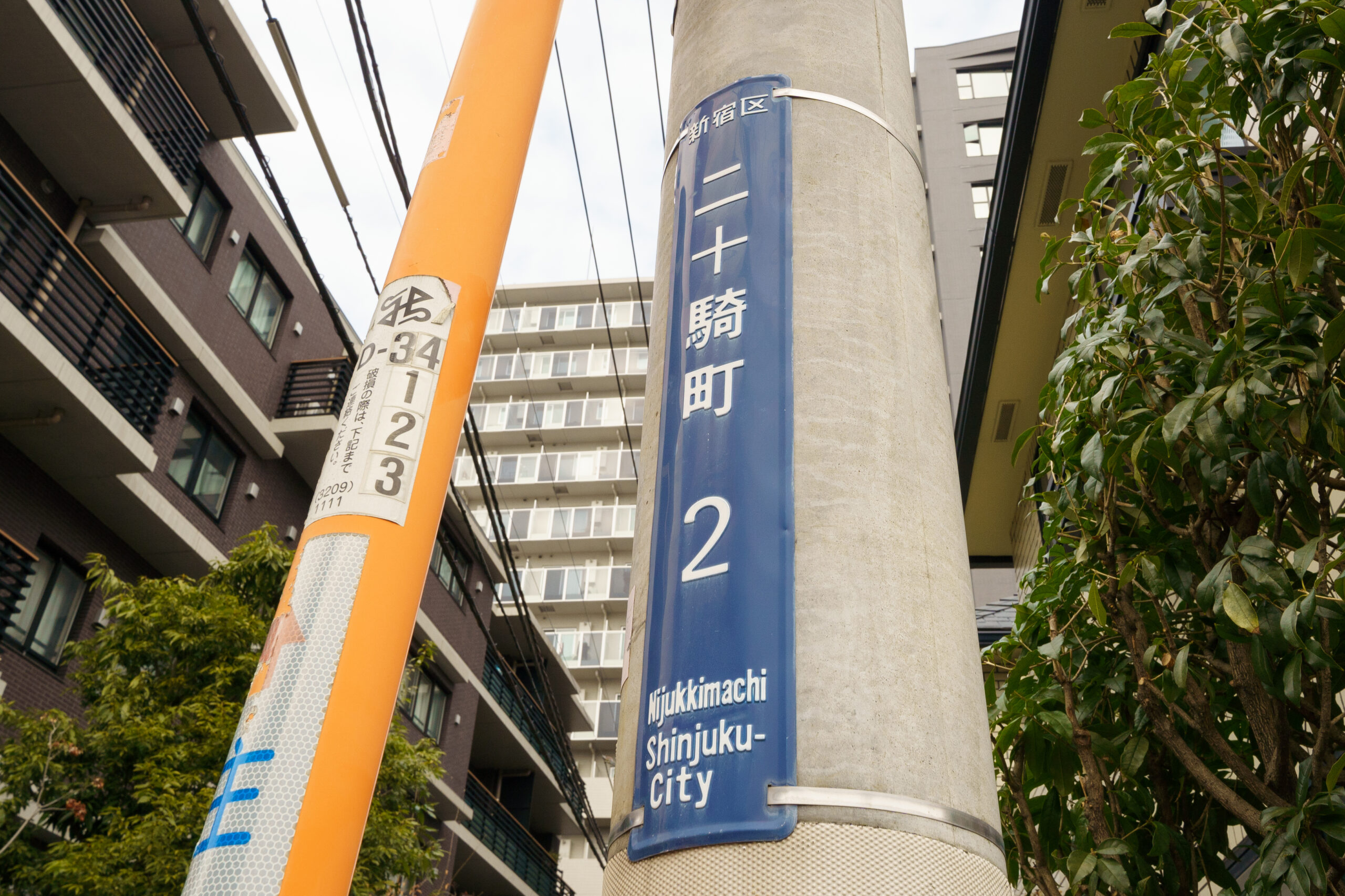
There used to be a mansion of a shogun called “Sente Yoriki” in this area. The name of the place comes from the fact that there were two groups of ten predecessor yoris living on both sides of this street.
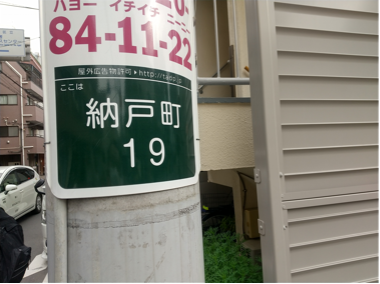
And also, such a telephone pole would not normally be photographed. But the reason why it has become such an imposing subject is because the name of the town, Nando-machi, is also based on a position held in the Edo period.
The word “Nodo” still means a place for storing things, but it is said that the shogunate had an official called “Nodo Yakusha” to begin with.
These officials were in charge of managing the gold, silver, clothing, furnishings, and offerings of the shoguns. Nodo-cho was named after the place where their residence was located. Nodo-cho is also written on old maps as Nodo-cho,” says Hoshino.
Passing through Nodo-cho, one enters an address called “Nakamachi” in Shinjuku Ward. Looking at today’s maps, the divisions are “Kitamachi,” “Nakamachi,” and “Minamimachi” from the top. In fact, this is also the origin of place names in Edo. The area was originally called “Okachigumi,” which literally means “Okachigumi,” a group of residences of low-ranked samurai who performed their duties on foot and not on horseback.
They were called “Okachigumi Minamimachi,” “Okachigumi Nakamachi,” and “Okachigumi Kitamachi. These names still remain today. The Kumiyashiki, like the Negoro-gumi introduced earlier, were tenements surrounded by walls block by block, so even today there are no alleys between these three towns.
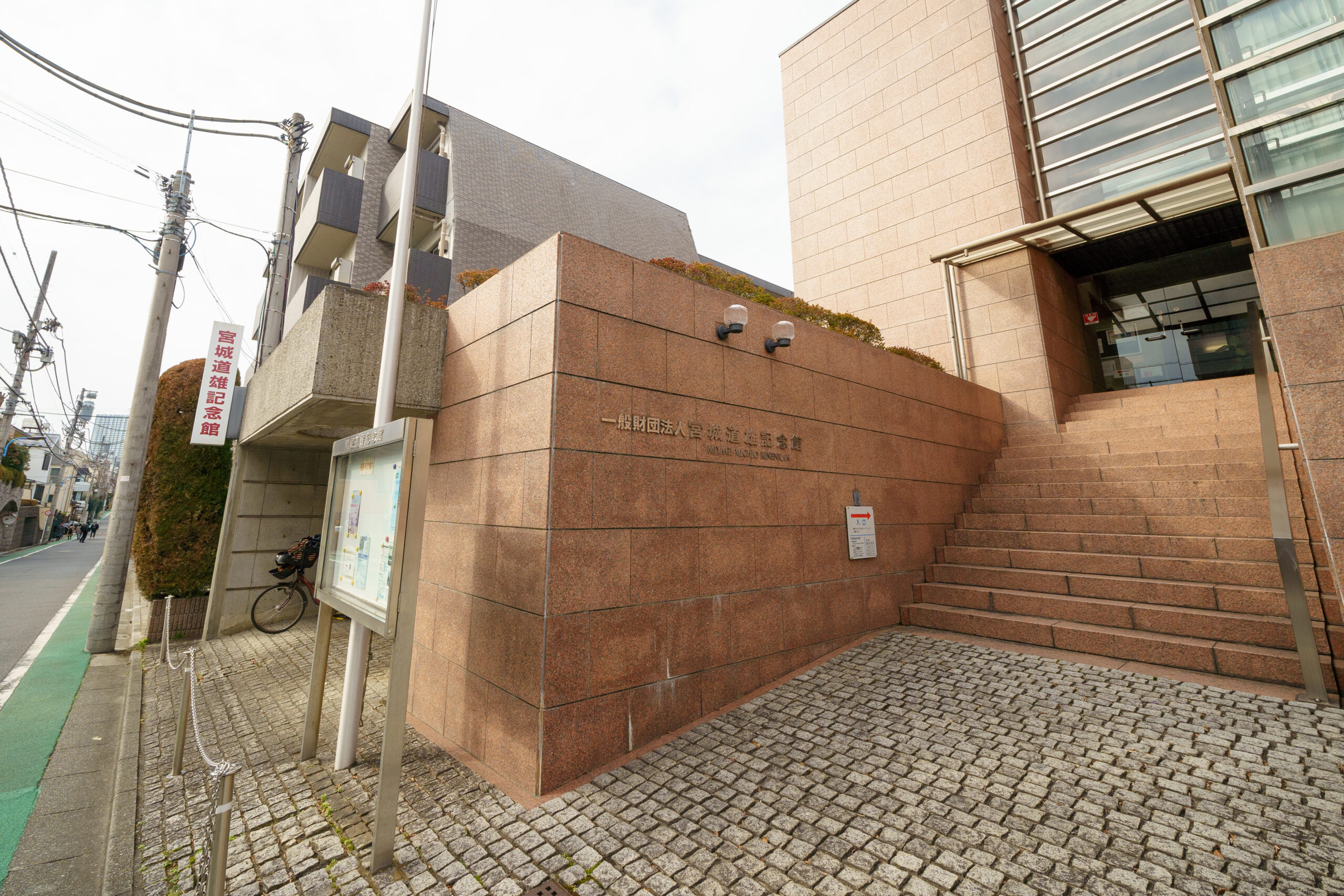
The trip ends at the Michio Miyagi Memorial Museum, known for composing that song that everyone knows.
At first glance, the name of the town may seem plain, but it still retains a surprisingly strong Edo flavor. In such a former “Okachigumi Nakamachi,” the Michio Miyagi Memorial Hall awaits us, completely unrelated to the context of an old map walk.
To be honest, I am ashamed to admit that the name did not instantly ring a bell, but I was struck hard on the knee by an explanatory sign on the eaves of the building.
Michio Miyagi was a koto player and composer active from the Taisho to Showa periods. If the author of the famous “Haru no Umi” (Sea of Spring) …… is hard to convey, try replaying this melody on the koto in your brain.
The shakuhachi joins in.
You can probably guess, can’t you? You can always hear it somewhere around New Year’s.
This is the final home and memorial hall of Soke, who created more than 400 koto pieces, including this one, and established the Miyagi school of koto. I happened to come across it while walking around Shinjuku City with an old map of Edo in my hand. Although the theme was supposed to be “place names remaining from Edo,” I encountered music that was not related at all, but deeply related to Japanese culture. Walking through a town based on an old map, you can not only recall the era of the map, but also encounter unexpected culture.
It was a trip that made me realize that walking is really the way to go.
Interview and text by Atsunori Takeda (Steam)
Photo by Satoshi Okubo
Supported by Walking Trip Ouensha