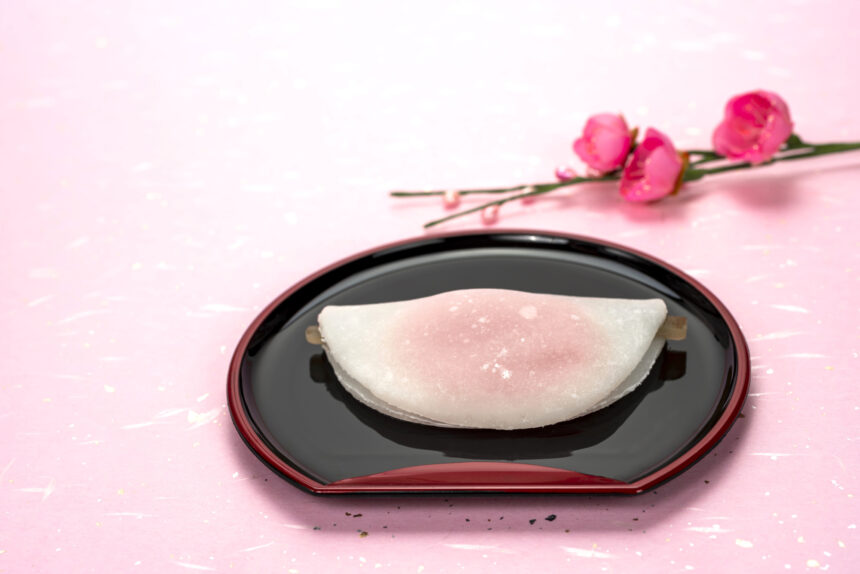
sweet burdock and miso-bean paste covered with a thin layer of mochi

Japanese confectionery

sweet burdock and miso-bean paste covered with a thin layer of mochi(Hanabiramochi)

red bean pastemochi (glutinous rice or other grain, sticky enough to make mochi rice cakes)New Year

A semi-circular mochi cake eaten during the New Year’s holiday. It is made by wrapping a rounded piece of white gyuhi inside a thin, diamond-shaped pink mochi, white miso bean paste, and sweetened burdock root. It is also called hishihanabira mochi. The origin of the name “hishi-hanabiru-mochi” comes from a Heian-period court ceremony called “teething hardening”. In the New Year, there was a custom of eating a sweetfish (salted sweetfish used for New Year’s celebrations) and miso wrapped in rice cake “Zoni” at court to wish for longevity, which later became sweets and eaten at court. The burdock is a substitute for pressed sweetfish, and the diamond shape is a remnant of the shape of New Year’s rice cake. In the Meiji period (1868-1912), Urasenke began to serve it as a confectionery for the first tea ceremony, and it is said to have spread to wagashi shops nationwide.

新着・おすすめ情報

  1. Ginza Suze Jizo Son (Ginza, Tokyo)

  2. Tomioka Hachimangu Shrine

  3. day of the ox in midsummer (during the hottest season)

  4. 三島神社(東京・鶯谷)

  5. Customer information is written down in a notebook and shared with all staff. Ginza Mikawaya’s commitment to hospitality

  6. A Walk in Edo with Old Maps] No.5: Traces of Edo Remain Strong in “Differences in Elevation” and “Town Names” in Ushigome and Ichigaya

  7. Tips for enjoying “summer kimonos” in a cool and fashionable way.

  8. What is “Katahira”? What kind of process is it? Words related to Sake

  9. 【第23回】蕎麦屋店主が考える真の蕎麦「通」の定義

  10. Hotel New Otani, Tokyo, Japan

  11. Manners Related to Tea: How to Make and Serve Delicious Tea, and Manners for Receiving Tea

  12. Ryugenji Temple (Kameido, Tokyo)

  13. Yamamoto Nori Store, a long-established business with 170 years of history. The birthplace of “seasoned laver” talks about its commitment to flavor.

  14. What is Gunkanmaki? Origin of the name, store of origin

  15. Musashi Fuchu Kumano Shrine Tomb (Fuchu, Tokyo)