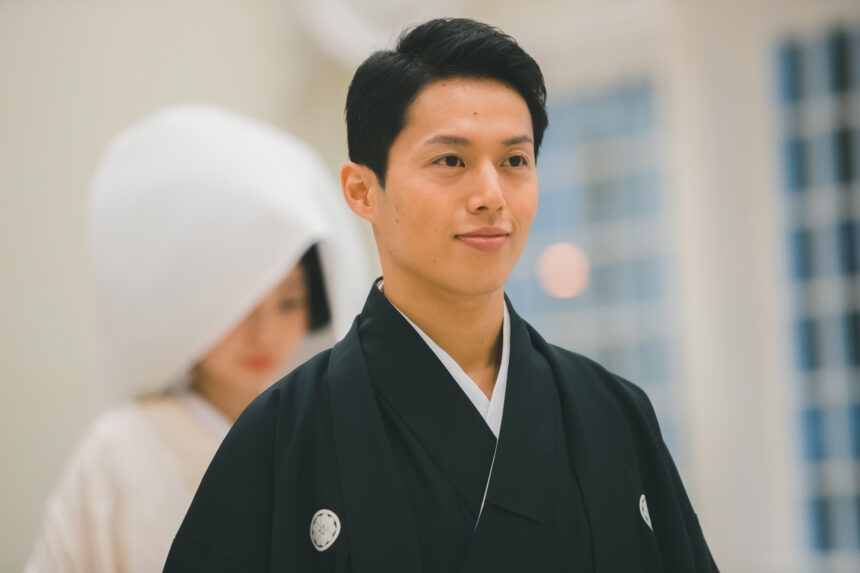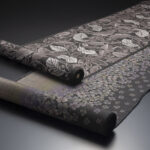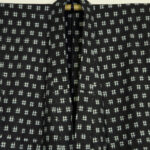
clothing (e.g. kimono) decorated with one’s family crest

Japanese clothing

clothing (e.g. kimono) decorated with one’s family crest(montsuki)

Japanese clothesclothing

A kimono or haori with a family crest (kamon). It is also called monbokuho. There are three types of crests: five, three, and one, with the five crests being the most prestigious. There are several ways to put a crest, such as nuki-mon (a crest dyed in white), sei-mon (a crest bordered with embroidery), and haprint-mon (a crest imprinted with a color). Originally worn by court nobles and warriors, it spread to wealthy merchants and actors during the Edo period (1603-1867), and was generally worn as formal attire from the Meiji period (1868-1912) onward. It sometimes refers to the black haori hakama with five crests worn by men.

新着・おすすめ情報

  1. rolled sushi with rice and other ingredients

  2. Sengakuji Temple

  3. large sword

  4. Responding to customer requests leads to innovation. Leading dairy products company “Nakazawa Dairy Co.

  5. (silk) crepe

  6. Ruins of the Tokugawa family residence of the Kii Wakayama domain (Kioicho, Tokyo)

  7. What does “Namida (sushi)” mean?

  8. Shoin Shrine (Setagaya, Tokyo)

  9. Zuijin” is a male doll that serves as an escort for O’naira-sama [Hina Dolls].

  10. The same manufacturing method since the establishment of the company. Interview with Satoru Nakamura, the 7th generation of Shirokiya Nakamura Denbei Shoten, who weaves Edo brooms using craftsmanship passed down from generation to generation .

  11. one-piece sash

  12. sandbar that projects into the ocean, particularly in a wavy form

  13. Nihonbashi Saruya is the only toothpick specialty store in Japan. Once you use it, you will never go back to ordinary toothpicks.

  14. Smoked Saikyo pickles have evolved into a snack for alcoholic beverages. The insatiable spirit of challenge at the long-established “Tsuta-no-ie

  15. Fukutoku Shrine Meibuki Inari (Nihonbashi, Tokyo)