kasuri

Japanese clothing

kasuri(kasuri)

Japanese clothesclothing

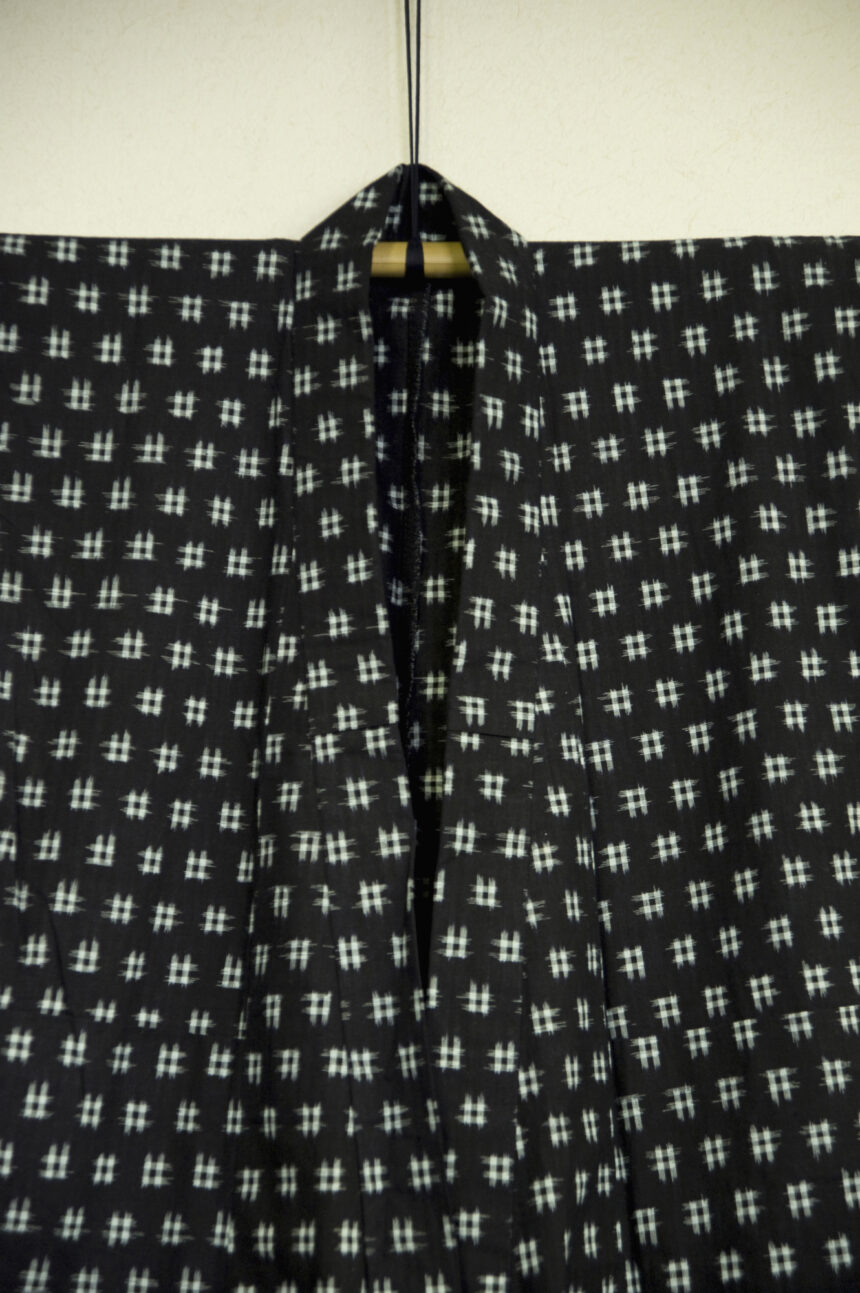
A textile in which the warp or weft threads, or both, are partially dyed and woven together to form a pattern. It has a long history and is believed to have originated in India. In Japan, tatekasuri is one of the treasures of Horyuji Temple. After the Edo period (1603-1868), with the spread of cotton, the use of kasuri spread throughout the country as a common people’s clothing. Patterns include crosses, wells, rice paddies, and arrow-shaped kasuri, and Ryukyu-kasuri has distinctive patterns such as running water and swallows. The colors were mainly navy blue and white. In the beginning, cotton was used for the threads, but silk and hemp were also used to make kasuri. The most well-known cotton varieties are Kurume kasuri and Iyo kasuri; silk varieties include Ryukyu kasuri, Yuki pongee, and Oshima pongee; and linen varieties include Echigo Kamifu (Ojiya shuku) and Noto Kamifu.

新着・おすすめ情報

  1. unlined kimono

  2. eel-liver soup

  3. Former Mikawashima sewage disposal pumping facility (Arakawa, Tokyo)

  4. dried confectionary

  5. method of patterning traditional Japanese clothing (the tops of all of patterns being pointed downwards)

  6. Responding to customer requests leads to innovation. Leading dairy products company “Nakazawa Dairy Co.

  7. paper knot

  8. 【第1回】蕎麦の実の殻を完全に取り除いて作る「江戸蕎麦」

  9. What is “Uguisumochi”? Which season is it?

  10. Former Residence of Soseki Natsume (Cat’s House)

  11. Katori Shrine, Kameido, Tokyo

  12. 【第27回】粋な江戸蕎麦の食べ方とは

  13. Koishikawa Botanical Garden

  14. Interview with Kotaro Ishikawa of Ishikawa Tortoiseshell Works, a company that connects traditional Edo tortoiseshell techniques and further promotes the Edo Tokyo brand .

  15. Where did okame soba originate? Ingredients used are also explained.