

Oshima tsumugi weave

Japanese clothing

Oshima tsumugi weave(Oshimatsumugi)

Japanese clothesclothing

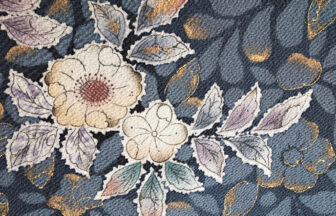
This is a pongee made around Kagoshima City and Amami-Oshima City in Kagoshima Prefecture and Miyakonojo City in Miyazaki Prefecture. Hand-spun silk yarns are dyed in advance with a liquid made by boiling Teichigi (a plant native to Amami Oshima) and mud containing iron. The silk yarns are hand-spun and dyed in advance with mud containing iron and liquid made from boiled Teach tree (a plant native to the Amami Oshima region), and then woven into patterns by hand. The deep, glossy black color is a characteristic feature of the cloth, and the patterns, mainly of natural plants and flowers, have varied with the times and technological innovations. Originally worn by farmers for their own use, it became the top delivery item for the Shimazu clan (present Kagoshima Prefecture) during the Edo period (1603-1868), and since the Meiji period (1868-1912), it has established its brand as a luxury kimono fabric through strict quality control and exhibition at expositions and other events. It is one of the world’s three major textiles (Gobelins in France and Persian carpets in Iran), and was designated as a traditional Japanese craft in 1975.

新着・おすすめ情報

  1. Sekiguchi Bashoan (Waseda, Tokyo)

  2. underskirt (half-slip), worn under kimono

  3. Former Iwasaki Residence

  4. Inokashira Onshi Park

  5. What are the characteristics of “Tailings”? Words related to sake

  6. What does “Oyako” mean? Hina Dolls

  7. Changing flavors and characteristics from generation to generation: the management strategy of the long-established “Tokiwando Thunder Stirrers’ Okoshi Honpo,” founded in 1816.

  8. 【第7回】蕎麦に欠かせない薬味「葱」と「唐辛子」について

  9. Akatsuka Fudo Falls (Takashimadaira, Tokyo)

  10. Manners for visiting shrines and temples: money offering, how to pray, how to get a red seal, etc.

  11. Kasai Shrine (Kanamachi, Tokyo)

  12. Monument to Kunikida Doppo (Mitaka, Tokyo)

  13. What does “Namida (sushi)” mean?

  14. What is Dragon Boat Festival?

  15. Namikaze Shrine (Tsukiji, Tokyo)