

Nihonbashi (bridge)traditional craftdecorative string used to hold a kimono sash in placeplaited cord
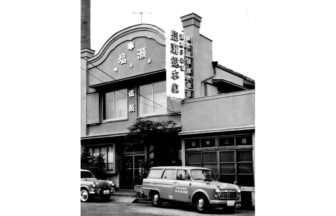
Kumi-himo, which are well-known as obi-jime for kimonos, are the essence of Japanese culture, combining practicality and beauty created by human hands. Ryu Kobo, established in Nihonbashi in 1963, is a long-established company that has been supporting the braided cord culture for more than 130 years by mastering the technique of braided cords as a family business. It is a long-established company that has continued to support the braided cord culture. We interviewed Mr. Ryuta Fukuda, the young third generation of Ryu Kobo, about the words he holds dear, the innovation of braided cords, and his relationship with his father, the second generation.
It’s just a braided cord, but it’s a braided cord. The best of techniques cultivated for more than 130 years
Now, please introduce your restaurant.
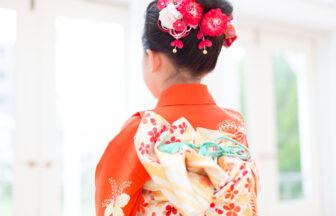
Ryu Koubou has been consistently making braided cords for more than 130 years. Among our products, we usually make “obijime,” which is used to fasten a kimono sash. I think it is not easy for men to understand what an obijime is, but do you usually wear kimonos?
Yes, I am a long-established businessman. I work for a long-established company, so I wear it from time to time.
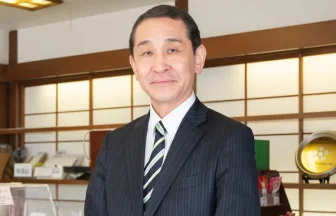
We put our heart and soul into every single strand of our “obijime”. There are various ways to express this, such as the way of braiding, and the shapes of round, flat, and square cords. My father, Takashi Fukuda, is currently the president of the company, and has received various certifications and awards, such as Tokyo Metropolitan Traditional Craftsman, Tokyo Meister, and Traditional Craftsman.
Takashi and Ryuta, we have heard from both of you about each other and felt that you are a very wonderful father and son. You are both well aware of your respective roles and divide them appropriately, aren’t you?
Yes, that’s right. My father is now more like an “uncle of the Nihonbashi town council. …… He told me that the happiest thing for him is when children at the elementary school in town call him “Ah, Mr. Fukuda” (laugh)! Mr. Fukuda” to the children at the elementary school in town (laugh).
You have held the responsible position of chairman in various organizations (laughs).
Tradition and innovation” is a common expression, and it is thanks to my father’s efforts to preserve our core business that we are able to engage in the various activities that we do. For this, I am extremely grateful.
The third generation, young but deeply experienced, who jumped into the world of craftsmanship when he was in middle school.
Could you please introduce yourself, Mr. Fukuda?
My name is Ryuta Fukuda of Ryu Koubou. I am 29 years old (as of July 2022), but I have been a craftsman for 14 to 15 years. I started learning the preparation of braided cords when I was in junior high school, and after entering high school and university, I joined our studio. Some people take over the family business after gaining working experience at other companies, but I entered the world of craftsmanship right after graduating from university.
I see.
I am the second son, and my brother works in a completely different field. My father never told me to take over the family business, but I watched my father and grandfather working as craftsmen and gradually became aware that I would inherit the Ryu Kobo business.
You started working as a craftsman in junior high school. Did you decide very early on that you wanted to take over the family business?
Yes, that’s right. I felt most comfortable with kumi-himo as an output of my ingrained skills and senses.
So you also had a budding will as a creator to put your technical input out there.
For example, there is a long-established obi shop in Kyoto that has expanded its business to interior design. In this way, I feel that I was in a privileged environment where being surrounded by crafts from an early age helped me to develop a sense of beauty.
Make craftsmanship as if picking flowers in the field” and “Edo’s style evolves.” ……The words we cherish support our traditions.
Does Ryu Kobo have some kind of family motto?
It is not so ostentatious, but there is a saying, “Make things as if you were picking flowers in the field. For example, the “obijime” itself is not the main character. We are making braided cords with the spirit that we want our customers to enjoy them as a supporting role that accentuates the entire obi, just like picking flowers one by one in the field and matching their colors.
In fact, there are about 200 other words that are important to you?
There is also one called “Edo’s chic evolves.”
Personally, I was very impressed with those words.
When we speak of “traditional crafts” in today’s society, there is a strong sense that they need to be protected and must be preserved. However, braided cords, for example, have a history of nearly 1,400 years. Traditional crafts with such a long history are the most “cool” products that have always been in step with the cutting edge of the times, and that is why they have always been loved. In this sense, the message “Edo’s Iki evolves with the times,” is expressed in the phrase, “Edo’s Iki evolves with the times.
From the Meiji period, the Showa period, and earlier to the present day of 2025, there has been a “chic” of each time.
Obijime was also a culture that was transmitted by people involved in culture and the performing arts, such as rakugo (comic storytellers) and kabuki actors, as fashion leaders. For example, when the performance changes, the movements change, and the manufacturing process evolves accordingly. This is how innovations have been made.
If you look at the covers of famous kimono magazines, you will often see obijime made by Ryu Kobo. These words must have been spun because you cherish them on a daily basis. How do you come up with such words in your daily life? Your father is a master of kumi-himo, so I assume that your relationship with him is different from that of the general public.
I live at home now, and my father and I don’t talk about work much anymore. We both enjoy playing tennis, and we sometimes talk on the tennis court in a different relationship than that of master and apprentice. I was a tennis coach in college, so contrary to our usual relationship, I once taught my father how to play tennis.
It may come as a surprise to you to learn that a family of traditional craftsmen enjoys playing tennis. It may be difficult for the general public to imagine the personal lives of people involved in traditional crafts, but there are times when they enjoy playing tennis in this way. I am sure that something is born out of such scenes.
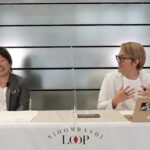
We visited today in short-sleeved sports shirts.
This is the sportiest outfit in the history of the head of the family who appeared in this project (laughs).
Even artisans do not wear kimonos every day, and when they work, they dress appropriately (laughs).
Although Ms. Fukuda is such a person, she also looks good in a kimono. Please search for her on the Internet and take a look at her photos.
Edo’s chic is evolving. With these words in mind, the third generation has been striving to create braided cords. Rather than adhering to the tradition, the third generation has been reflecting the changes of the times in their products. We caught a glimpse of an unexpected aspect of a long-established company that has supported the braided cord culture for more than 130 years.
Continue to Part 2
*If you would like to see this dialogue on video.here (place close to the speaker or where the speaker is)