

Founded in Kyōwa 1 (1801)
Enjoy unpretentious flavors in a space that preserves the Edo period atmosphere.
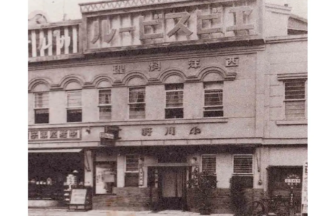
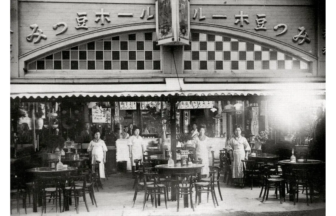
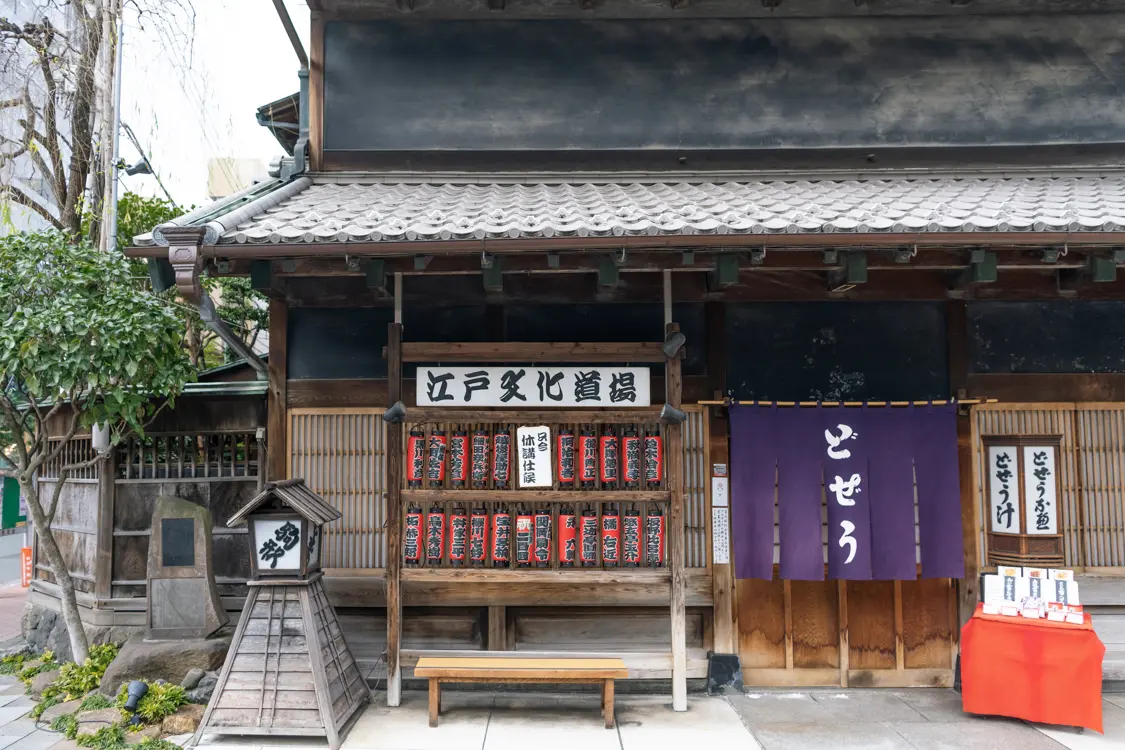
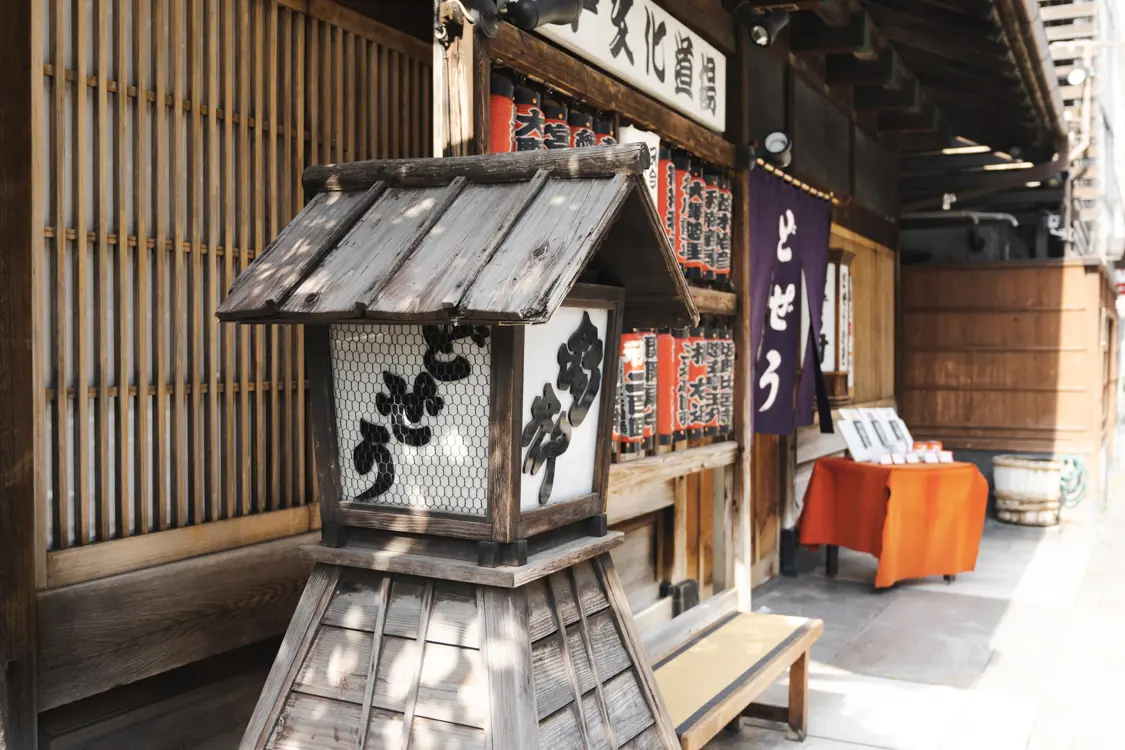
The impressive building along Edo Street, which leads to the Nikkō Highway, is a classic Edo-period merchant house.The willow trees planted beside it also evoke Edo charm—this is Komagata Dozeu.After the war, the building was rebuilt using Edo-period plans, creating a “projecting-beam style” so beautiful you’ll want to take a photo.In the Edo period, daimyo processions passed in front, so the second floor facing the street has no windows to avoid looking down on them.
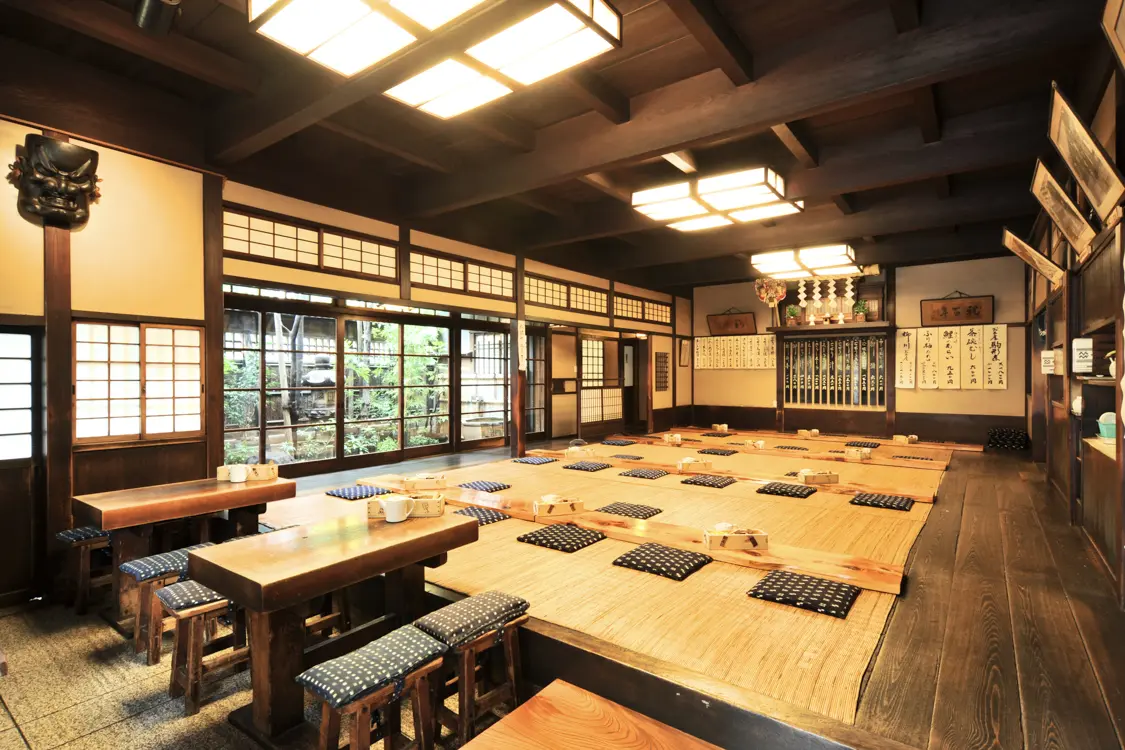
Passing under the noren, you enter a sunken tatami seating area that keeps the Edo atmosphere intact.On reed tatami mats, flat “kanaita” tables are set, where hot dozeu-nabe is served over charcoal.The second floor has a large hall with chairs and private rooms; the basement also has chair seating.Following its original tradition as a place for workers to eat from early morning to dusk, the restaurant still operates all day without a break.“During the Sanja Festival we open at 7 a.m., and you’ll see people in festival attire come in, eat dozeu-soup quickly, and go off to carry the mikoshi,” says the owner, Mr. Watanabe.
Komagata Dozeu is known for its unique method of letting loaches drink plenty of sake—once precious—which softens the flesh.Dozeu-soup is then slowly simmered in miso broth using Chikuma’s Edo sweet miso, and for dozeu-nabe, the loaches are simmered again in warishita broth.
Therefore, selecting good loaches is essential.They visit producers across Japan to purchase high-quality loaches.Good loaches are plump and fatty but never heavy, and so soft you hardly notice the bones.This is why the meat is fluffy and free from any odor.
“We want all employees to master kitchen skills and service so they can always watch the dining floor and serve dishes at their best,” says Mr. Watanabe.
History
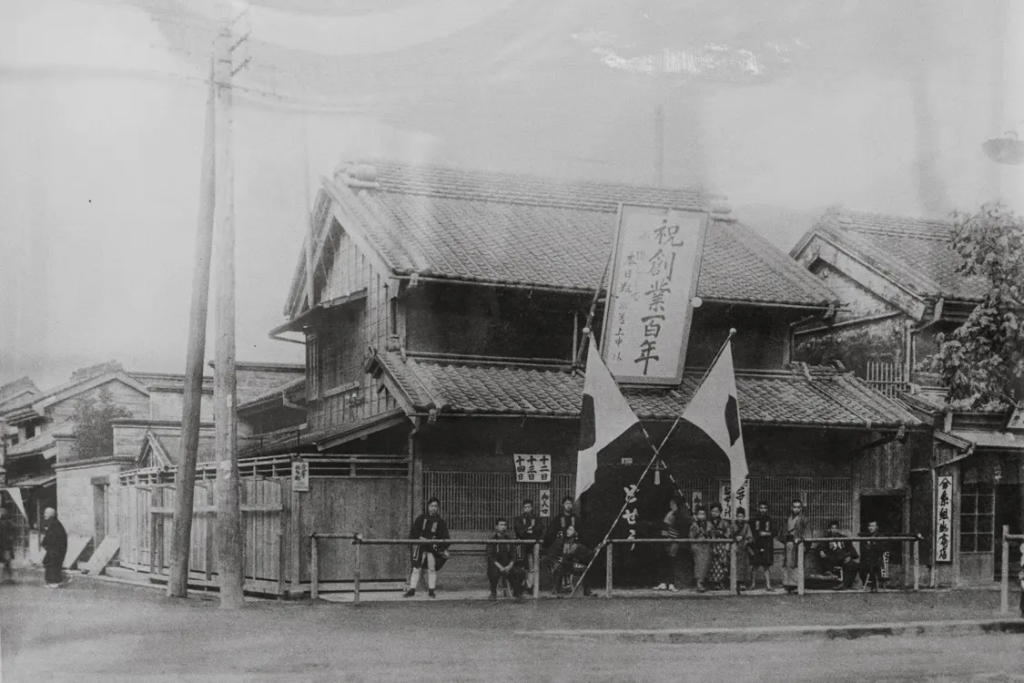
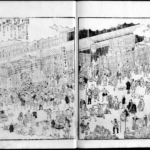
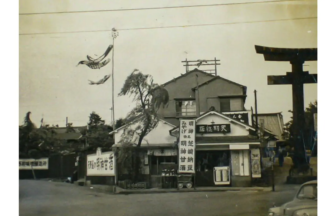
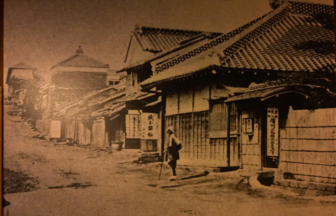
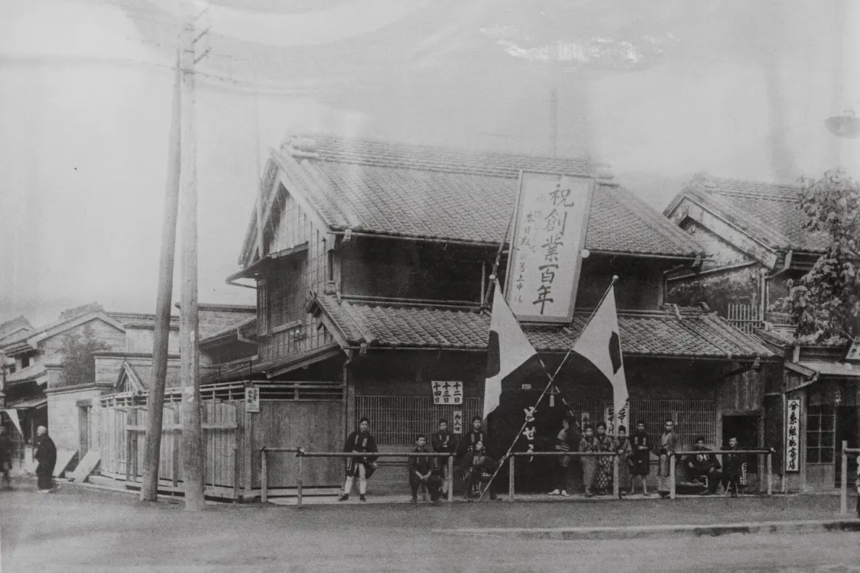
The restaurant was founded in Kyōwa 1 (1801), during the rule of the 11th shogun, Tokugawa Ienari.The first owner, Suke-shichi Echigoya from Musashi Province, opened a rice shop serving dozeu-soup in Asakusa Komagata, where many visitors to Sensō-ji passed.“Dozeu” means loach; it was originally written “dojiyau,” but after a major fire in 1806, the four-character spelling was avoided as unlucky, and “dozeu” became the new form.The shop grew popular, and whale-nabe introduced by the second (or possibly third) Suke-shichi also gained fame.Though the shop was lost in the Great Kantō Earthquake and World War II, it was rebuilt each time; the current building dates from 1964.Since its founding, it has continued to serve flavors beloved by Edo-Tokyo locals.
The guests are the stars—enjoy casually and comfortably.
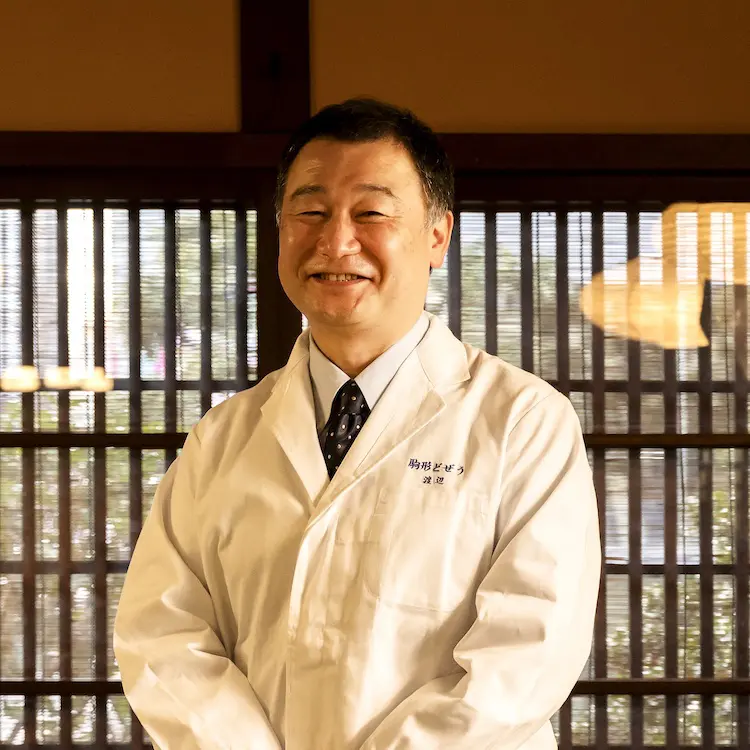
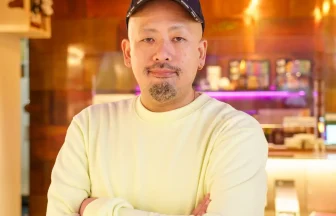
Takashi Watanabe
7th-generation owner of Komagata Dozeu
Our strength is that you can enjoy our food casually without any formal rules.The guests are always the main focus, so we want you to enjoy both the taste and the atmosphere.We recommend pairing dozeu-nabe with “Furisode,” a sake from Fushimi in Kyoto, discovered by the 5th owner during his travels.
This Notable Item
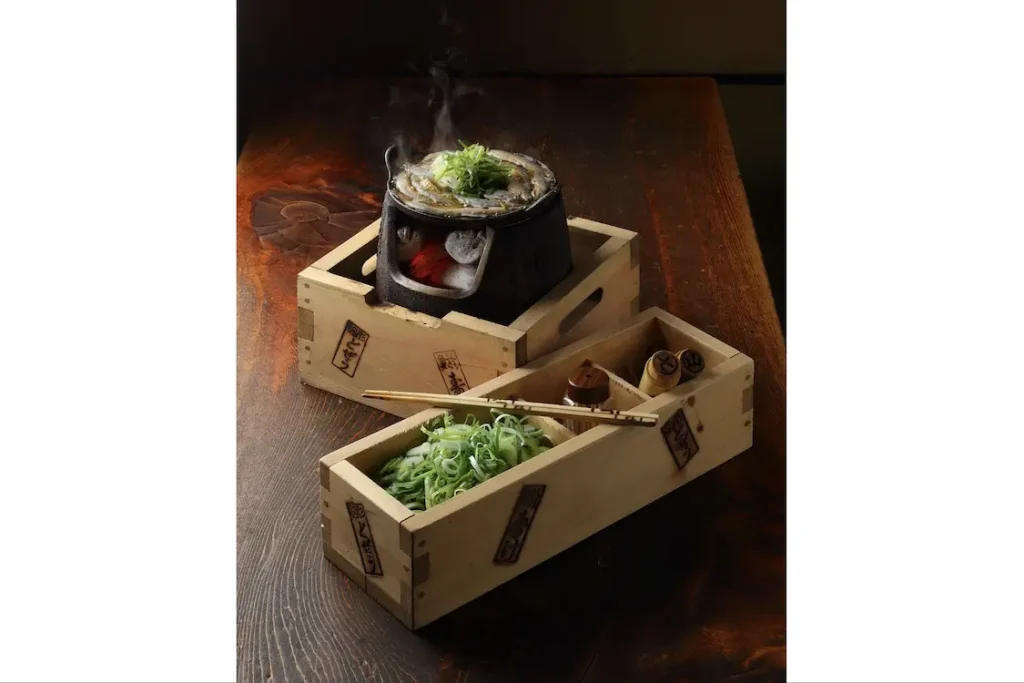
Dozeu-nabe
2,100 yen
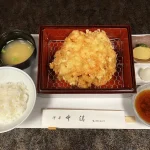
Loaches are softened with sake, simmered in Edo sweet miso, arranged in a shallow iron pan, and cooked over charcoal with added warishita and plenty of green onions. Enjoy with shichimi or sansho.
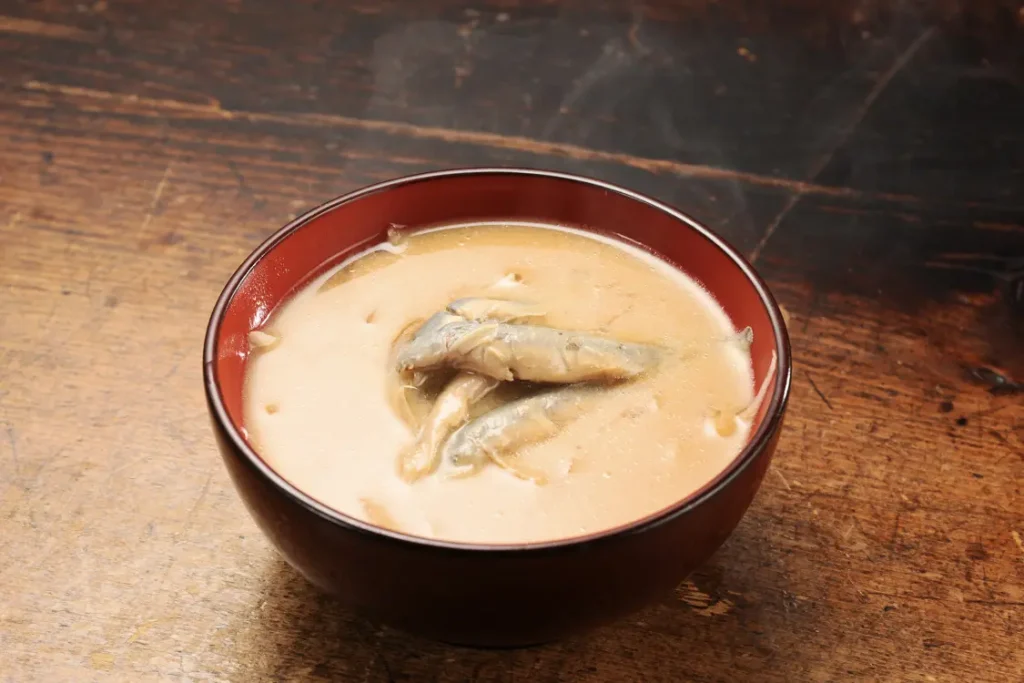
Dozeu-soup
350 yen
The smallest loaches are used, softened with sake, and prepared with Chikuma miso.Edo-style is to enjoy the broth, flavored with shaved burdock, together with white rice.All rice served here is Hitomebore from Tome, Miyagi Prefecture.
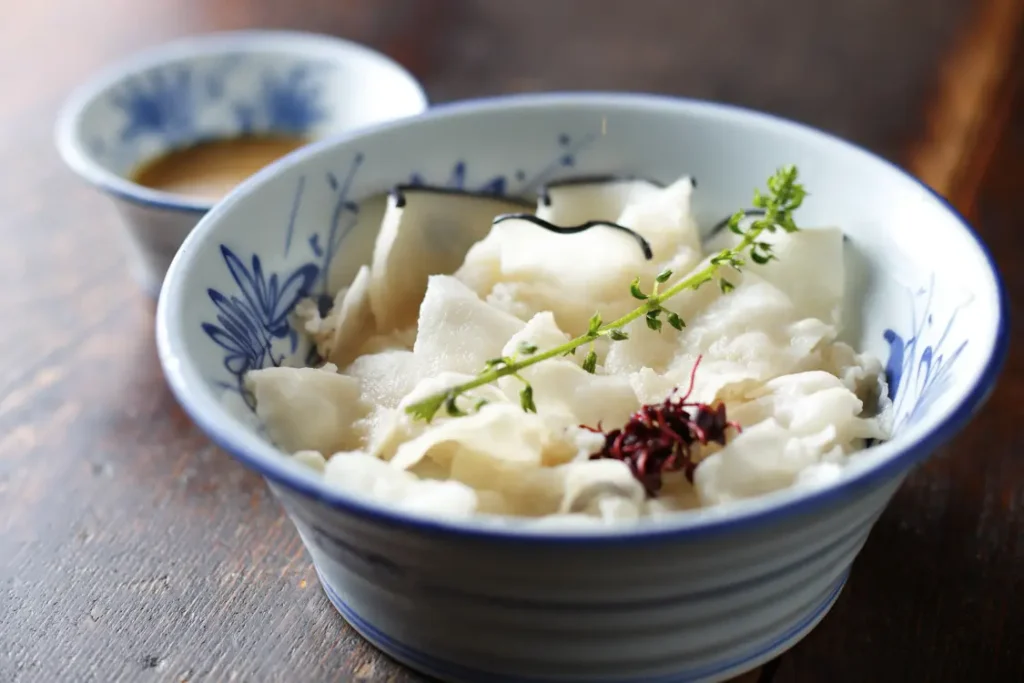
Sarashi-kujira (blanched whale meat)
1,300 yen
Whale dishes, started by the second (or third) owner, came from the idea: “If we serve the smallest fish, loach, why not also serve the largest?”It became a hit, and today the dish is made with minke whale meat.
Spot Overview
| address (e.g. of house) | |
|---|---|
| phone | |
| Business Hours | |
| regular closing day | |
| Payment Method | |
| External Links |