

Asakusa (department store)paper lantern
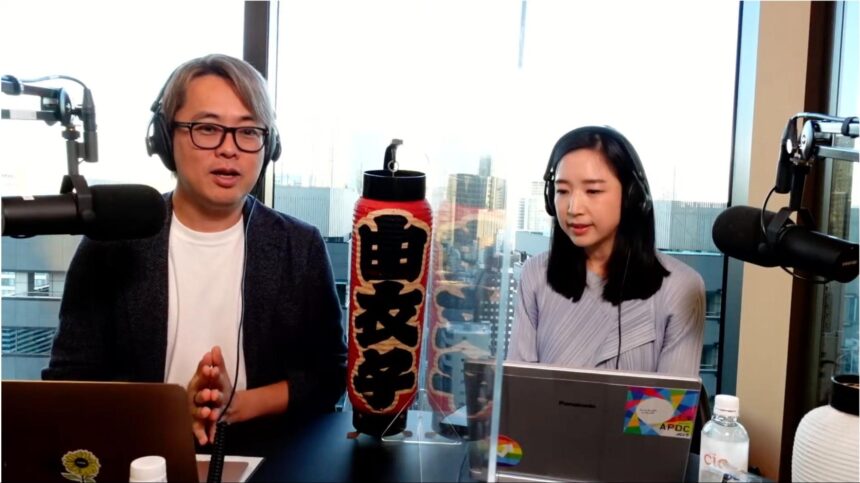
Chochin, traditional Japanese chic lights that brightly illuminate the eaves of festival streets, shrines and temples, stores, and theaters. Since 1854, seven generations of Yoshinoya’s lanterns have been used at the Kabuki-za Theater, Naritasan Shinshoji Temple, Kanda Festival, Mitamatsuri Festival, and many other events. Yoshinoya’s lantern production began as a “samurai’s inside job. We interviewed Ms. Yuiko Yoshino, the daughter of Kiichi Yoshino, the seventh generation Yoshinoya owner, who is in charge of public relations and sales at Yoshinoya, about the company’s history, innovations, and important ideas.
〜first partArticle by ~.
Today you ask, “What are lanterns?” I understand that you have compiled a document on this point. Could you introduce its contents?
Chochin are lights that can be folded and carried. Unlike “andon” (paper lanterns), chochin can be folded up to a small size. In the old days, there were no streetlights, so people would put a candle or other object in their pocket and stick it in the center of the lantern, and when it got dark, they would quickly unfold it and say, “Let’s go home.
So it was a portable tool.
It is really small. Besides, the bow-shaped handle can also be folded, so it can be carried around so small.
I wonder if this can be made with camping goods.
It’s paper, so it burns.
A lantern-type light with a non-flammable mechanism might be a possibility.
If it burns out, you can order it again at …… (smile).
There is a difficult balance (laughs).
It really is. In the old days, lanterns would be hooked around the omikoshi at Yoimiya and filled with candles and carried violently. Then, they would burn down, so they would be ordered again the next day. Now we have candle-shaped electric lights like this.
Ah, the lanterns are shining.These days, it is possible to express the flickering of a candle in this way with LEDs.
In the past, only fluorescent lamps were available, and they lacked elegance, but this kind of innovation is happening in the chochin industry.
Japanese lantern culture is a favorite among Asian people.
We also have lanterns on display at the “agata japan cafe” in Vietnam, which we operate. People are very happy to see the lanterns.
Asian people are fond of lanterns, aren’t they? For example, people in Thailand celebrate the New Year with flying lanterns, and red lanterns are decorated for the Chinese New Year.
Jiufen in Taiwan is also famous.
The paper for the lanterns is made in Gifu, where the Nagara River is located, and in Tochigi, where the Nakagawa River is located, both of which have long been famous for their washi paper. The paper arrives in Edo in this completed form, and we are in charge of inserting letters into the paper.
I see. So Edo’s work begins with putting in the letters?
These characters are different from those used by Kyoto lantern makers. In Kyoto, the characters are simple and elegant, while in Edo, they are like this, with a big bang.
Certainly not.
There are various styles of Edo-moji, including “Kantei-ryu,” which is used at the Kabuki-za Theater, “Yose-moji,” which decorates rakugo performances, and “Kagomoji,” a chubby character that is painted on the inside of a lantern after the surrounding area is painted. The characters used on chochin are somewhere between “Kagomoji” and “Edo-moji.
Edo characters look a bit shuffling, like Mincho type.
This is the “mustache character” often used at sushi restaurants in Tsukiji. The brush strokes that bounce like a mustache are very characteristic. There are also “Sumo characters” used in sumo wrestling and “Kaku characters” used for hanten and obi (obi sash).
I see.
Drawing “crests” is one of Yoshinoya’s jobs. The “homon” (gate), the seat gate of the Kabuki-za Theater, was drawn by hand by craftsmen using a tool shaped like a compass called a bunsuri. Nowadays, with innovations, we can mass-produce and print using stencils, but we still do hand-drawings as well.
The use of new techniques and traditional manual labor is a topic of much discussion in traditional crafts these days.
The black parts at the top and bottom of the chochin are called “jukka”. Once this is tailored and installed, it is finished by sewing linseed oil, which has a water-repellent effect when used outdoors. The problem with oil on Japanese paper is that it tastes good and can be eaten by insects.
I see, so the insects eat them and make holes in them.
But when linseed oil is applied, it becomes brownish and has a nice, tasteful texture. The next slide shows various types of chochin from this ukiyoe. As time went by, chochin also began to play an advertising role, and they were sometimes used to put geisha crests on.
I see. What’s next?
This is a lantern ghost. It is said that the image of the lantern ghost began when the Nakamura-za Theater created a stage set-up called “Chochin-no Hari,” in which Oiwa-san from “Tokaido Yotsuya Ghost Story” jumps out from a lantern. As the lanterns get older and older, they start to tear and look like faces. It would indeed be frightening if such a thing appeared on a street at night when there is only moonlight.
True. And then?
This is an old theater. Yoshinoya’s lanterns are still used at the Kabuki-za and other theaters.
It is used in the Konpira Kabuki and other performances, isn’t it? It has a tasteful atmosphere.
This is how they still use the lanterns at the Kanda Festival and the Mitama Festival. These are the lanterns from Yoimiya that I mentioned earlier. Our portable shrines are allowed to enter Akihabara Station.
Amazing.
This was a bit of a highlight, and I would say that even the geeks were surprised.
Rare.
In July, 10,000 lanterns are hung at the Mitama Festival, which we also do at Yoshinoya. Next is the big lantern at the Kabuki-za Theater.
I have seen this before.
We love the Kabuki-za and are really grateful for the job, because such large lanterns are hard to find.
It’s both a hobby and a practical benefit.
Yes, we actually hung and painted them in our store and brought them in together. We also had a lantern stall at the opening.
Collaborating with animation and popular actors to promote the appeal of lanterns
And now we come to the topic of innovation.
In 2008, the Ministry of Economy, Trade and Industry (METI) organized an event for companies that wanted to collaborate with anime, and since I also love anime, I participated. We made lanterns combining Osamu Tezuka’s Melmo and Atom characters with traditional family crests.
Furthermore, this is Arata Iura’s “The Sky is Dawn, Yellow Coma Exhibition.
Mr. Arata, who has been taking photos for a long time, wanted to combine his photos of Hakone with something unique to Hakone, so he printed a series of works on Odawara lanterns to create a wonderful work of art.
And you also do workshops.
Yes, I held a workshop to lecture on making lanterns for people from overseas and children. The children all ended up making lantern ghosts (laughs).
The result is Yoshinoya’s gallery.
This lantern was also unveiled in 2008 to bring the lanterns closer to the public. This lantern, created by artist Mr. Furuta, depicts the phases of the moon.
Your time has come very quickly. Finally, could you give a message to everyone?
Chochin have a strong image of being for business, but we would like to encourage the general public to use them, too, by decorating them with their own names or giving them as gifts to friends. It might be nice to enjoy the feeling of an izakaya (Japanese-style pub) at home. We hope you will patronize Yoshinoya’s chochin.
Loved around the world, chochin are a truly profound culture. Yoshinoya Shoten’s lanterns have been devised in such a way that they can be enjoyed by the general public. It would be interesting to have one in the family.
*If you would like to see this dialogue on video.here (place close to the speaker or where the speaker is)