
Was Kimuraya Fuhonten’s Anpan Created by “Painful Measures”? 150 years of history of trial and error

Ginza (shopping district in Tokyo)pastries (e.g. croissants)

In the first part, we asked about Kimuraya Sohonten’s attitude toward manufacturing and corporate philosophy, which have been passed down from generation to generation. In the second part, we will hear about the background of the birth of the classic snack “anpan” and what the company is doing to create a new classic.

first partArticle by

The search for a substitute for hops led us to the sake variety

In the more than 150 years since your company’s founding, there have been times when you have hit a wall. How did you overcome these obstacles and innovate?

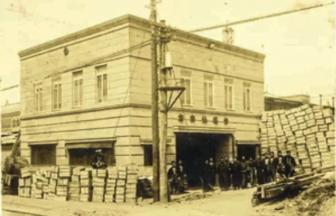
The first and greatest innovation was the creation of anpan. However, even if I had researched the reason for its birth, there are almost no documents left from that time, as they were burned in the Great Kanto Earthquake and the war. Therefore, I considered the background of the birth of anpan in my own way. Although the company was founded in 1869, the bread-eating culture had not taken root in Japan at that time. Even if bread was available, it was difficult to pair with fish, the staple food, and it did not replace rice, the staple food. Therefore, bakeries were not popular with the general public, and in addition, the area around Ginza, where the store was located, was often burned down, and raw materials such as flour and hops must have been hard to come by.

It must have been very difficult for the bakery due to a number of overlapping challenges.

For the hops used in the fermentation process, they looked for an everyday substitute, and then they kneaded sake seed, a raw material for Japanese sake, into the dough. The dough expanded, but it was too hard to be a staple food, so the amount of sugar was increased to make it more like a snack. If it was to be a snack, there was a sake manju that was close, and through trial and error, the idea of putting anko (red bean paste) in it was born. Therefore, anpan is positioned as a product that was a result of groping rather than a strategic decision. In my interpretation, innovation is the result of continuous trial and error on a daily basis.

In another interview, a manager of a well-established company said that innovation is not a means but a result.

I, too, believe that that is what innovation is in a continuum. In the midst of worrying about the need to sell something new, the first and second generations of craftsmen thought, “Anko (red bean paste) would be a good idea,” and what they came up with was anpan–anpan. This is my interpretation that I arrived at by connecting the background of the times and the situation of raw material procurement at that time.

Many people probably have the image that “Kimuraya started at the same time as the birth of anpan. So it is difficult to think back to the hardships and troubles that preceded that time. Then, what are some of the other innovations you have made?

One of the major innovations is the “Mushi Cake,” which was born in 1980. This long-selling product is based on the Chinese “ma la cao” and was created by combining Japanese-style arrangements, puffing techniques, and Western confectionery techniques cultivated in Japan.

So the ma la cao is the model for this product.

Both anpan and mushi cakes are a combination of old techniques and new things that have come in, and we have created something that fits the Japanese culture. It may be something that lies at our core. From there, our philosophy of “creating a fusion of fun and pride” was also born.

We take for granted the products born from such a process, don’t we?

Expanding the base of anko (red bean paste) fans and creating a “classic” with customers

I think that “becoming commonplace” is a very difficult thing to do. New things are always being introduced to the world, but only a small percentage of them survive.

To “become a standard” is a very difficult thing to do, isn’t it?

Yes, it is. In order to become a standard item, it is very important not only to preserve the taste, but also for customers to pass the taste on to their families. A customer once told us, “My mother used to like anpan, so I like it too. I am sure that my children will like it, too.” I felt that we must thank them again for preserving the tradition of the Kimuraya Sohonten flavor. Recently, I have also felt the importance of preserving tradition vertically and preserving taste horizontally in the community, and I believe it is important to create a story for this purpose.

Speaking of horizontal communities, the same is true for everyone in Ginza.

Yes, it is. We can share some things in terms of “emotional experiences in Ginza. As part of this, the Ankomann Innai event was launched based on the concept of anko (red bean paste), sake, and music, in order to make Japanese sweets more accessible and enjoyable. Although non-promotional, the circle of friends gradually grew, and now we have many young people in their 20s and 30s. At these events, we usually have to make reservations to buy products, but at these events we have all-you-can-eat specials (laughs).

It’s a pattern that leads to a war of attrition (laughs).

(Laughs) Some customers enjoy eating monaka while drinking alcohol. When I saw such a scene, I realized that “Anko is not as much shunned as we thought it was. I believe that there is still more we can do to make anko and bread a part of our custom, such as offering new ways to enjoy them.

That, too, could be called a new fusion.

I think there are many innovations that have taken place in Mr. Mitsuhaku’s generation. Do you regularly review your packaging and design?

We regularly review the packaging of our bread. We still need to preserve the traditional taste of the bags and boxes, so we are still learning how to find the right balance.

There is a saying, “Era of change is not easy to achieve,” but it is difficult to find the right balance to achieve it.

Next, let me ask you a question. I know that Kimuraya has many fans, but do you feel that your clientele is changing?

If you look at the age group, the main customers 20 years ago and 40 years ago were people in their 60s and 70s. I wondered if they would continue to age in the same way, but the generations have been passed down to the next generation.

You also have many younger customers in your store, don’t you?

Yes, we do. In Ginza, our store is probably the only place where you can buy something for 170 or 180 yen when you come here as a tourist (laughs). (Laughs) So we also have young customers. I also feel that the number of young people who eat bread and anko (sweet bean paste) has been increasing recently.

By the way, I wanted to ask you about jam buns today.

Jam buns were also born out of a desperate attempt. To put it simply, we were dealing with jam sandwich cookies in a different company, and we thought we had some leftover jam from that (laughs). (Laughs.) Of course, I think we also had the idea that jam would be tasty on bread.

I had no idea that jam buns, which I loved as a child, were born from such a background (laughs). After all, innovation is the result of groping, isn’t it? Listening to you today, I was reminded of how difficult it is to become a standard item. Now, could you tell us what you are currently working on in order to create a standard for the future?

We are developing sub-brands such as Kimura Stand, which is separate from the Kimuraya name, because we want the younger generation to be able to enjoy sweet buns as well. Here, we propose new sweet buns with an unprecedented approach: cute, fun to look at, and good for photos on social networking sites. Whether at a supermarket near you or in Ginza when you visit for sightseeing, we want our customers to enjoy the new and cute Kimuraya while creating various points of contact with our customers. This is what we are currently based on. By repeating this process, we hope to connect tastes across generations and create a standard.

The fact that “anpan” is now taken for granted is due to the fact that we, the customers, also had a role to play in connecting the flavors. That is why Kimuraya Sohonten is committed to providing delicious and enjoyable snacks, including anko (red bean paste), and to the experience of the craftsmen and the history of making the products that make these things possible. We feel a sense of pride when we think that we, too, are participating in the creation of a “classic” along with the repeated trial and error of a long-established shop. We are sure that the snacks we will enjoy from now on will taste deeper and tastier than ever before.

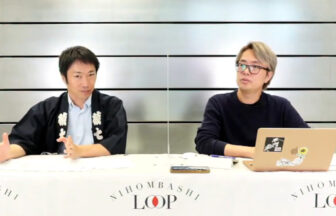
If you would like to watch the video of this conversation, please click here.here (place close to the speaker or where the speaker is)

新着・おすすめ情報

  1. piece placed to block opponent’s check (shogi)

  2. Long-established souvenirs to buy in Asakusa! 6 recommendations including famous Japanese sweets [Food].

  3. What does a “dresser” do? Craftsmen who make dolls series

  4. man’s formal divided skirt

  5. Yagiri no Ferry (Shibamata ferry terminal)

  6. Nakatani Seika Factory Direct Sales Shop

  7. Yoshitoku Asakusabashi Honten

  8. Amaterasu Oomikami

  9. 【第19回】家庭でも美味しく乾麺の蕎麦を茹でる方法

  10. Meiji Shrine

  11. To make swords a part of our daily lives. The future of swords is the goal of Nihon Katana, a long-established sword specialty store.

  12. oldest surviving traditional style of sake making

  13. Morihan Nori Store (Buy / Omori/Kamata area) page is now open.

  14. Eitaro Sohonmasho’s “5 secrets” video is now available.

  15. Tsukiji Catholic Church (Tsukiji, Tokyo)