
man’s formal divided skirt

Japanese clothing

man’s formal divided skirt(hakama)

Japanese clothesclothing

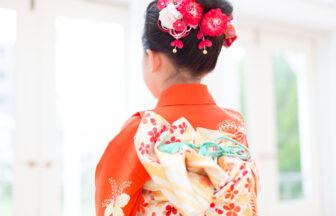
A type of kimono that covers the lower half of the body. It is similar to Western-style trousers, and is worn by putting both legs through the gusset, which is divided by a partition. From the Heian to the Muromachi period (1392-1573), it was used as a costume for court ladies (court ladies who served the imperial family or nobility), and in the Edo period (1603-1868), it became the formal dress of feudal lords and warriors. In the Meiji period (1868-1912), gakanai hakama (also known as gakanai hakama, a long skirt-like garment) were worn as school uniforms for girls, which were easier to wear. In the Meiji era (1868-1912), the gakanai hakama (also known as gakanai hakama, or long skirt-like hakama) came to be worn by girls as school uniform. Today, the gakayuri hakama is an essential part of formal wear for men. In recent years, an increasing number of female students are wearing gaketoshi hakama as formal attire for graduation ceremonies. Other traditional hakama are also used for kendo and kyudo wear, costumes for Noh and shimai dance, and for Shinto priests’ attire.

新着・おすすめ情報

  1. Lengshan (dynasty of China; 386-589 CE)

  2. Mori Garden (Roppongi, Tokyo)

  3. Kamiya Bar, the oldest bar in Japan, well-known for its Denki Bran, and its innovations through the ages.

  4. Zoshigaya Old Mission Building (Zoshigaya, Tokyo)

  5. 【第14回】江戸蕎麦の流儀〜道具立て編〜

  6. sweet red-bean soup

  7. Railroad starting point 0 leagues sign (Shinbashi, Tokyo)

  8. Tokyo Metropolitan Teien Art Museum

  9. The 2nd “Sake Samurai”s Tour of Tokyo’s Long-established Sake Breweries with Yuki Aoi

  10. metal collar mounted between a sword blade and the hand guard

  11. Atago Shrine

  12. Tokyo Literature Walk] No. 2: From Hongo to Sendagi via Slopes and Alleys, Touring the Former Residences of Modern Literary Greats

  13. polearm

  14. What is “Gyoku (sushi)”?

  15. battledore (early form of badminton racket)