

Ginza (shopping district in Tokyo)pastries (e.g. croissants)
Anpan” is a very familiar food for us. Founded in 1869, Kimuraya Sohonten is the creator of anpan, a bakery that has continued to support the history of sweet buns in Japan. The company has continued to create numerous innovations such as sakura anpan, steamed cakes, and jam buns. Mr. Mitsuhaku Kimura, the seventh generation of the family, tells us about the philosophy and trial-and-error process that underlies the more than 150 years of history of this long-established bakery.
What is the family motto of Kimuraya Sohonpo with over 150 years of history? The thoughts behind the two headstones
Today we will talk to Mr. Mitsuhaku Kimura, the 7th president of Kimuraya Sohonten.
Kimuraya Fuhonten has an image of familiarity and a taste that is always nearby. Please introduce yourself and Kimuraya Fuso-Honten once again.
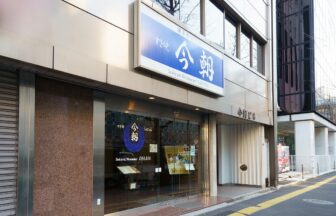
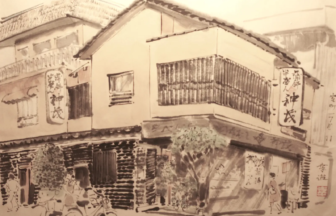
My name is Mitsuhaku Kimura of Kimuraya Sohonten. I was born in July 1978. The company, Kimuraya Sohonten, was founded in 1869 in Shimbashi’s Shiba-Nikage-cho district, which is now the Karasumori-guchi area, and moved to Ginza a few years later.
I am very familiar with the store. What path did you follow as a bakery?
We invented anpan in 1874 and had the opportunity to present it to the Emperor Meiji on April 4, 1875. Sakura Anpan was born at that time, and it is still one of our company’s representative products. Our main store is located in Ginza 4-chome. We are also involved in the bagged bread business, wholesaling bread to supermarkets and convenience stores.
Almost no one in Japan would be unfamiliar with anpan, and sakura anpan is accented with the salty flavor of cherry blossom leaves. All of these products are pervasive in daily life, aren’t they? I believe that there must have been numerous innovations to create such things. What is the family motto of Kimuraya Sohonten?
There is no such thing as a written family motto. But I, too, wondered what such a family motto might be. Then I remembered that my parents took me to visit their graves every month. Actually, there are two gravestones at our family temple. One is the grave where the Kimura family rests, and the other is the gravestone where the thoughts of our seniors – not only the Kimura family, but also those who worked at the Kimuraya head store, as well as all the other Kimuraya stores throughout Japan that have divided their business.
That’s great.
I thought again about the reason for the two headstones. What came to mind was to take pride in the name Kimuraya, and at the same time, to always maintain respect for the seniors who have been involved in the company, and to carefully protect the wishes of the seniors. I felt that kind of belief. Although not formalized, I believe that this is something close to a family motto.
I see that you place great importance on taking care of people and cherishing all those who have contributed to the company in the past. Next, could you tell us how you yourself inherited the Kimuraya Honten?
I joined Kimuraya Sohonten directly after graduating from university. Since I was a university student, I had been involved in the manufacturing process and had a few part-time jobs, so in that sense, I did not jump into an unknown world, and I joined the company easily.
What was your childhood environment like?
Since I was a small child, I lived with my grandmother in a three-family house and often ate meals with her. Growing up, I was rarely told that I had to take over the company, and I had no intention of taking over the company. However, during a summer vacation while I was in college, my father told me to go work part-time if I was free, and I went to the company for the first time. While I was there, I was taken care of by the production workers, and I gradually became aware of the idea of taking over the company.
I have heard from the owners of long-established businesses in the past, and they do not seem to say “take over” or anything like that. I feel that many of them naturally decide to take over.
That may be so. I rarely tell my own children to take over the business, and I don’t think it is something I should force them to do. I think of myself as the seventh runner who has been entrusted with the baton of “Kimuraya” by my ancestors. I have a mission to polish that baton and pass it on to the eighth runner, but whether that runner is my child or not is another matter. I need to think about who would be a good runner for the company.
So you are calmly thinking there, but also looking at the balance. Now, when there is a food product that is all too familiar to Kimura-san, such as anpan, we sometimes hear episodes where he is surprised at the difference in taste between his company’s product and another company’s product. How about you, Mr. Kimura?
I have been eating anpan since I was a child. So has bread. But my parents are rice people.
That is surprising (laughs).
We had three meals a day, breakfast, lunch, and dinner, and we ate a lot of rice. If you went to the office, there was always bread to sample, so I think my father did the same. After I became a working person and bread became my profession, it became my hobby to visit the trendy bakeries and compare them with other bakeries. Even now, when I hear that a new bakery has opened, I go there on weekends to buy some.
That sounds very nerve-wracking for the bakery on the other end (laughs). Now let me ask you about when you actually started working in the form of a part-time job. Was there anything that changed or that you felt anew?
We go to the baking site where the experience and sensibility of artisans come to life. Knowing the aspirations of our predecessors, we apply them to our management.
First of all, I was surprised by the process. I was surprised at the process, because I had thought that products were made more industrially. In actual production, however, human hands are really working on the manufacturing site, and the craftsmen are orally passing on their ideas on how to improve the taste according to the temperature and humidity of the day. I was still intimidated by this behind-the-scenes process.
That is amazing. How did you become familiar with the manufacturing process while conversing with craftspeople in this way?
When I entered training on the production line, the master craftsman asked me if I wanted to go out for a drink. Then the topic of conversation turned to complaining about how bad your father was. And somehow I ended up apologizing to him (laughs).
That’s very interesting (laughs). (Laughs.) That’s partly because we can learn about your father’s background from a familiar point of view. What were some of his difficulties and what were some of his greatest achievements?
Yes, I did. I was able to learn about what my father had done for the company and his attitude toward it. In doing so, I sometimes felt that my father at home and my father working at the company had completely different ways of thinking and moving.
Do you have any memorable episodes or words about your father?
My father had been in production for a long time and was very stoic about manufacturing. One day, while I was wiping the griddle for baking bread, my father came over to check the griddle. He said, “The oil is not well coated,” or “The oil is a little oxidized, so we have to redo the whole process. The craftsmen turned pale and had to redo the work. In manufacturing, my father always spoke from the perspective of production, valuing the sensations he learned with his body.
Did Mr. Kimura learn anything directly from your father?
I was 28 years old when I became a representative. I had been training at AIB (American Institute of Baking) in the U.S. for about a year and a half from the age of 22 when I entered the workforce, so I actually worked with my father for a little over three years. Looking back now, I wish I had heard a little more about him. Now, I am re-listening to what my father and grandfather said to craftsmen and other people in the company, and what they said was important to them, and I am using it to judge my own management.
What were the words used and spoken often by your predecessors?
We have always had a corporate motto, “Always be happy,” and we have always valued the idea that “the company as a whole will not improve unless the happiness of our customers, partners, employees, the company, and ourselves is achieved. I have always cherished the idea that “the entire company will not be good unless these five things are happy. But I did not understand the reason why these words were formed. I put down the words I thought to re-create the philosophy again, but I had doubts as to whether this was something that anyone in the company would put their feelings into. So, I decided to spin from the words that my seniors had cherished in the field, which overlaps with the previous story. That is, “Connecting emotions with food and expanding the circle of happiness. In order to embody the thoughts of our seniors within the company, we have incorporated the phrase, “Create the best products with care and speed,” into our philosophy. We have also reviewed our evaluation system and other systems based on this philosophy.
I am also involved in management, and I find the words you just mentioned most difficult and very thought-provoking.
It must be really hard to “make the best of it carefully and quickly.”
That’s right. I believe that the words “make it quickly and carefully” released by the master of production at the site are very important for the junior staff.
There are many companies that do not have a philosophy, but Kimuraya General Store has created one. Furthermore, it is truly amazing that you have incorporated your philosophy into your personnel system.
Because it is a word created by everyone in the company, we want it to be firmly ingrained in our daily lives. We thought that by evaluating actions based on the philosophy and returning them with incentives, they would become ingrained in the company. The connection between our philosophy and evaluation was a key point that we were particular about.
In the first part, we asked about the thoughts that have been passed down from generation to generation at Kimuraya Sohonten and the importance of a monozukuri perspective. In the second part, we will hear about the innovations that began with the birth of anpan, as well as current initiatives and prospects.
latter part(temporal or logical sense) follow …
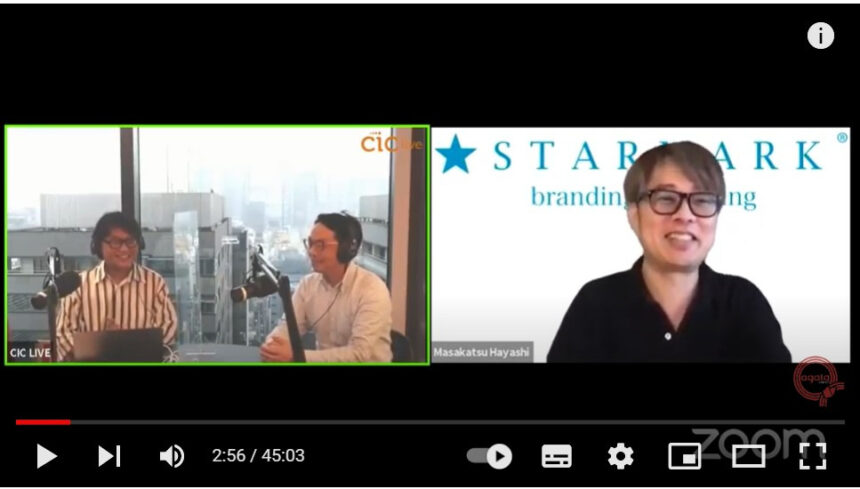
*If you would like to see this dialogue on video.here (place close to the speaker or where the speaker is)