Asakusa (department store)wrestler of Hokkaidan ancestrybeef sinew stewed in miso and mirinJapanese-style meal
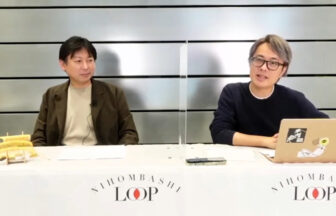
Komagata Dozeu was established in 1801, the first year of the Kyowa Era. The “dozeyu nabe” served at the restaurant has been popular among the general public since the Edo period (1603-1867), and its flavor can be felt for more than 200 years. We interviewed Mr. Sukeshichi Echigoya VI about how such dozeyu nabe is made.
~first partArticle by ~.
Even though times may change, we will never forget to preserve “taste.
So here, please tell us about July 1-3.
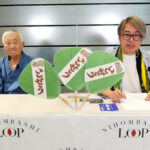
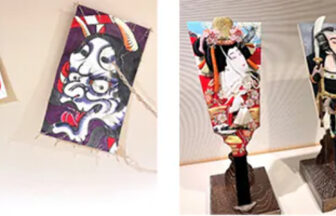
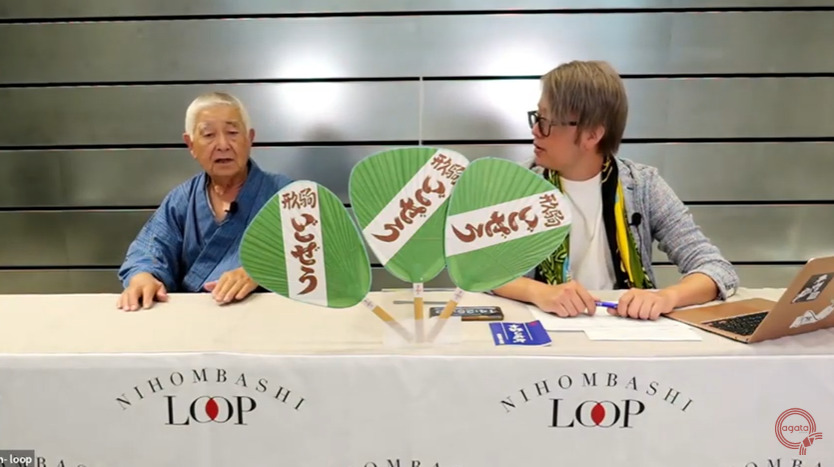
Around July 1 is the season when loach is at its best. In the old days, when there were no air conditioners, everyone sweated and ate loach. At that time, instead of a mid-year gift, a fan is given as a thank-you gift. In the old days it was only for one day, but now we give out fans to all customers for three days, from July 1 to 3.
I’m told that you can get a pretty solid, original Komagata Doze-san fan, so everyone is encouraged to get one. This is really nice. I hope you will come to Asakusa to enjoy the loach. And there is one more picture.
That is our main selling point. This is “doze soup. When we started our business, we were a one-size-fits-all rice restaurant. All we sold was “doze soup,” rice, and sake. It was fast, cheap, and tasty. There was a market in Nihonbashi, and in front of our house on Edo Street, horse-drawn wagons and ox-drawn wagons were used by the greengrocers and greengrocers who wholesale to the market. So early in the morning, around 5:00 a.m., we started serving “doze soup” and rice. Eventually, the third generation of the family decided to offer not only “doze-jiru” but also “doze-nabe” as well.
I see.
From the first generation to the third generation, the restaurant was almost exclusively “doze soup” and rice. The third generation was a very clever man, so he came up with many variations of dishes using doze soup.
I also like “Doze-jiru” soup. I always eat it when I visit your restaurant.
This is Edo ama, an original miso made by Chikuma Miso in Koto-ku, Tokyo, and is a slightly sweet miso. Most miso in Edo was made by people from Shinshu, so it is usually spicy miso, but this miso was made in Matsusaka, Mie Prefecture. This miso was made in Matsusaka, Mie Prefecture. Because it is Kansai-style there, it is a little sweeter. We have been using this miso since the first generation because we thought it would be a good match for Dojo. That is why Chikuma Miso is our oldest business partner.
So you have been in business with us for 200 years. Chikuma Miso is also a long-established company, and in terms of taste, how should I put it, if you imagine corn soup in Western cuisine.
Yes, it is. It’s very thick, isn’t it? Even those who don’t like thickening can eat it with the loach without much resistance. Also, there is burdock root in it. It is called “sagaki gobo” (burdock root), and our craftsmen shave all of it. It is a perfect dish to eat with rice, with the condiments and green onions I mentioned earlier, and a little bit of shichiriki (seven colors of soy sauce). This is another “cheap and tasty” specialty from the Edo period.
Now, could you tell us about Komagata Dosei’s idea of a brand?
The first generation opened this restaurant in the first year of the Kyouwa Era (the first year of the Kyouwa Era), and at that time, loach was really abundant in the rice paddies. Our founder came from Saitama Prefecture. He said, “I want to make this into a business,” so he joined Izenmeshiya in Edo (Tokyo) and started the business with a lot of thought and consideration. That is why, from generation to generation, we have dealt in nothing but loach. We decided to deal only in loach and to value our brand. The third generation was a bit different. On his way back from visiting Ise, he went to Osaka and ate whale. When I asked him what this was, he said, “This is whale. He was so impressed by the fatty part of the whale’s skin. He thought, “I’ll bring this to my house and sell it. At that time, there was the Edo period’s concept of “daisyo,” or small and large, which dealt with both large and small items. The dojo was the smallest fish and the whale was the largest. In those days, whales were not for eating in Edo, but for showing off. They were for show. Ryogoku Hirokoji, the alley at the foot of today’s Ryogoku Bridge, was used as a plaza to prevent fires from breaking out. There was a freak show there, where they brought in dead whales from Tokyo Bay and built a hut to show them off. He went to Ise to eat something that had never been eaten in Tokyo, and brought it back to Osaka. The third generation is a very unusual person. It was the third generation who invented Doze-nabe.
I see. What happened after that?
And my father, the fifth generation, was really faithful and did nothing but loach and whale. But when my mother came from Kyoto to marry, she said, “We lost the war, and from now on, it is no longer enough to eat only whole loach. Why don’t you open up the bones of the loach and eat them?
My father didn’t like it, but he said it was the only way to make a living, so he sold Yanagawa and it sold better. He took that as an opportunity to make kabayaki and tsukudani, saying, “Why don’t you sell kabayaki? In this way, my father greatly expanded the variation of our products.
Anyway, it was a one-shop policy. We had the idea that “you have to do it here” in order to preserve the goodwill of the restaurant.
I would like to keep this idea in mind as much as possible. As much as possible, I want to be present in the restaurant. I now think that this is the way to preserve tradition.
He said there are parts that will not change and parts that will change.
Keep up with the times somewhat, but never change the essence.
So that leads to branding.
Yes, I think that is the most important thing. I think that is the most important thing.
What about the taste and so on?
As for the taste, it is not a matter of changing the dojo to a Western style, as is the current trend, but since we have a tradition from Edo, I think it would be fine if there were one or two restaurants that are connected to ours from Edo. That is why we will not change the taste any more.
I think there are two kinds of things you are talking about not changing the taste. In other words, which are you more concerned about: not changing the quantity of the recipe, or not changing the taste that you perceive?
That’s taste. Don’t let the taste change. Because even soy sauce tastes different. The mixture has to be made in a slightly different way. That is why I, as the owner of the restaurant, eat doze soup at least once a day when I am in the restaurant. I think it comes down to what you value the most in our products. I think that is what we are particular about. In our case, I want them to be particular about their doze soup. It has been around for more than 200 years, and if we change it, it will cease to be doze-jiru. That’s what I think.
Now, we are running out of time. I would like to ask Mr. Sukenichi to say one last thing.
This is how we preserve our taste, and we hope you enjoy it.
In order to protect the long-established brand, they will not change their taste even if the times change. For this reason, the sixth generation says he eats “doze-jiru” every day. This persistence must be the reason for the trust in Komagata Doze soup.
*If you would like to see this dialogue on video.here (place close to the speaker or where the speaker is)