

historic siteHachioji, Machida, Fuchu
Otakanomichi and Masashino-ike Spring Group(Otaka no Michi Masugata Pond Springs)
Saraswati (god of wealth, music, eloquence and water)the House of Tokugawapond
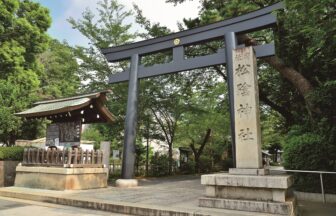
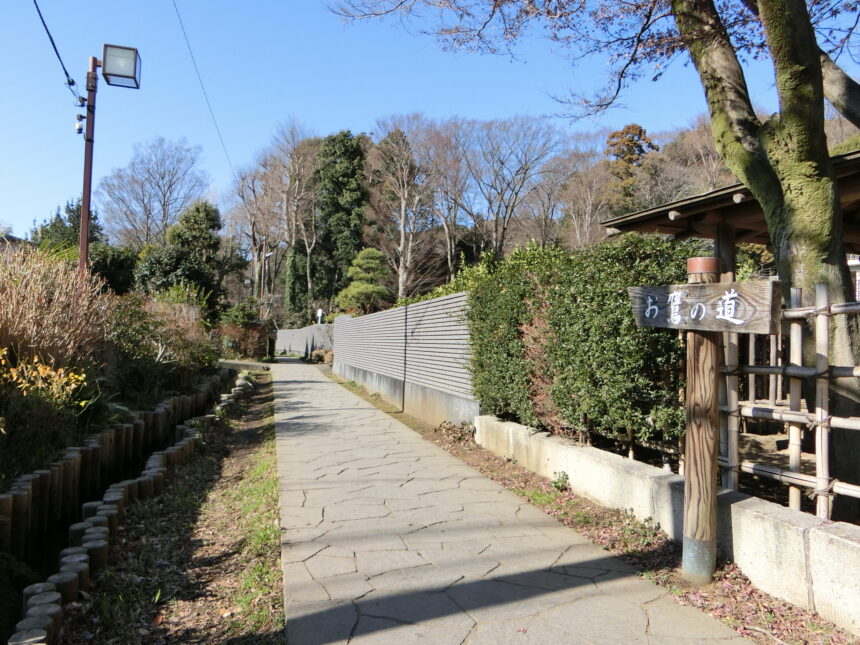
In the Edo period, villages in Kokubunji City were designated as falconry grounds for the Owari Tokugawa family. In honor of this, the path along the clear stream where the springs below the cliff line gather and flow into the Nogawa River was named “Otaka-no-michi” and has been developed as a promenade, which is enjoyed by many people as a seasonal walking path. The “Shinjiri-no-ike” and other springs along the cliff line have been selected as one of the 100 best water sources by the Ministry of the Environment and one of the 57 best springs in Tokyo, for their environmental quality. According to legend, the name “Shinjiri-no-ike” comes from the fact that a woman suffering from a serious illness was healed and returned to her original form (true posture) after purifying herself with the water in this pond. Today, Benzaiten is enshrined at this site.
Spot OutlineOutline
| address (e.g. of house) | Higashi-Motomachi 3-chome and Nishi-Motomachi 1-chome, Kokubunji City, Tokyo |
|---|---|
| Access |
15-minute walk from Kokubunji Station on JR Chuo Line and Seibu Kokubunji Line, 12-minute walk from Nishikokubunji Station on JR Musashino Line
|
| Business Hours | always open |
| regular closing day | nashi (Pyrus pyrifolia, esp. var. culta) |
| External Links | |
| Founding and opening of business | Edo period (1603-1868 CE) |