Okadaya Fuse” has a history of 188 years.

Asakusa (department store)Buddhist altar equipmentBuddhist (household) altardrum

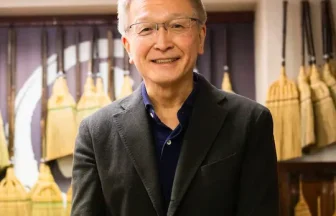
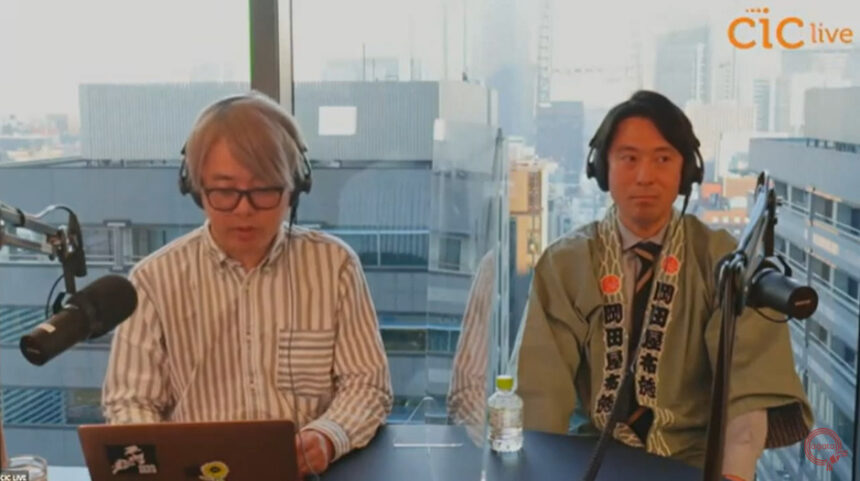
Okadaya Fuse has a store along Kokusai-dori Avenue in Asakusa with an array of taiko drums in its storefront. Founded in 1835, the shop has a 188-year history. It began as a tool shop. The company eventually began selling Noh drums and drums, and now also handles festival drums, Kabuki narimono, Buddhist altars, and Buddhist altar and altar accessories. We interview Yoshihiro Fuse, the seventh generation head of Okadaya Fuse.

We are told that the company was founded in 1835, in the 6th year of Tempo.

How did you originally get started?

There was a store called Okadaya in what is now Komagata. The first generation worked at Okadaya as a small boy, and worked his way up from apprentice to head of the bantam shop. He served as an apprentice and worked his way up to the position of bancho (head baker), and then received the goodwill of the store.

I see. How did you get started after you received the goodwill?

In those days, Kabuki theaters gathered in Asakusa, which is partly due to the historical background of the year Tempo 6. Our company was also a supplier to these theaters, and we delivered traditional Japanese musical instruments to them. I heard that our business started with the delivery of musical instruments such as drums and tsuzumi drums. Our business started with the trade of traditional Japanese musical instruments. Asakusa was a major entertainment district in those days, and the Yoshiwara amusement quarters were also located there. In the old days, hogaku instruments were what we now call popular instruments and were the only instruments used for music. They started out as such drums and sound instrument shops.

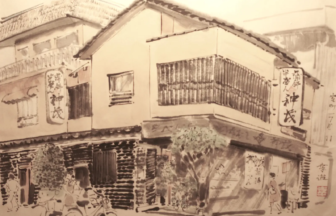
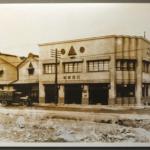
This photo shows the current store.

You have already been working at the same place since the establishment of the company.

Yes, it is. Next is a picture of the store. Originally, we started as a narimono-ya, but after the Meiji period, we went from a narimono-ko drum store to dealing in portable shrines for gods and Buddhist altar fittings. Although our main business started as a Narimono-ya, we now also deal in these types of Buddhist altars.

From a layman’s perspective, I am wondering what the connection is. I would like to know how the projects themselves are also connected and related.

The taiko itself is a start, a musical instrument, but some drums are used in temples, others in shrines. They are in demand wherever they are used. There are also regional characteristics. Asakusa is a town in front of a gate, so “temples” are very close to the area. There are many shrines and many old temples in the area, so that’s why we are involved in this kind of business. It seems to be related to taiko drums, but in fact, it may be largely due to regional characteristics.

Also, is there any commonality in what, for example, craftsmen can do?

Yes, the drums and the mikoshi. The mikoshi is made of lacquer and fabric. These parts are common. The structure of today’s butsudan is slightly different, but in the past, traditional Japanese techniques were used, such as lacquering and stamping with gold leaf, so I think these parts were also common.

In that sense, as you go in and out of shrines and temples, for example, you might have a job making mikoshi (portable shrines) first, and then you might transfer that mikoshi technology to make Buddhist altars because you also go in and out of temples. Is that how it went down?

Yes, I think so. I still think we responded to the needs.

Yes, we did. So you responded where the market was. How many generations were you talking about when you did that?

Maybe, but I think it was around the Meiji Taisho period. So I think he is my great-grandfather.

So, was it during the third generation?

Yes, that’s right. I think it was around that time.

Then, when you were the third generation, I think that such a new business of Buddhist altar accessories, in a way, is also an innovation. So you expanded in response to customer demand?

Handling diverse items such as festival flutes, bells, bachi, lanterns, etc.

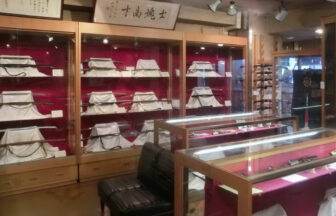
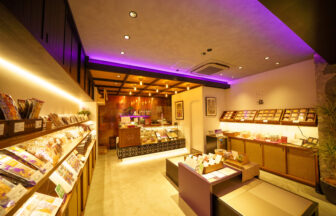
The next picture is also of the store. It is a bit cluttered, but since we deal in a variety of items, the store looks like this.

I will ask you about something other than drums here, but there seems to be quite a variety of somethings on the left side.

Other than taiko drums, there are also flutes and bells used in festivals. You can find items used for such festivals in this section. There are also taiko bachi.

The bees are on the shelf at the back left of the photo, right? They are lined up toward the back.

Also, there are lanterns and other items used in festivals.

Are there various orders for lanterns and such, such as personalized ones?

Yes, we do. We also do personalized chochin. We ask a real chochin maker to make the lanterns. Our craftsmen do not write on them.

If so, is there a drum that you can say, “We have craftsmen working here”?


Yes, we manufacture all of our own drums, from one to ten. And the o-mikoshi, or portable shrine. We also manufacture our own mikoshi.

Also, would a Buddhist altar do the same?

As for Buddhist altars, we do not have any that are manufactured completely in-house at this time.

That’s because the way we make things has changed. Conversely, have you been innovating there as well, or are you asking for a place that is doing things the way they are now, in keeping with the times?

Yes, we have asked craftsmen who can do it the way we are doing it now to make our products.

Traditional instruments are also made to order by customers.

That’s what I meant. Thank you very much. And now, I think we are probably going to start talking about taiko drums. In the next picture, there are quite a lot of drums lined up in a row.

Here is another picture of our store. We have a lot of drums on display, but there are two types of orders: those who order drums and those who choose drums from our already-made selection. We also have a selection of drums that we have already made for customers to choose from. We also do this.

This is a very difficult one. Maybe some people prefer to have something that is there, or maybe some people want to make sure it is there.

Yes, each one is different because it is made of sound. Since they are strung using natural materials, no two are exactly alike.

Fuse-san uses the word “sound things,” so that is somewhat of an industry term.

I don’t think it is an industry term, but it is the kind of term we usually deal with, so I guess in that sense it is an industry term.

Is it drums, drums, bells, flutes, etc., that are included in “sound things?”

Yes, I think that would be a traditional Japanese instrument.

Okadaya Fuse” started as a tool shop and handles not only traditional musical instruments but also Buddhist and Shinto ritual implements. As we trace the changes in the lineup, we find that the underlying concept has been “responding to needs. This is also a form of innovation.

latter part(temporal or logical sense) follow …

*If you would like to see this dialogue on video.here (place close to the speaker or where the speaker is)

新着・おすすめ情報

  1. Long-established Tabi Shoes supported by all generations. Ohnoya Fuso-Honten” continues to make Tabi Shoes with all our hearts.

  2. Shimotani Shrine

  3. Fukutoku Shrine Meibuki Inari (Nihonbashi, Tokyo)

  4. Smoked Saikyo pickles have evolved into a snack for alcoholic beverages. The insatiable spirit of challenge at the long-established “Tsuta-no-ie

  5. What is Gunkanmaki? Origin of the name, store of origin

  6. pickled ginger

  7. stalk (of a mushroom, leaf, etc.)

  8. Shinsendo Yanaka Senbei

  9. glutinous rice steamed with red beans or some other ingredient

  10. box lunch (containing rice and 10-15 small portions of fish, meat, and vegetables)

  11. Hotman Ome Store

  12. Okame Sushi

  13. When did the Hina Matsuri (Peach Festival) begin?

  14. Yamamoto Nori Store] Limited Time Offer: “Early Summer Special Sale” is now being held! Early Summer Special Sale” is underway!

  15. Muromachi Sunaba Nihonbashi Main Branch