stalk (of a mushroom, leaf, etc.)

armour

stalk (of a mushroom, leaf, etc.)(tsuka/tsuka)

Japanese sword

The term refers to the part of the sword that is held by the hand. Inside the hilt is the “stem (nakago, the part of the sword blade to hold). The handle contains the “nakago” (the part of the blade that is held by the hand). Most swords are made of wood, often of magnolia, which is also used for the scabbard.
The handle is wrapped with a leather cord or braided string, which reinforces the handle and makes it comfortable to hold and prevents slipping. There are various techniques for pattern winding, such as “rhombus winding,” in which the pattern is wound into a diamond shape, and “tsukumaki,” in which the overlapping threads of the pattern are plucked to make it taller.

新着・おすすめ情報

  1. point (of a sword, etc.)

  2. Honmyoji Temple (Sugamo, Tokyo)

  3. What is the origin of “May dolls” displayed on Dragon Boat Festival?

  4. beef sinew stewed in miso and mirin

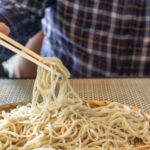
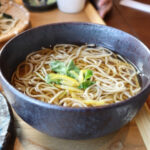
  5. 【第19回】家庭でも美味しく乾麺の蕎麦を茹でる方法

  6. The characteristics of “koshu” (old sake) explained [Words related to sake].

  7. Daiba Park (Odaiba, Tokyo)

  8. Taisyuji Temple (Shinjuku, Tokyo)

  9. What is kaiseki ryori? What is the difference between kaiseki ryori and kaiseki cuisine, and which is eaten at a tea ceremony?

  10. Komagata Dozeu, a famous restaurant with a history of more than 200 years, serves dojo cuisine.

  11. Meaning of “Unaju” and “Unadon”. What’s the difference?

  12. Koishikawa Botanical Garden

  13. Takahata Fudo Kongoji Temple

  14. black formal kimono with designs along the bottom of the skirt worn by married women on ceremonial occasions

  15. Samurai dolls” for Dragon Boat Festival. When did they come to be displayed?