Walking around Edo with old mapsIidabashi/Kagurazaka
Part 6: Kagurazaka is full of historical attractions. From alleys where you can feel the Edo period to wooden buildings of the Showa period
Historic sites, cultural assetsNational Tangible Cultural PropertiesTemples, shrines, and Buddhist templesryoteired-light district
Tokyo is a city that has been transformed in the past year, half a year, or even a week. While new buildings are being constructed and new stores are opening, it is surprising that traces of the old days remain, or in fact, are still the same as they were in the Edo period.
The “Edo Walking Tour with Old Maps” is an opportunity to enjoy such evidence of the times based on old maps. Guided by Ms. Tae Hoshino, a guide from “Walking Trip Ouensha,” a pioneer of old map walking tours, we will discover Edo by walking around present-day Tokyo. This time, we will visit Kagurazaka.
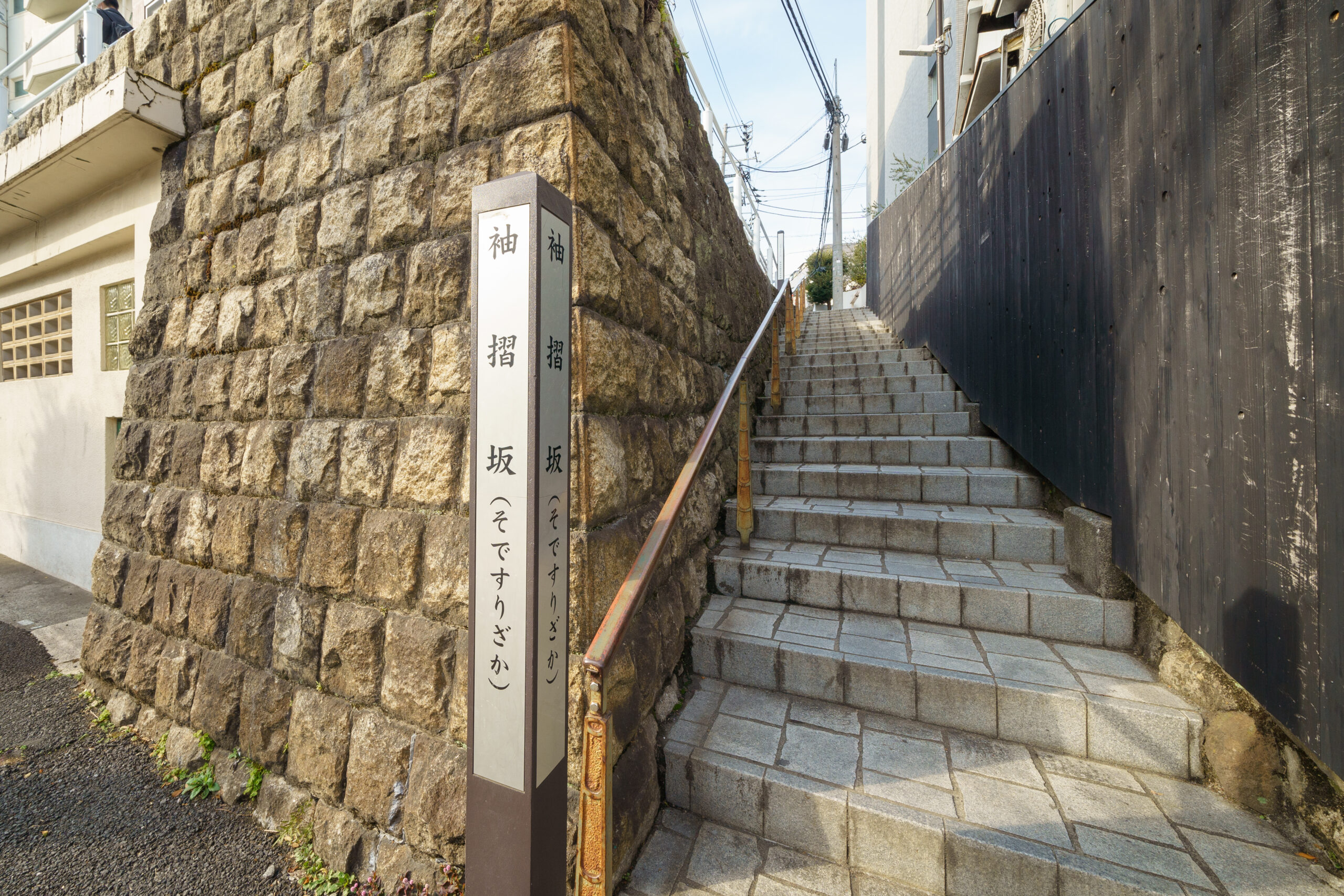
Old map walking starts from the tastefully named “Sodezuri Slope”.
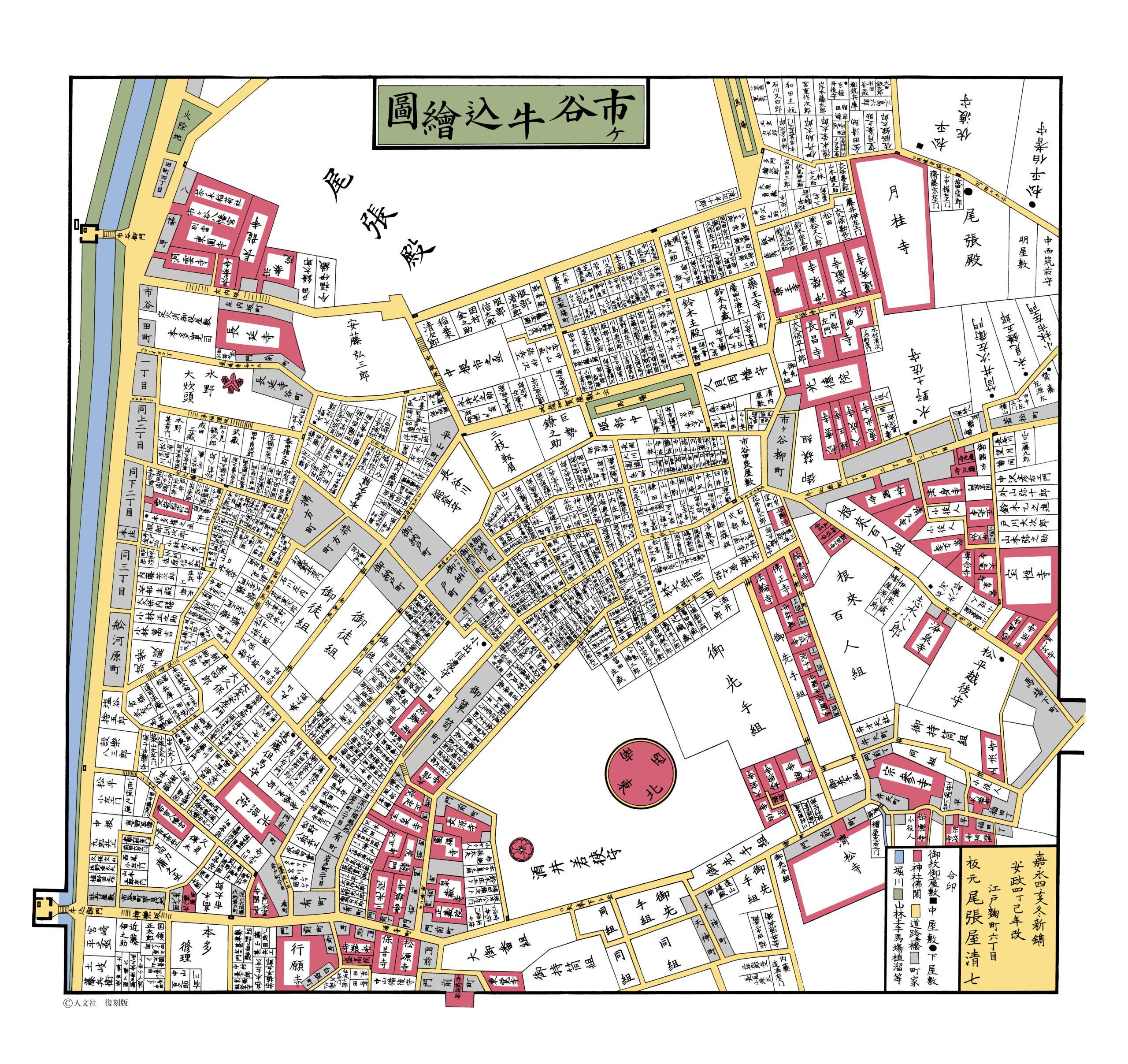
Here is an old map of Kagurazaka. The map is called “Eto-kiri ezu Ichigaya-ushigome edu”.last timeWe started from the end of the Ichigaya-Ushigome area, which we had visited in the previous tour. Although the distance may have been about 1/3 of the previous tour, Kagurazaka is indeed a place of concentrated attractions.
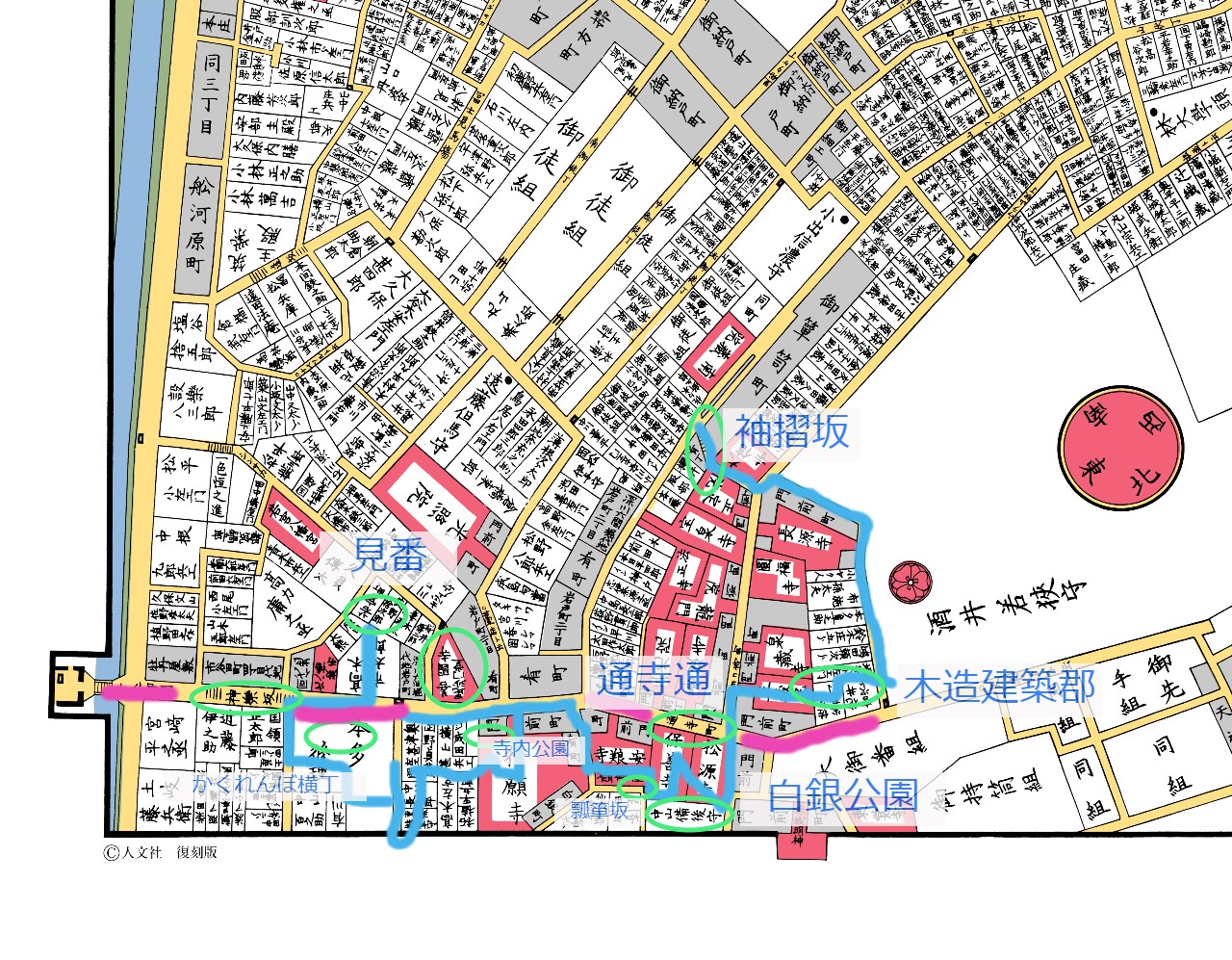
Here is an old map zoomed in and dropped in the course and highlights.
Please note that the north-south orientation of this old map is almost the opposite of the current map, so please be careful when viewing it with Google Maps. The light blue line is the route of the trip, and the green oval is the highlight. Kagurazaka is indicated in pink.
Sodezurizuzaka, the starting point of this trip, is located right next to Exit A2 of Ushigome-Kagurazaka Station on the Toei Oedo Line in modern times, and its name is preserved on old maps.
The origin of the naming is very tasteful, as you can easily imagine.
The slope is marked on an old map: “In the Edo period, there was a cliff on one side and a hedge on the other. The path was so narrow that when two people passed each other, the sleeves of their kimonos would rub against each other.
The current staircase between the stone wall and the black wall seems to have been built in the early Showa period. The stone pavement and copper (?) handrails with rusty surfaces. The cobblestone pavement and copper (?) handrails with rusted surfaces create a nice atmosphere that could be used as a movie location or for fashion photography. I have already given a brief impression of Kagurazaka, but there are many more places in Kagurazaka that would be “perfect for movie locations and fashion shoots”.
This area was called “Tansu-machi” in the Edo period. According to Mr. Hoshino, “Unlike today’s wardrobes, tansu was a term used to refer to boxes used to store armor, bows and arrows, and other weapons. This town is where the Gusoku magistrate and the Yari magistrate, who were in charge of weapons and ammunition for the shogunate, received their residences.
On an old map, a vast residence of Settsumori Yanagisawa can be seen near Tansu-machi, which appears to be the site of the residence of Mitsuaki Yanagisawa, a descendant of Yoshiyasu Yanagisawa, who rose to prominence under the fifth shogun, Tsunayoshi Yanagisawa. I get a little excited when I see a surname I know on old maps.
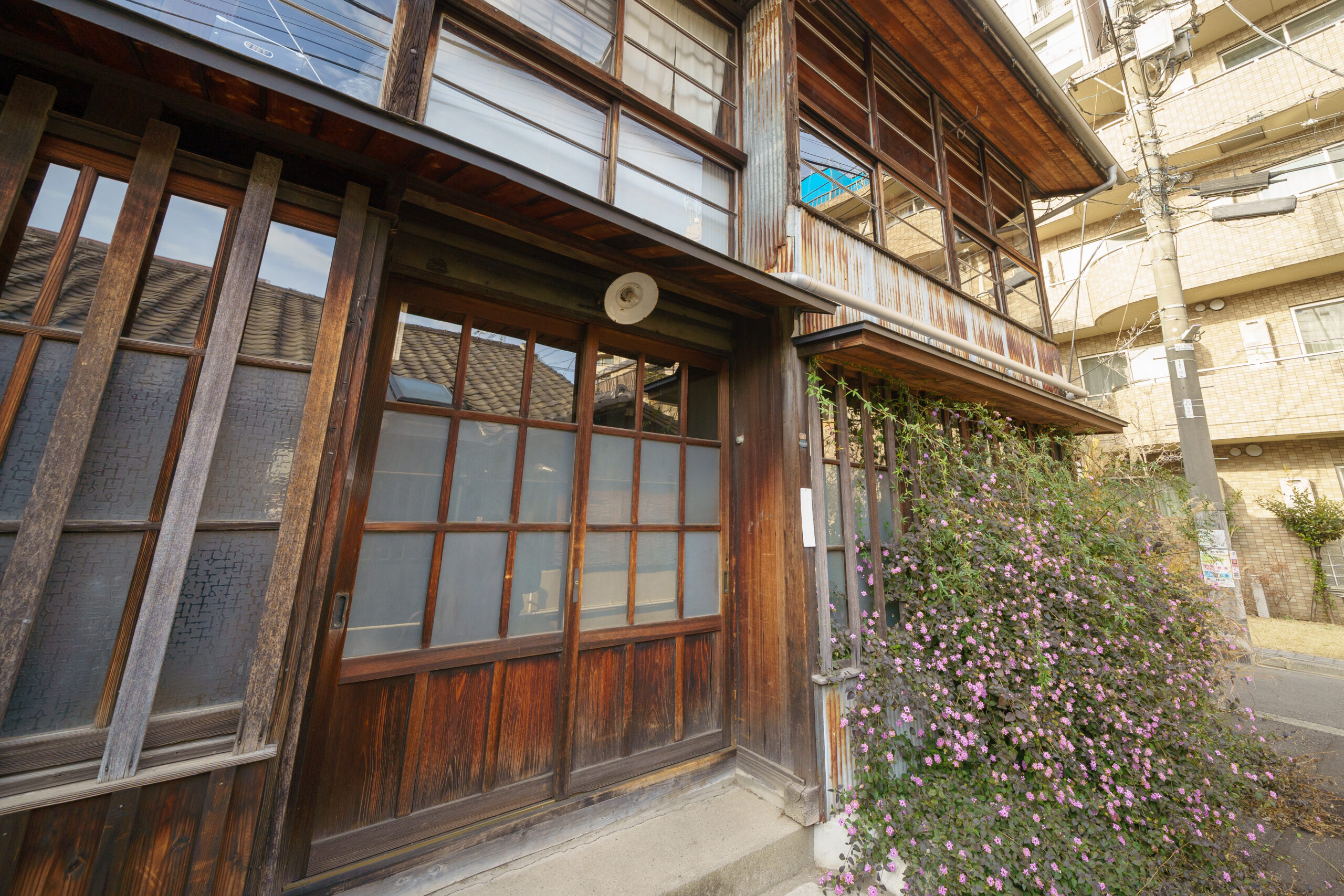
If you enter Kagurazaka from “diagonally to the left,” the first thing you should see is an austere wooden building from the Showa period.
I am sure that your impression of Kagurazaka will differ depending on the train line you use, but for me, who mainly uses the JR line, the “main entrance” to Kagurazaka is from Iidabashi, across the moat and up the hill. Therefore, entering from Sodezurizaka is like entering Tokyo Disneyland from the “Critter Country” area. Or, you might be watching a concert from diagonally behind the stage.
So, we still walk from the alley without passing through Kagurazaka. And on such side streets, I encounter tasteful wooden buildings.
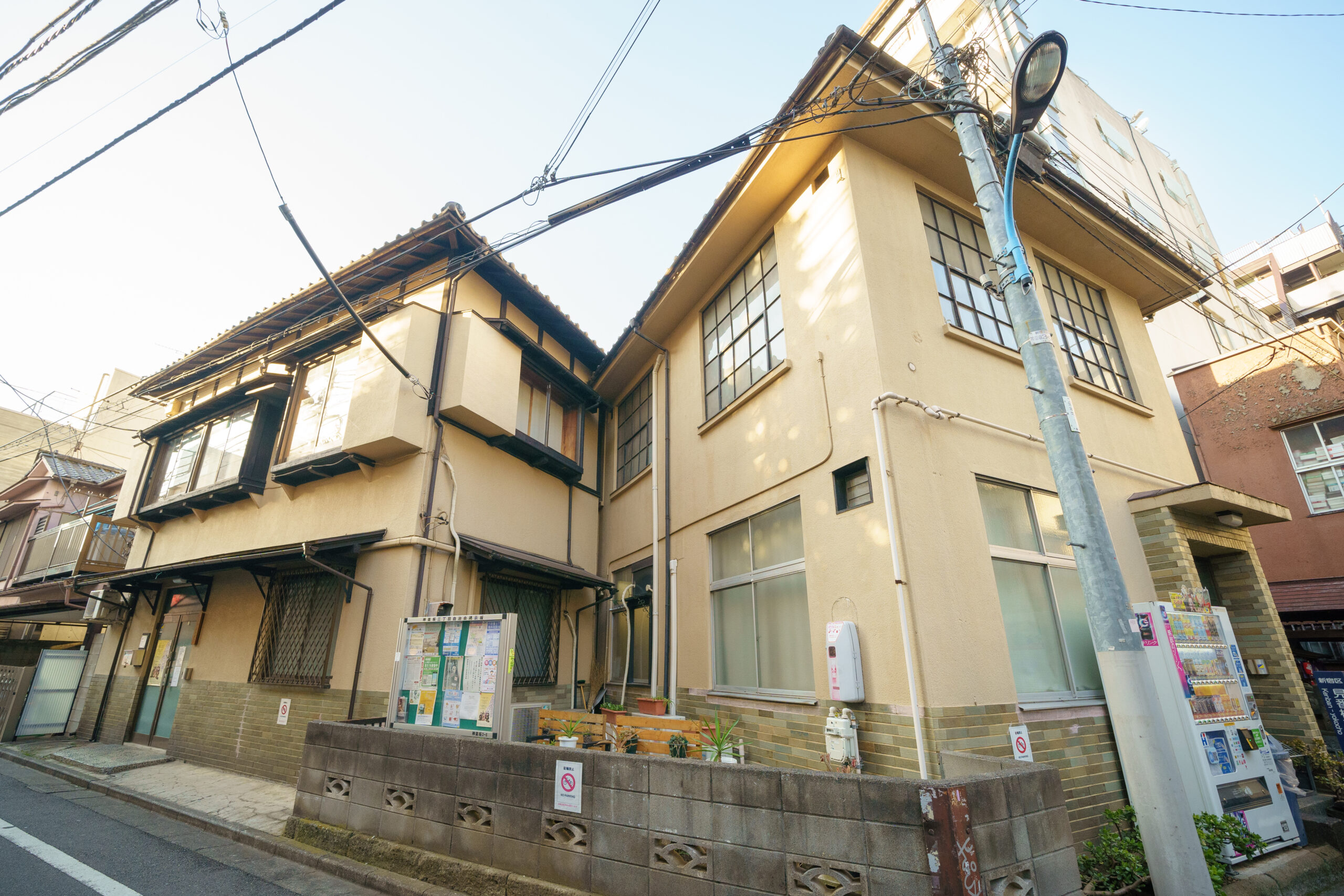
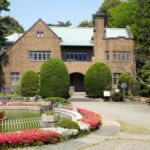
This is “Takahashi Architectural Office Issuiryo.
It was built in 1951 as a dormitory for carpenters who had studied in England and worked for the architect Hiroshi Takahashi, who was active after the war. The design is orthodox and there are no extravagant materials used, but if you look closely, you can see that the latticework of the windows has a ‘Naguri finish,’ in which patterns are carved with a hatchet, and the elaborate workmanship of the beams is like a showcase of the carpenters’ skills at the time.
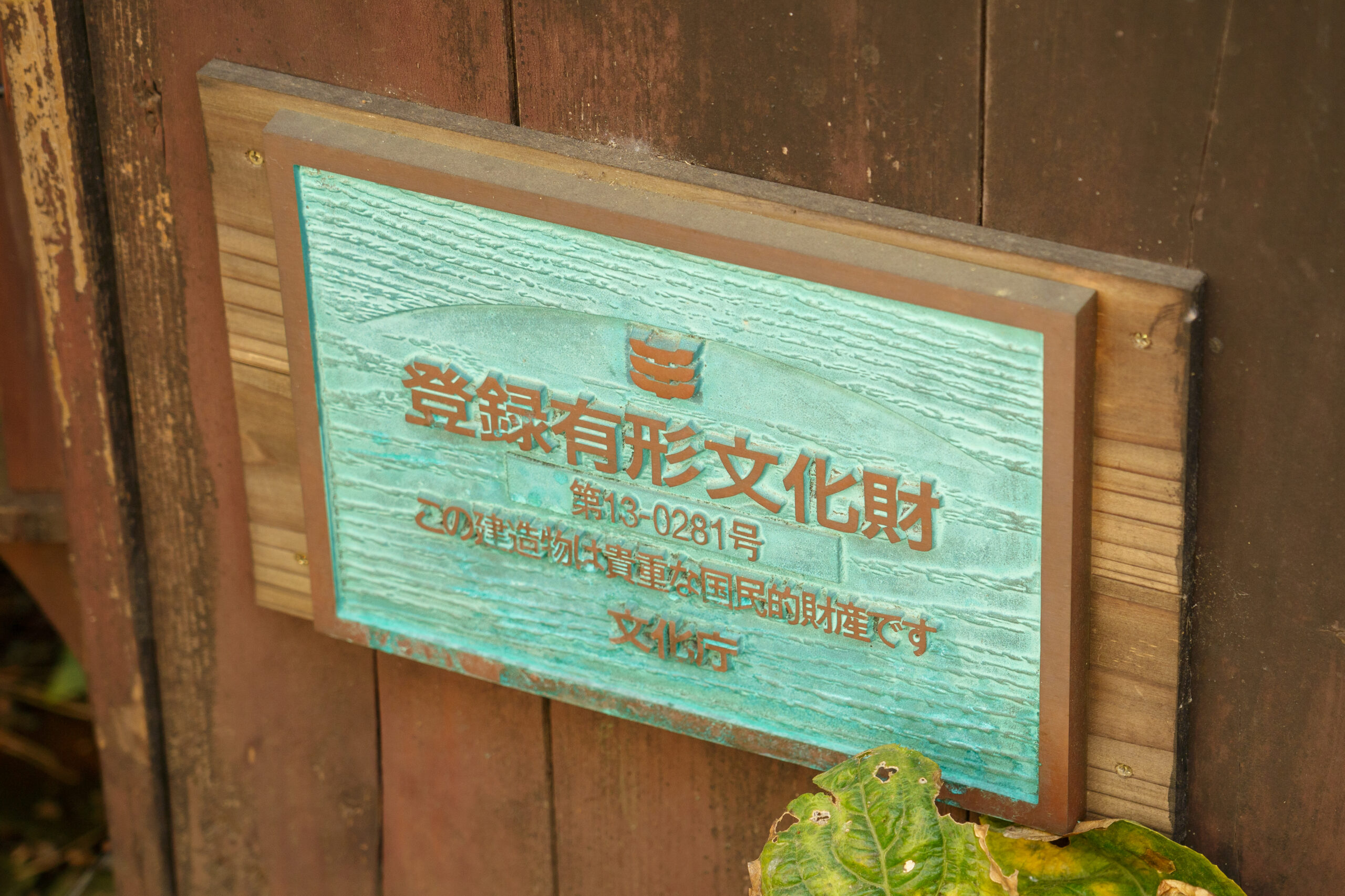
Across the alley from Issuiryo, which is now used as a rental office and gallery, is the Suzuki Family Residence, which was Takahashi’s residence and studio. The house was renovated by Kiichi Suzuki, Takahashi’s son-in-law and an architect, to create an elegant blend of Japanese and Western style, with a brick entrance and tiled roof. It was later renovated by Kiichi Suzuki, Takahashi’s daughter-in-law and an architect, and together with Issuiryo, it is designated as a registered tangible cultural property of Japan. Although the building was constructed in the 1950s, it is a curious feeling to be able to take a stroll in the mood of the Edo period.
The address of this area is now “Yokoteramachi, Shinjuku-ku,” but the neighborhood has been called “Tooriteramachi” since the Edo period. Many temples are marked on the map, and “Toritera-machi” can also be seen on the map. Incidentally, “Dori” means “Ushigome Gomon Dori,” which is now Kagurazaka, connected across the moat from the Ushigome Gomon of the castle. It is said that the name “Yokoteramachi” came about at the end of the Meiji period (1868-1912) because it was the “Yoko-machi” of the “Teramachi” of Ushigome-imon-dori.
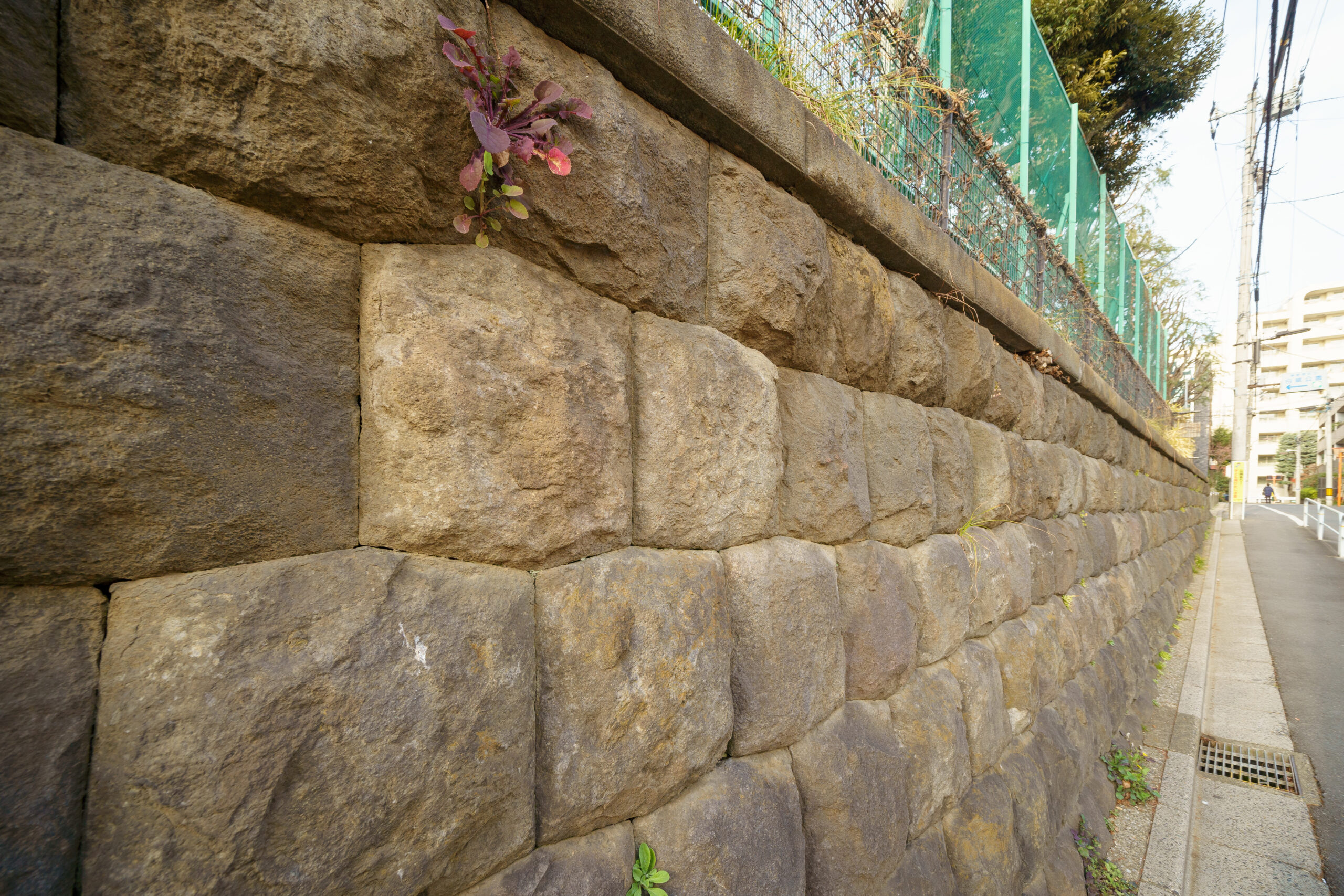
Stone wall remaining in “Shiragin Park” at the site of a businessman’s house, the former samurai residence
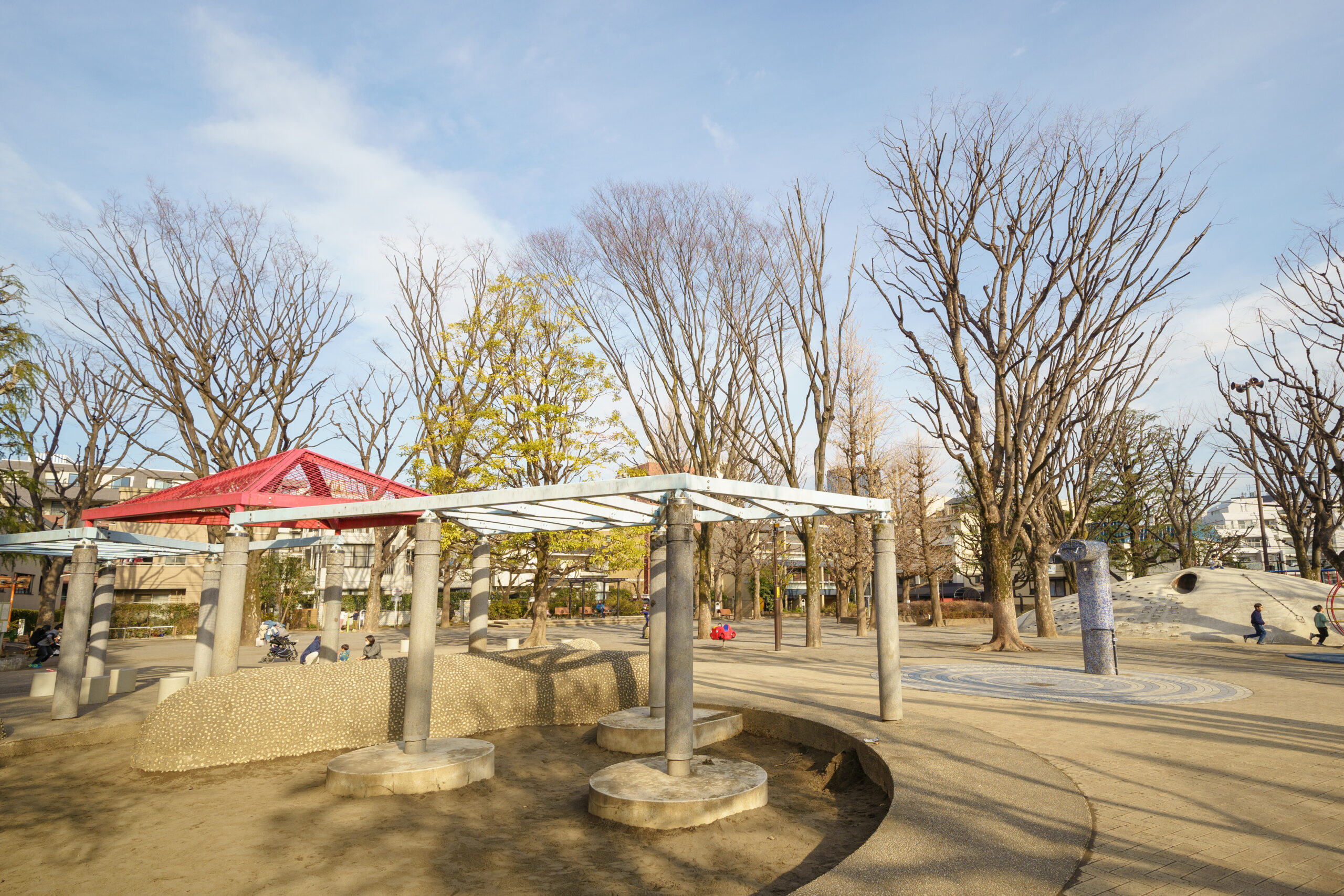
If you walk down the street with the wooden buildings of the Showa period at your back, you will reach Kagurazaka. If you turn right and walk down the hill, you will reach Iidabashi. A little to the left is Kagurazaka Station. However, we cut through the hill and entered a residential area. As soon as we turn off the main street, the road narrows and the scenery becomes lined with old-fashioned houses. And then, Shiragin Park opens up in front of us.
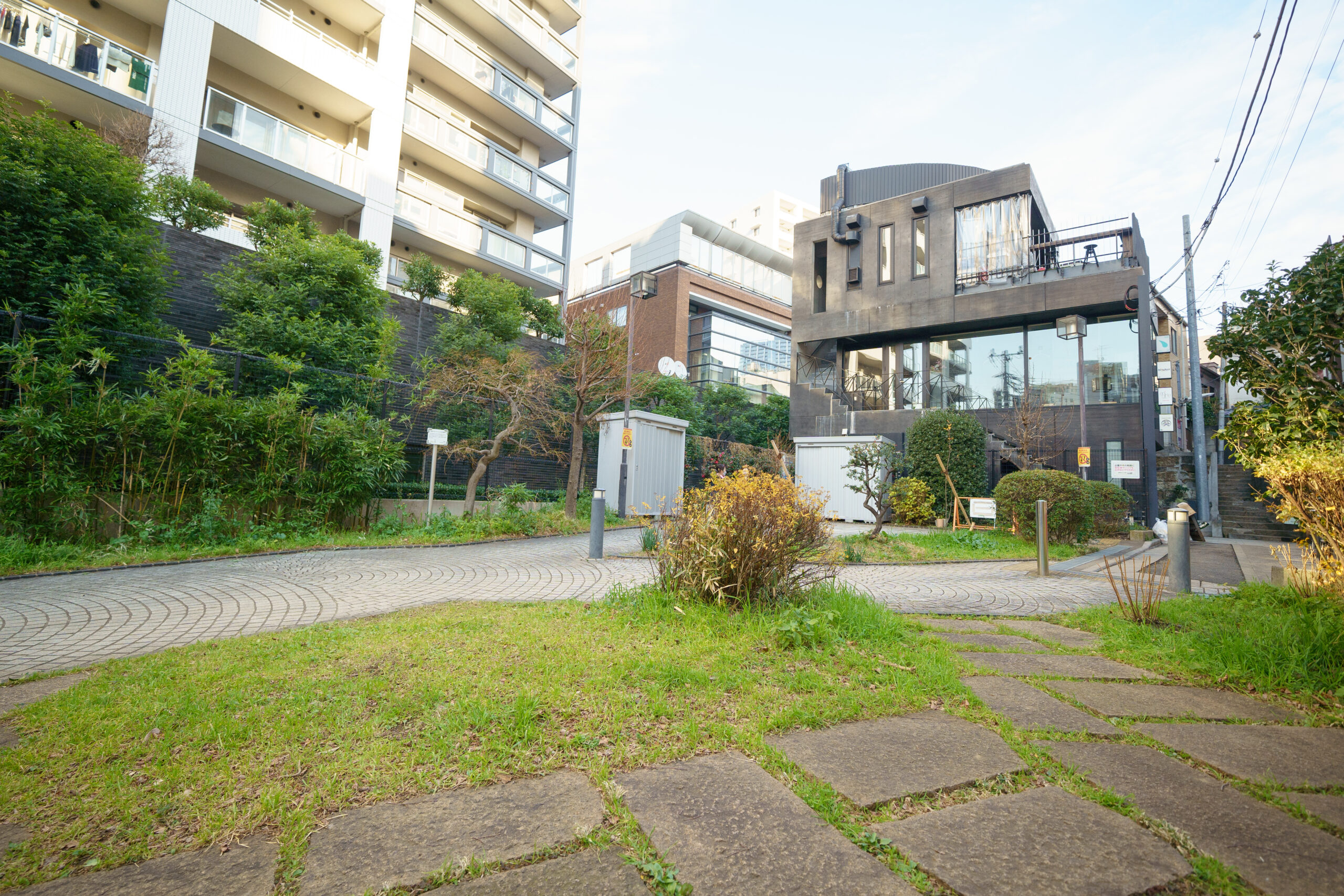
It is a well-maintained, spacious, and pleasant park in a residential area. As I gazed idly at the children playing among the leafless trees and piles of stones, Mr. Hoshino motioned to me, “This way,” he said. I followed the fence and concrete wall and turned the corner!
The site was originally the residence of the Nakayama family of the Mito Clan, which is marked on an old map as “Nakayama Bingomori. In the Meiji era (1868-1912), businessman and scholar Atsushi Watanabe took up residence here, and the site was converted into a park in the Showa era (1926-1989).
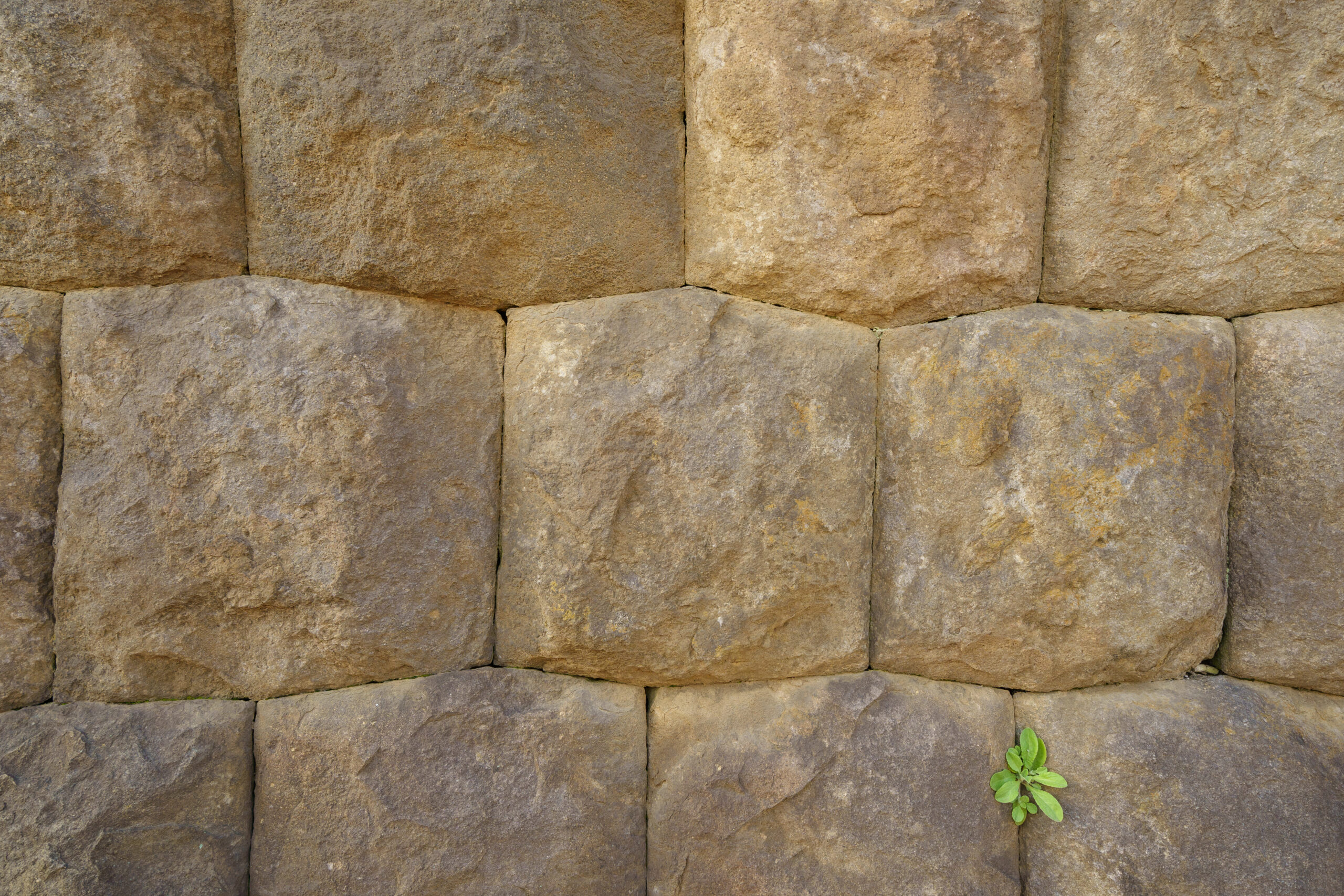
The upper and lower lines of each stone are not in a straight line, but rather in a tortoise shell shape, right? I think this stone wall is a technique of the Meiji period. The bumpy surface of the stone is the result of stone pounding and cracking. It is difficult to find craftsmen to do this nowadays. This stone wall is very valuable,” says Okamoto.
I see that the chipped areas have been repaired with concrete (mortar?) and other materials. I can see where chipped areas have been repaired with concrete (mortar?) and other materials. The stone walls were built using traditional construction methods that cannot be used easily today. If it is a technology from the Meiji period, it may be a remnant of the Watabe residence (……). This gives us a perspective from which we can examine something about a single stone wall in the park. By the way, last time, I acquired the skill of analogizing the width of a road in the old days from the “boundary” between the road and the land. Well, old maps make people a little smarter and life a little more fun.
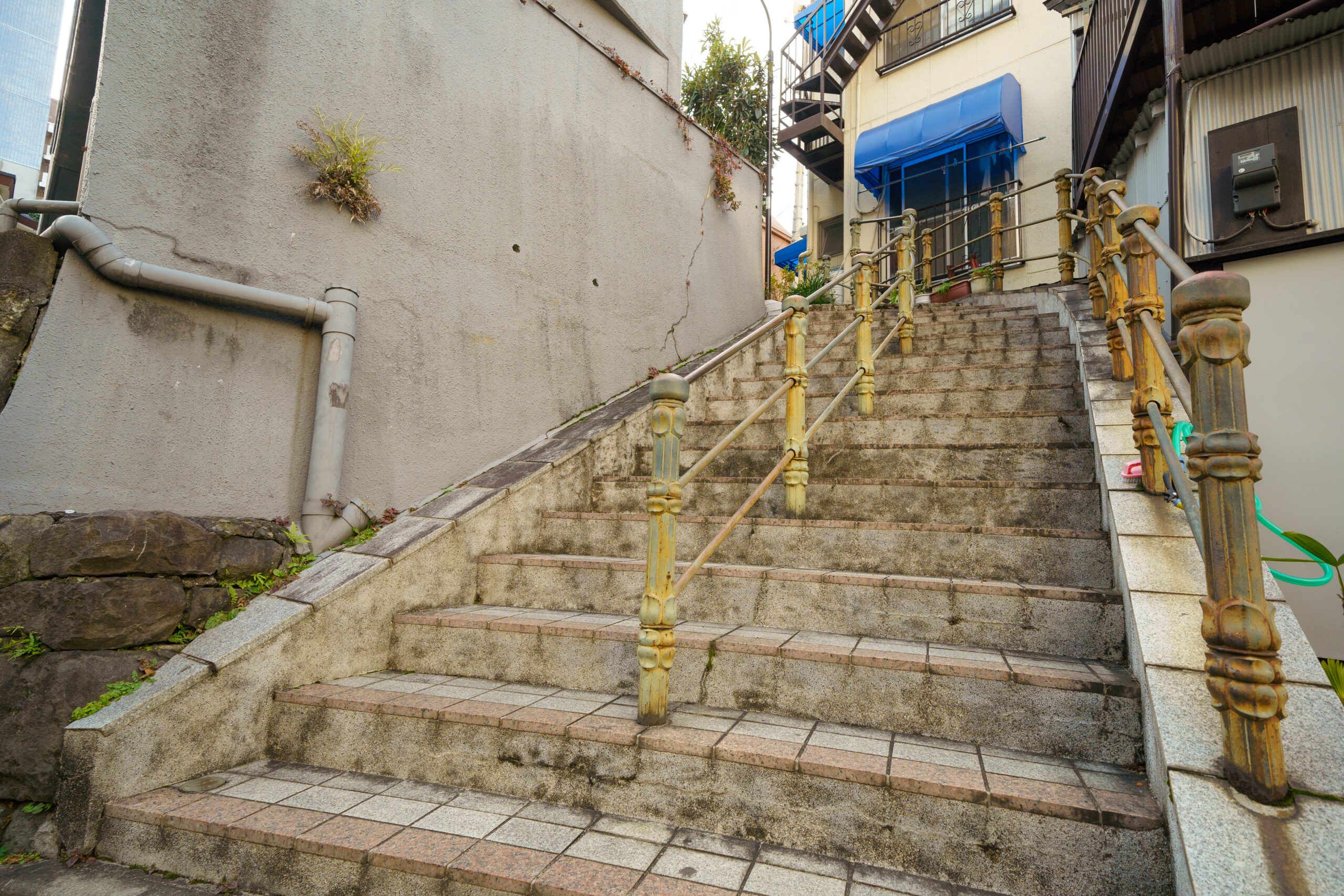
After descending the steep slope of “Hyotanzaka” (gourd slope) from the corner of “Shiragin Park” to the east, turn right and you will encounter “Koma-zaka,” which is also a “Sodezuri Zaka. This slope is also a “Sodezuri Slope,” so to speak, in size. It is about 2 meters wide with tiled stairs and classic handrails. In fact, this is still a “ward road” of Shinjuku City.
This area is the site of a temple called “Seikoin” that existed in the Edo period.
Kagurazaka was full of temples!
This old map walk tends to miss the so-called “main” areas of the current city.Ginza” timesand so on, I even followed the “river trail” on the back roads without paying attention to shopping, gourmet food, or Kabuki (it’s fun!). ). (It’s fun!) This time, too, I followed the back roads until I finally reached the main street! Hello Kagurazaka! And suddenly, the landmark “Bishamonten Zenkokuji Temple. The temple is even shown on an old map.
The temple was built in the Azuchi-Momoyama period (1568-1600), and after suffering several fires, it was moved to Kagurazaka in Kansei 4 (1615-1644). In the Bunka-Bunsei period (late Edo period), it became very popular to pay homage to Bishamon-sama, and stores began to line the streets of this town, which until then had been almost exclusively samurai residences and temples.”
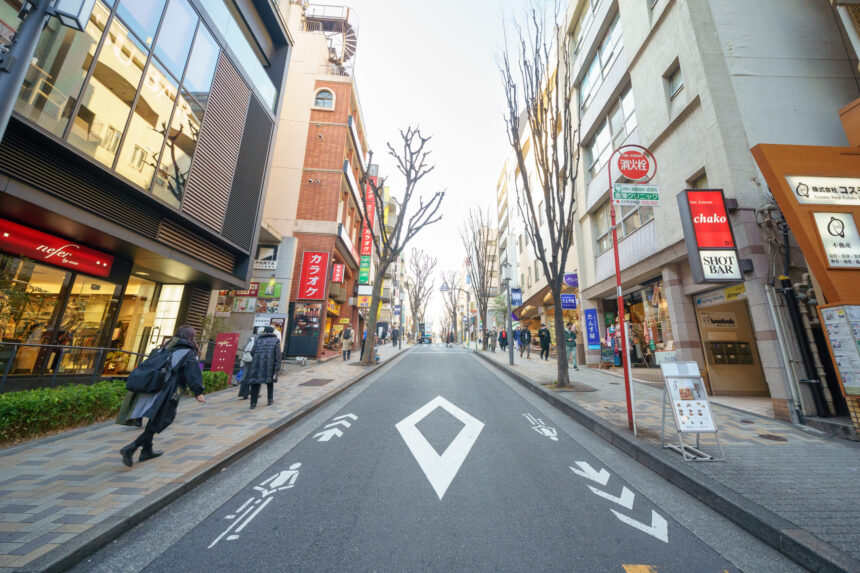
This is a view looking up Kagurazaka from below. The northern side is lined with old samurai residences and temples, while the southern side, where Zenkoku-ji Temple is located, has become a bustling flower district with many teahouses with yoshiizu (reed screens) lining the street.
It is said that there used to be a temple called “Gyoganji” across the hill from Zenkokuji. In an old map, this temple is marked as “Gyoganji,” but it was moved to Nishi-Gotanda in 1907, and part of its former site is now called “Jinae Park.
According to the park’s information board, this area is the birthplace of Kagurazaka as a hanamachi (flower street).
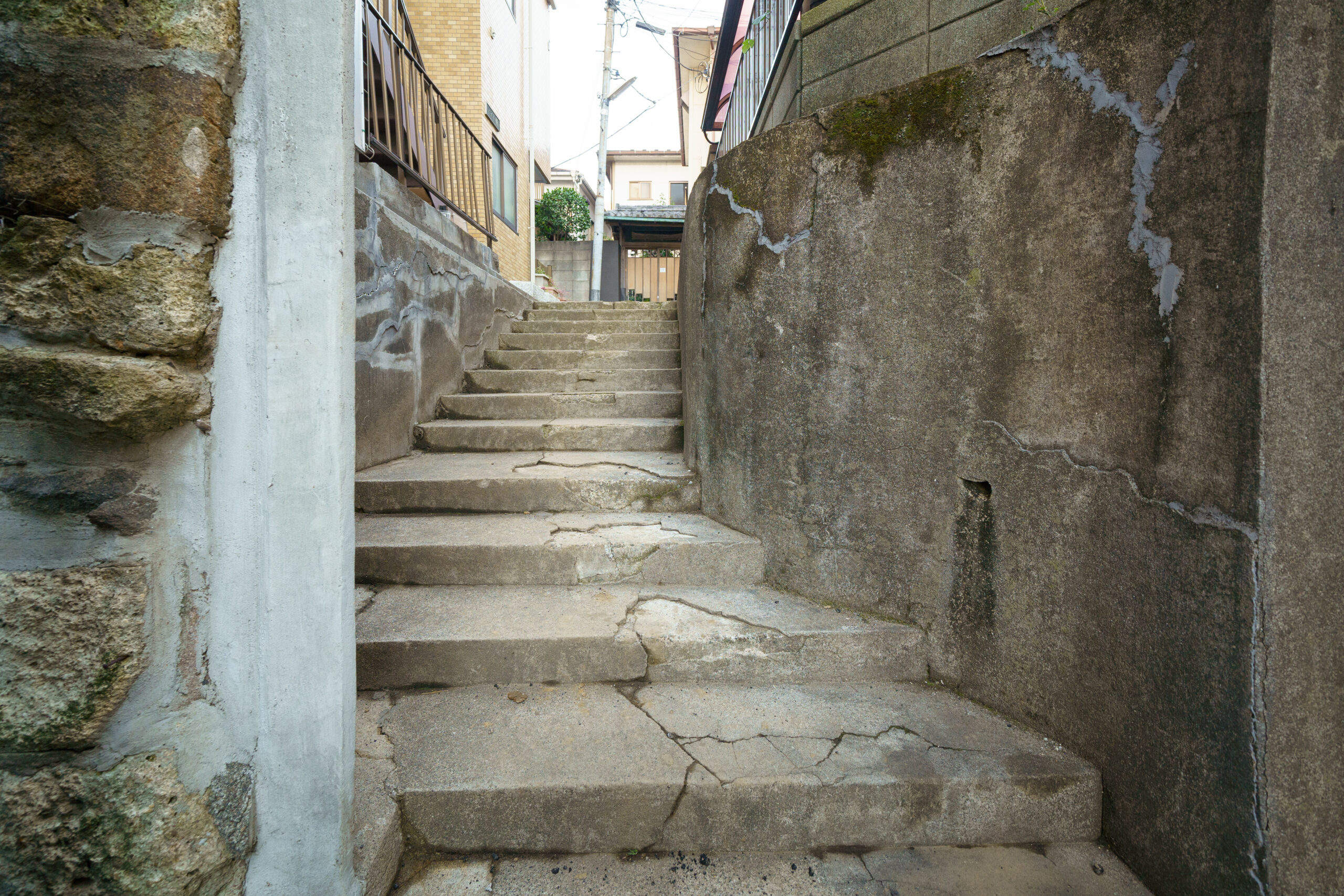
The board explains that Gyogenji temple rented out part of its precincts as residences for samurai families in the mid-Edo period, and that a narrow alley within the temple became a place for amusement at the end of the Edo period, giving birth to Kagurazaka’s flower and willow community. Well, at first glance, Terauchi Park seems to be a dead end, but there is a very narrow and old staircase at the back of the park.
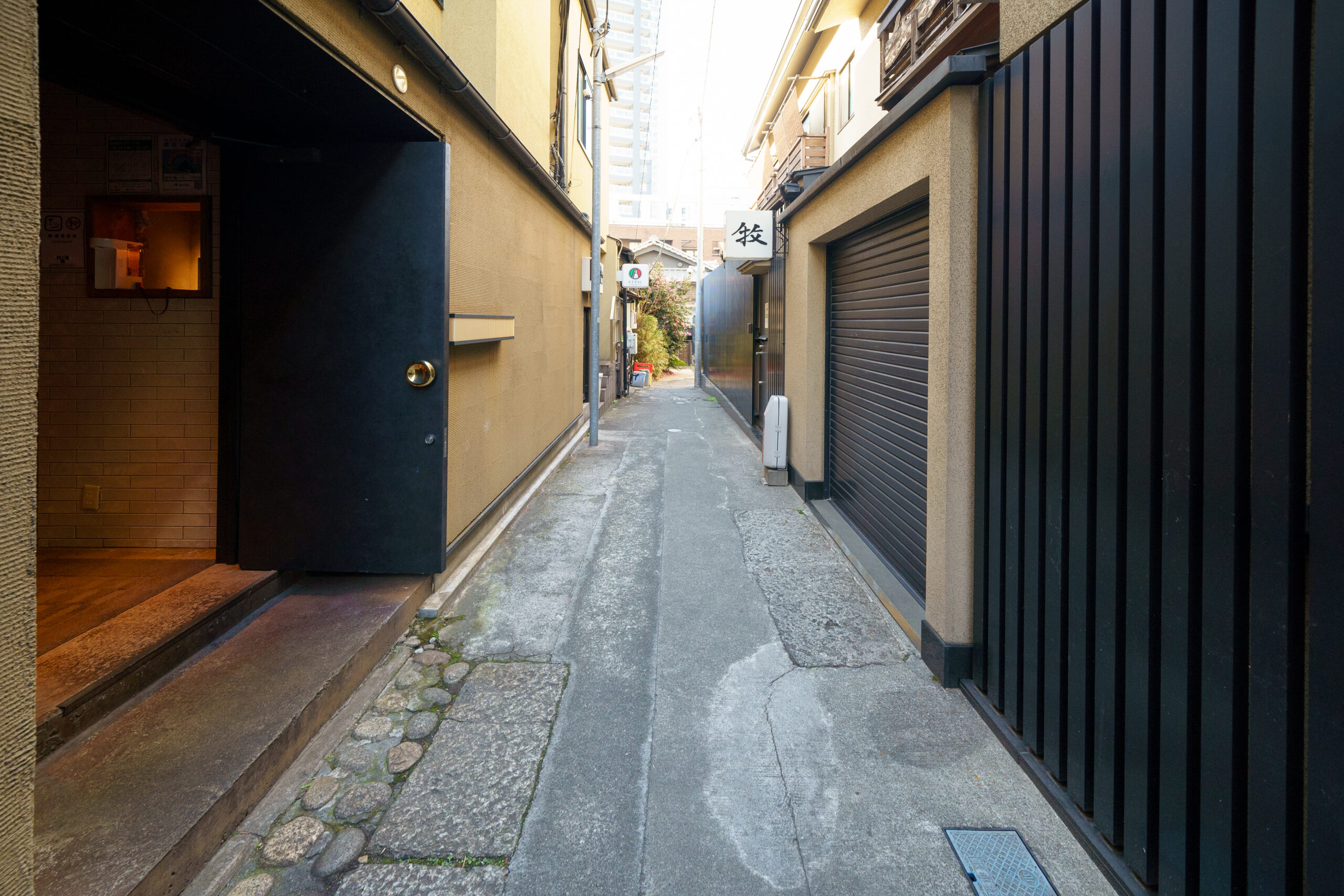
It then leads to an alley lined with historic ryotei restaurants and Japanese restaurants. Of course, you can also approach from various side streets along Kagurazaka Street, but the stairs at the back of Terauchi Park are like an entrance to another world.
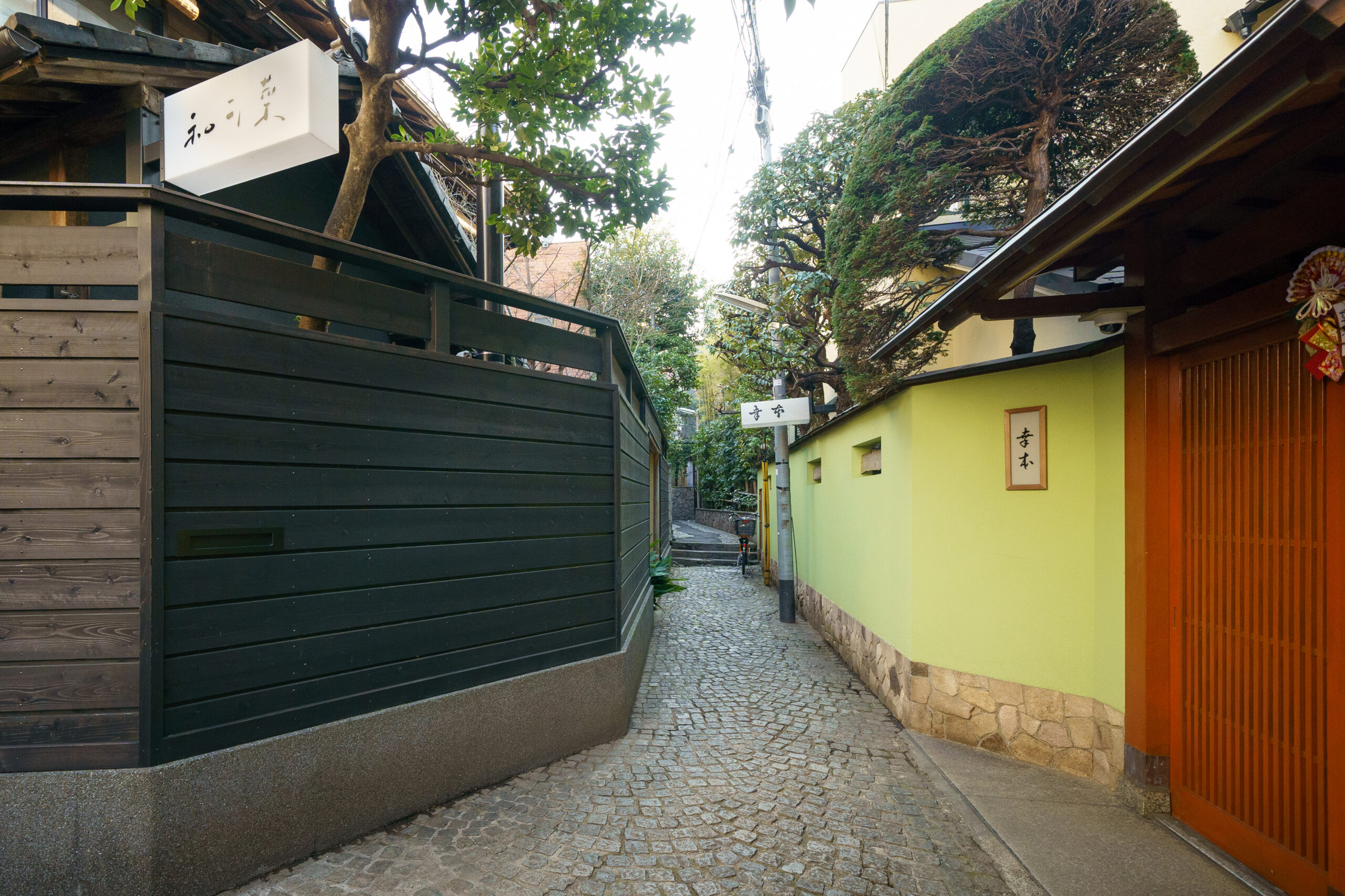
The alley behind Terauchi Park is called “Hyogo Yokocho,” which derives its name from the location of an armory in the Warring States Period. The alley is lined with ryotei and ryokan “Wakana,” which were used by many literary giants and people in the movie industry for meetings and writing. Currently, there are three ryotei restaurants that are members of the “Tokyo Kagurazaka Association,” which consists of geisha and ryotei restaurants in Kagurazaka. Kohon” is located in this area. Sengetsu” is located in “Kakurenbo Yokocho” and “Maki” is in the Honda Yokocho area.
Wakana” is currently closed and is preparing to reopen as an auberge under a new project by architect Kengo Kuma.
There is also Honda Yokocho, a collection of tasteful stores that utilize wooden stores and old ryotei restaurants built in the early Showa period on the site of the former residence of Honda Tsushimanomori.
Also note the stone pavement of Kagurazaka. Uroko-bari,” or “scaly lining,” with an auspicious ending.
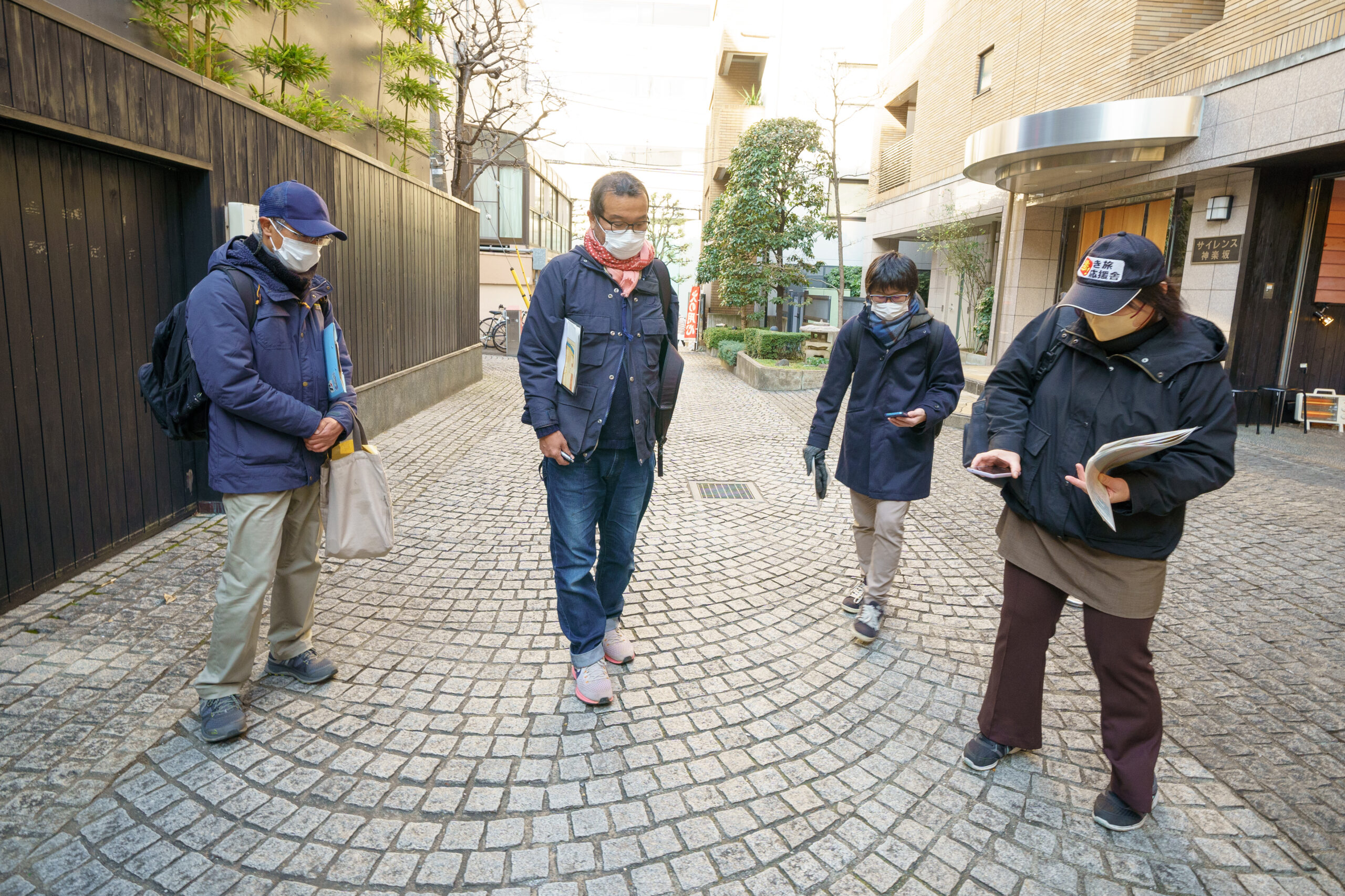
The stone pavement in Kagurazaka is said to have been laid out in a style called “Uroko-bari,” using cubes of stone called “Pinkoro-ishi” and arranging them in an arch shape. There are various theories about the design, such as that it is supposed to bring good luck, or that the waves are designed to point in one direction to lure customers to the Hanamachi district. …… “Since I’m here, there’s something I really want to find this time! said Mr. Hoshino.
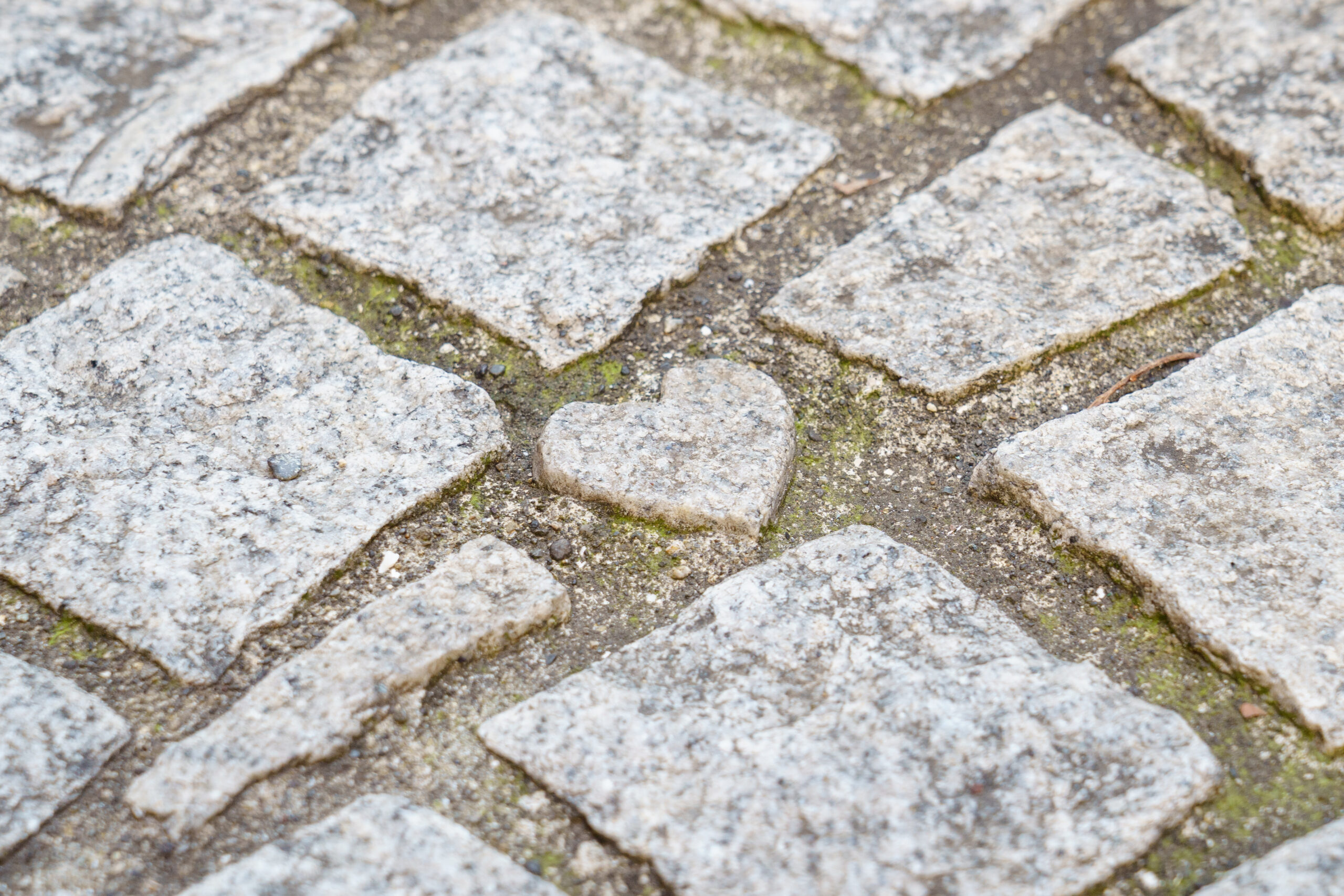
The location is in front of a new building that has widened the alleyway of “Hide and Seek Alley”. I heard that there is a heart in a stone on the cobblestone pavement. We put away the old map for the time being and all searched together.
Adults silently staring at the cobblestones at 2:00 p.m. on a weekday afternoon. They were all wearing navy jackets, as if to show that they were all wearing navy (they were not). They were more daring than a pair of contact lenses as they walked around and stared, painstakingly looking for a contact lens that they had dropped.
Found at ………………! The location is around 3-1 Kagurazaka, Shinjuku-ku, Tokyo. The alley in front of “Cookie & Chocolat Heart’s Lane Kagurazaka”. Please look for it.
Although it was an accidental “hidden something” (and everyone who found the heart was surprised and excited), we were still aiming for a historical place at the end of our old map walking tour. According to the old map, our destination was the remains of a samurai family’s mansion named “Takagi Ichitaro. After reaching Kagurazaka, we went up a little and crossed a street. This is the very place where the current “Miban Yokocho” originated.
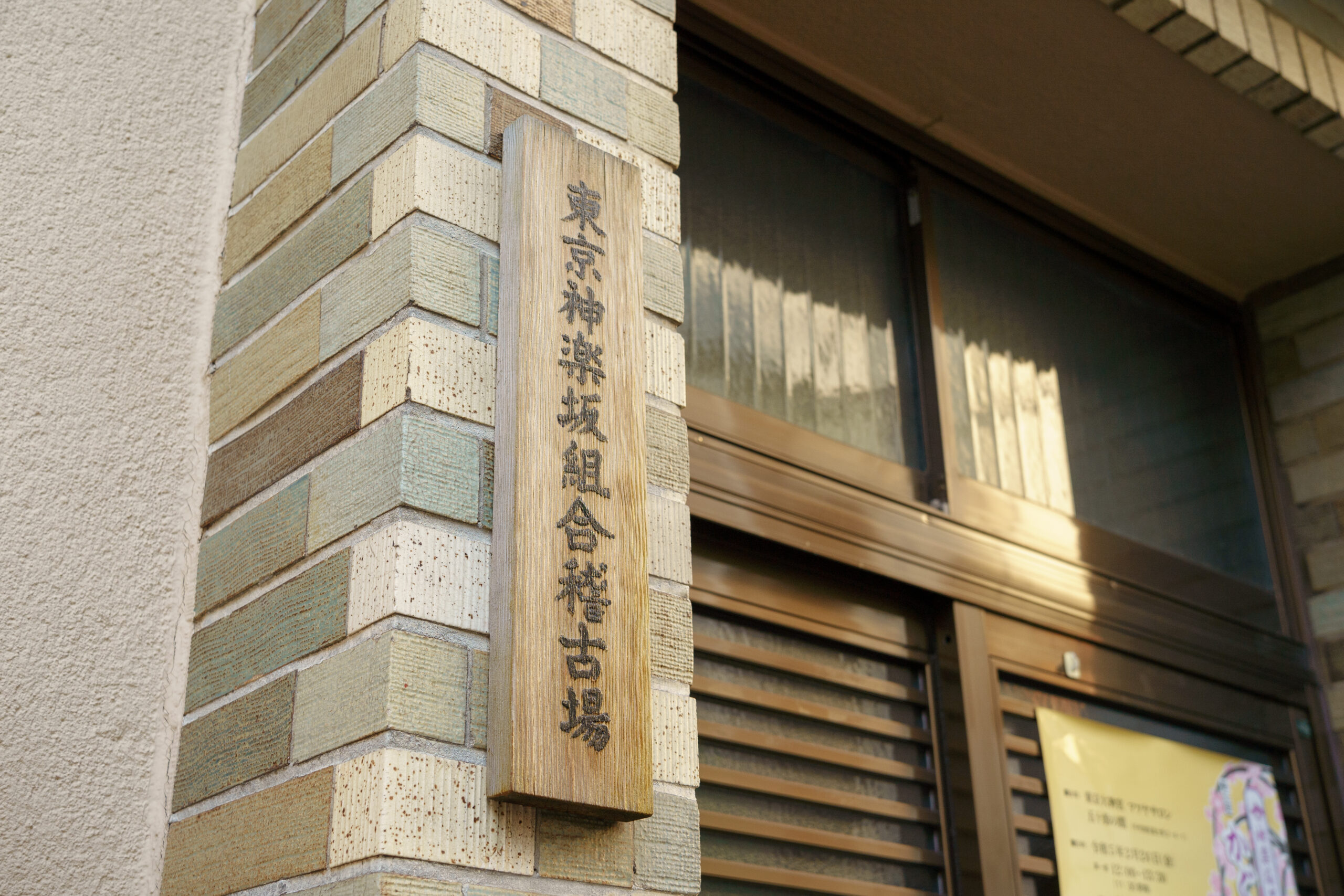
The “Tokyo Kagurazaka Association” still exists today, commonly known as “Miban. As Mr. Hoshino explained earlier, there are three ryotei restaurants that are members of the association, as well as a little less than 20 geisha and one hantama-san (apprentice) (from Instagram account “kagurazaka_kumiai”).
This is the “training hall.
And the union office is next door. The street in front is “Miban Yokocho”.
The association is also responsible for organizing the Kagurazaka Odori (dance performance), in which geishas participate in Zenkokuji’s Setsubun Festival and perform the results of their daily studies once a year in front of everyone.
Kagurazaka flourished as a hanamachi (flower town) from the end of the Edo period (1603-1868) as the number of visitors to Zenkokuji Temple increased, but at that time it was a town for common people. It is said that it was after the Great Kanto Earthquake that the mature and upscale atmosphere of today’s Kagurazaka was generated. Many stores moved to Kagurazaka from Ginza, and the rent prices rose dramatically, and the common people began to drink in Yotsuya and Shinjuku. This is the reason why the tradition of the Hanayagikai is still being passed down today.
Even at first glance, there are ryotei that sell plans to experience the fun with geisha without renting out the entire tatami room, and you can also experience the real Edo chic. On the other hand, there are also restaurants where you can enjoy a casual Japanese atmosphere while making use of old buildings. You can stroll around with an old map in hand, or put it away and explore the heart-shaped cobblestones. Just wandering around Kagurazaka is a trip back in time.
Interview and text by Atsunori Takeda (steam)
Photo by Satoshi Okubo
Supported by Walking Trip Ouensha