

Explanation of the contents of “Yomeiri Dougu Arrangement” [Decorating Hina Dolls].(yomeiridouguzoroi)
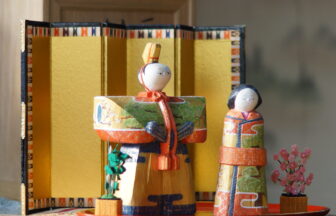
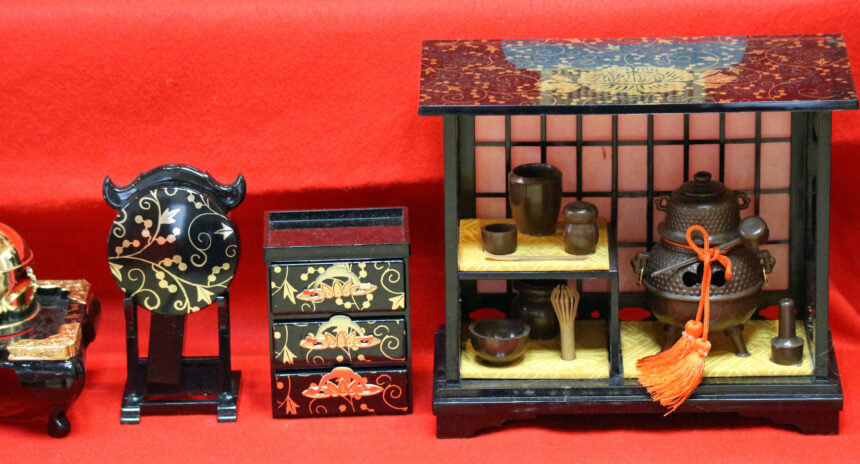
These gorgeous wedding implements accompanied the dolls, which were made to resemble a wedding ceremony at court. The implements included chests of drawers, nagamochi (rectangular storage boxes for clothing and bedding that could be carried around), and kagami-hari zoroi (a set of mirror needles). The utensils included tansu (chests), nagamochi (rectangular storage boxes for clothing and bedding that could be carried around), and kyohari zororai (a set of sewing boxes and two sets of mirror stands). A hibachi (brazier), a daisu (a portable tea ceremony utensil set), and a tansu (a rectangular storage box for clothing and bedding). Hibachi (a hibachi, a small bowl with a set of tea utensils on it), daisu (a mobile stand for tea utensils), stacked boxes, okago (a palanquin), and gisha (a vehicle pulled by an ox). A vehicle pulled by an ox, a kakebanzen (a table with five kinds of fine bowls). The traditional Hina dolls include a stacked box, a palanquin, an ox carriage, a gisha (a vehicle used to pull oxen), and a kakebanzen (a table with five kinds of fancy bowls). Some of the most venerable dolls are lacquered and decorated with gold maki-e, and are highly valued as arts and crafts.