

What is the meaning behind the three colors of “Hishimochi”? Hina Doll Decorations(Hishimochi)
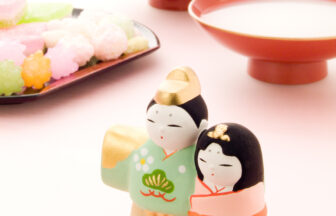
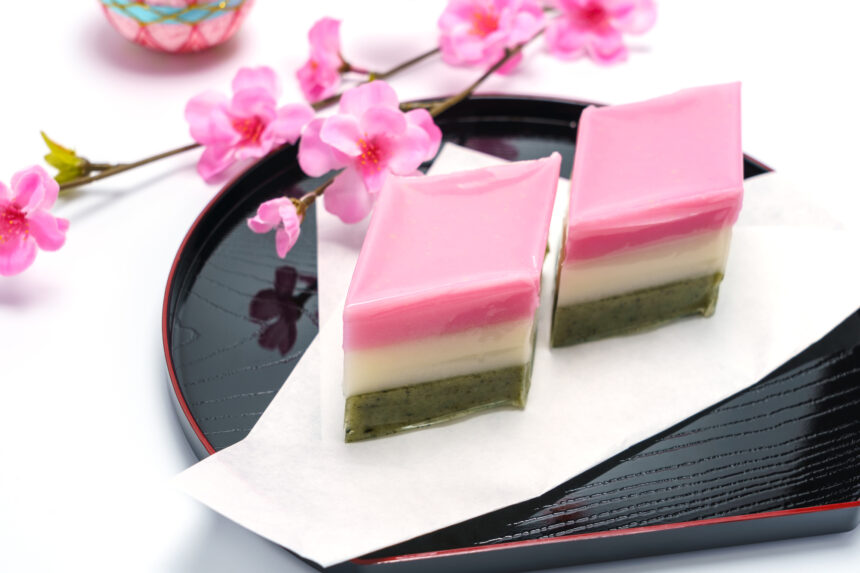
Mochi (rice cakes) cut into diamond shapes are displayed with hina dolls on Hina Matsuri. Most rice cakes are layered with three colors from the top: red (pink), white, and green, but there is no rule for this. In some areas, five colors are used. Since ancient times, in China, water chestnuts have been used for the festival of the Snake of the First Serpent (Joushi-no-Matsuri). The custom was to eat rice cakes made of water chestnuts and gogyo, one of the seven spring herbs. This custom was introduced to Japan, and people began to make rice cakes with mugwort, which sprouts around the same time. It was not until the Edo period (1603-1867) that the current diamond shape was adopted. At first, two layers of white and green rice cakes were piled on top of each other, but in the Meiji period (1868-1912), a layer dyed red with gardenia seeds was added. The red and green colors are meant to ward off evil spirits, while the white color is meant to bring prosperity and longevity to offspring.