Uiro

Japanese confectionery

Uiro(Uirou)

Nagoya (city)

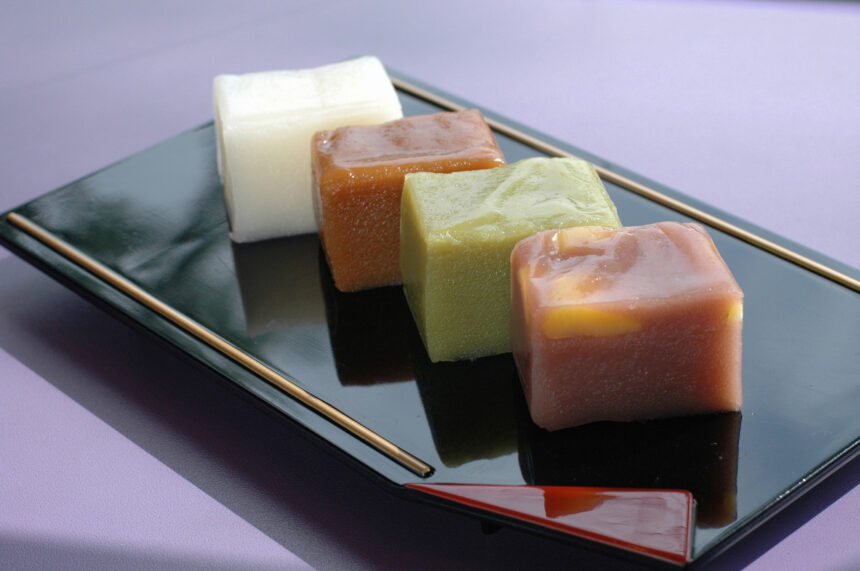
Rice or glutinous rice flour is mixed with sugar and water, kneaded, and steamed in a mold. Some gairo are made with kudzu flour or bracken flour, and are a specialty of Nagoya, Yamaguchi, Odawara, and other areas. It is usually made into necklaces, but it is also used as the dough for other wagashi such as mizunashi, eaten on June 30 during the summer purification ceremony called “Nagoshi-no-harae”.
The name comes from the name of a phlegm-cutting pill introduced from China in the Muromachi period (1336-1573). It is said that the name was given because the shape and color of the pill resembled the confectionery gairo, or because it was used as a mouthwash for the pill.
新着・おすすめ情報

  1. Yamamoto-Tei (aristocratic group of pious men)

  2. Abiru Shrine (Akiruno, Tokyo)

  3. What does a “prop maker” do? The Craftsman Who Creates Puppets Series

  4. The name “Mokumegome doll” comes from the fact that the fabric is pressed into the shape of a doll.

  5. He started helping out in the family business as a child and went on to become a part of it. Kimuraya Honten, Asakusa’s oldest doll-shaped yaki store

  6. Tokyo Literature Walk] No.3: Waseda Area. Soseki Natsume and Waseda University, a journey tracing the scent of modern literature and culture

  7. 【老舗ご当主・識者と歩く】日本推しラトビア人アルトゥルさんと虎ノ門−新橋の老舗をめぐる

  8. revitalization

  9. Kawaramachi Inari Shrine (Kitasenju, Tokyo)

  10. 【第7回】蕎麦に欠かせない薬味「葱」と「唐辛子」について

  11. What innovations have been made at Nimben, a 321-year-old dried bonito flakes business?

  12. Namikaze Shrine (Tsukiji, Tokyo)

  13. soba noodles eaten on New Year’s Eve

  14. New Year’s decorations

  15. Ome Shinmachi Oido (Ome, Tokyo)