

Japanese confectionerymanjuuGinza (shopping district in Tokyo)
Founded in 1349, Shioze Sohonke invented Japanese-style sweet buns. The Shioze Sohonke invented Japanese-style sweet buns and has continued to innovate throughout its 670-year history, and still supports Japan’s wagashi culture today. We interview the 35th head of the family, Issei Kawashima, about the history and family traditions of the family. The history of the Shioze family, which is grander than a great river, including the invention of sweet buns by the first generation Hayashi Jochin, the development of the Shioze family with close ties to the Ashikaga and Tokugawa families, and the transition of buns, brings us many surprises beyond the image we have of “buns.
〜first partcontinued from
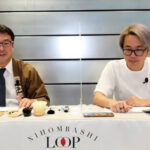
Hayashi: Let’s continue with the history of the Shioze Sohonke family.
In 1460, Touten Seisuke opened a store in Kyoto from Hayashi Jochin’s store in Nara. The name Manjo-ya-cho still remains in Karasuma Sanjo.However, shortly thereafter, in 1467, the Onin War broke out. The ancestors evacuated to the village of Shioze in Shitara County, Mikawa Province. While he was unable to do business, he went to China to acquire new knowledge. What was born there was “Tororojo Manju,” which is still the signature menu item of Shioze Sohonke.
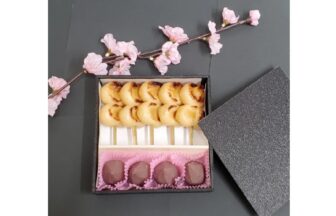
Forest:This is a good size. Once you start eating it, you won’t be able to stop.
Ms. Kawashima: There are also photos of Shioze Castle, which was evacuated at the time.
Wow, great.
Mr. Kawashima:This small castle was located in present-day Shinshiro City, Aichi Prefecture. It was given to us by the Shioze clan, a powerful family that ruled this castle, and we took the name of Shioze as our trade name.
Until then, you simply called yourself a “bun shop.
Edo period buns were “made to order.
The subsequent prosperity of the shop is indicated by a large signboard that reads “Japan’s No. 1 Main Manju-sho” (Japan’s first bun shop). Lord Ashikaga Yoshimasa, who built the Ginkakuji Temple, wrote the characters on the signboard. We also received the very prestigious 57 paulownia crest from Emperor Go-Tsuchimikado. And we must not forget one more person: …….
Hayashi: There you go.
I am Soji Hayashi’s grandson, Soji Hayashi. He loved tea so much that he got Sen no Rikyu’s granddaughter as a bride. He invented a tool called shiose fukusa, which is indispensable for tea, and sold it along with manjuu (steamed buns). Unfortunately, the family in Kyoto ceased to exist, but the ancestors who moved to Edo (present-day Tokyo) became three separate families, one in Nihonbashi, one in Reigishima, and one in Kyobashi, and they prospered.
Hayashi: I see.
Especially famous was Gozaemon Shioze.
It is the ancestor of Reigan Island.
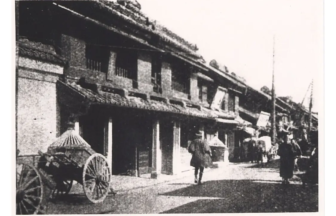
He wrote the biography of Shioze Yamashiro and is said to be the founder of Shioze Chukyo. The prosperity of the business is described in Edo guidebooks such as “Shokuedo Sunako” (1735) and “Edo Meimono-shi sen” (1836). In the Edo period, basically, they did not sell manju on a shelf and say, “Here, take one. Instead, they were delivered to the ladies’ chambers or temples after receiving an order.
Basically custom-made.
At that time, sugar was an imported commodity controlled by the Edo shogunate. At the end of the Edo period, when the financial situation of the Edo shogunate worsened, sugarcane was started to be grown in Okinawa and Tokushima, and the common people were finally able to eat sugar.
Until then, sugar was a very luxurious thing.
Actually, Lin Jo-Yin left his descendants in Nara and went back to China. Since we do not know the exact location of where he went back, we erected a monument in a national park in his hometown of West Lake Hangzhou, China, and hold an event called the Manju Festival every fall.
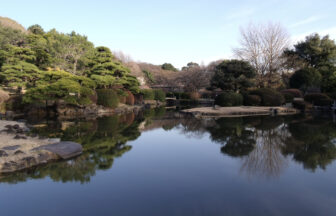
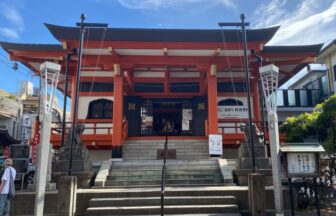
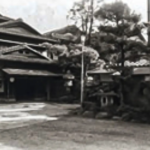
This is the current Shioze Sohonke head office and the teahouse inside the head office.
Then there is the family motto.
In the president’s office, the posthumous instructions of an Edo period scholar named Watanabe Kazan are displayed in a frame. The company’s business precepts, such as “First of all, get up before the servants in the morning,” and “Value a customer who pays 100 bun more than a customer who pays 10 ryo,” as well as its life precepts, such as “Never forget the debt you owe your father and mentors and never say you are short of anything today,” are also on display.
Birth of the greatest invention “Anko
What are some of the innovations of the Shioze Sohonke?
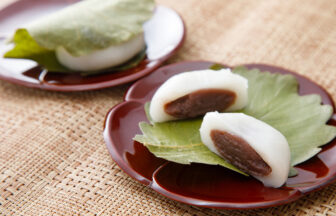
Mr. Kawashima: First of all, the transition of buns. The wheat buns that hardened over time became grated yam, and the taste of the red bean paste became much better, which led to the creation of honmanjyu, a very thin-skinned bun. This innovation was made by our company alone.
That’s great.
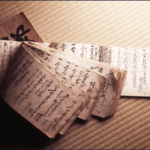
The greatest achievement of Hayashi Jochin is that he invented anko (red bean paste). With this change, buns also went through a transition. That is how the “confectionery sample book” of jyosai sweets handed down in our company since the Edo period was born. The technique of creating craft-like confections using only anko (red bean paste) was established during the Edo period.
Hayashi: And next.
Reforms in confectionery occurred even after the war, and our company took on various challenges to adapt to them. We collaborated with Sanrio to make Kitty-chan shaped buns, collaborated with the Kabuki-za theater to create kuma-ori buns, and developed chocolate yokan for the Olympics. We can draw anything on the white grated yam,” says Mr. Kikuchi.
Well, your time has come quickly, and we have asked you to do the impossible and summarize over 670 years of history in this 45-minute presentation at ……. The contents of this book are described in full in the book “Manjyuya Shokatsuki” written by Eiko Kawashima, Mr. Kawashima’s mother. We encourage everyone to read this book, including history, folklore, and shrine lovers.
The Shioze Sohonke is eager to take on innovative initiatives, such as the invention of anko (red bean paste) and recent collaborations with Sanrio and the Kabuki-za Theater. The company’s attitude of never resting on its laurels and always taking on new challenges is dazzling.
*If you would like to see this dialogue on video.here (place close to the speaker or where the speaker is)