

What is the difference between kaiseki ryori and kaiseki cuisine? Explanation of the origin and manners you should know!
Japanese Food Mannerstea-ceremony dishesDifference between Kaiseki Cuisine and Kaiseki CuisineKaiseki Cooking MannersKaiseki Cuisine Order
Kaiseki ryori” and “kaiseki ryori” restaurants come up when searching for Japanese restaurants. Although they read the same “kaiseki,” there are differences between them. In this issue, we asked etiquette consultant Hiroko Nishide about the origin of kaiseki ryori, differences from kaiseki ryori, and manners to keep in mind when eating kaiseki ryori, which you should know in order to enjoy kaiseki cuisine.
What is Kaiseki cuisine?
Kaiseki ryori is a light meal served at a tea ceremony before the Koicha (thick tea) is served.
Kaiseki ryori is for enjoying tea. Kaiseki ryori is served before the tea ceremony so as not to damage the stomach by drinking koicha on an empty stomach. Kaiseki cuisine respects the wabi and sabi, the spirit of the tea ceremony, and uses seasonal ingredients to share the sense of the season. To avoid spoiling the taste of the tea ceremony, the portions tend to be small, and dishes with strong flavors, fried foods, and gaudy decorations are avoided. The menu is based on “one soup and three dishes,” with rice and soup served first.
What is the history and origin of kaiseki cuisine?
There are various theories as to the origin of kaiseki cuisine, but it is related to “onjaku,” the practice by Zen monks of keeping a warm stone in their bosom to ward off cold and hunger. The word “kaiseki” was coined to mean a light meal that warms the body and eases hunger, just like the warm stones in the bosom. In the Azuchi-Momoyama period (1573-1600), Sen no Rikyu introduced this spirit into the tea ceremony and established kaiseki ryori.
Difference between Kaiseki Cuisine and Kaiseki Cuisine
Kaiseki ryori, on the other hand, was developed in the Edo period as banquet cuisine based on honzen ryori, a highly prestigious hospitality dish based on the etiquette of the samurai class in the Muromachi period.
Kaiseki ryori is said to be “cuisine for enjoying tea” while kaiseki ryori is said to be “cuisine for enjoying sake. However, with the passage of time, kaiseki ryori is no longer considered to be a meal for tea ceremonies, and some kaiseki ryori is served at ryotei (Japanese-style restaurants) to enjoy alcoholic beverages. Some kaiseki dishes are served at ryotei (Japanese-style restaurants) and other places where drinks are enjoyed. The main difference between kaiseki ryori and kaiseki ryori is that kaiseki ryori is served with rice and soup at the beginning, while kaiseki ryori is served with rice and soup at the end.
Introduction of Kaiseki dishes and the order in which they are served.
The basis of kaiseki cuisine is, as mentioned above, one soup and three dishes. Recently, however, arrangements have been made and the number of items and their order varies from restaurant to restaurant. Here are some typical menus and their order.
1 / Oshiki
An oshiki is a set of three items: rice, soup, and mukozuke. Mukozuke is the first dish of the three in a soup, and sashimi is typical.
Mukozuke is the first dish in the “Ippiru-Sansai” cycle, and is typically composed of sashimi.
2/Wan mori
The main dish of kaiseki cuisine. Seasonal vegetables, meat, fish, fu, etc. are colorfully arranged in a large bowl.
3/Grilled fish
Grilled fish is arranged on a large plate for a number of people, and you use chopsticks to share the portion you will eat.
4/Shiizakana (strong appetizers)
Shiizakana is also called “Advancing side dish” or “Deposit bowl”. It is mainly served with takikomiawase and vinegared dishes.
5/sukemono
Soup is served at the end of the meal to refresh the palate. It is also called “chopstick wash” or “rinse soup.
6/Hassun
A dish of mountain and sea food served as a snack to enjoy sake after the meal.
In kaiseki cuisine, hassun (appetizers) are served in the latter half of the meal. On the other hand, in kaiseki cuisine, where sake is served first, they are often served at the beginning of the meal, either with the first course or following the bowl of soup.
7/Yutouke and Konomono
Yutou is a salty, salted dish made by pouring boiling water over the leftover roasted rice in the bottom of the kettle.
8. Omogashi and koicha (thick tea)
Omogashi is a Japanese confectionery that enhances the taste of koicha (thick tea), and is served with kneaded rice balls, kuzu manju, etc.
Manners at Kaiseki Restaurants to Remember
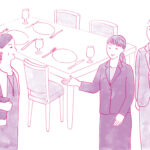
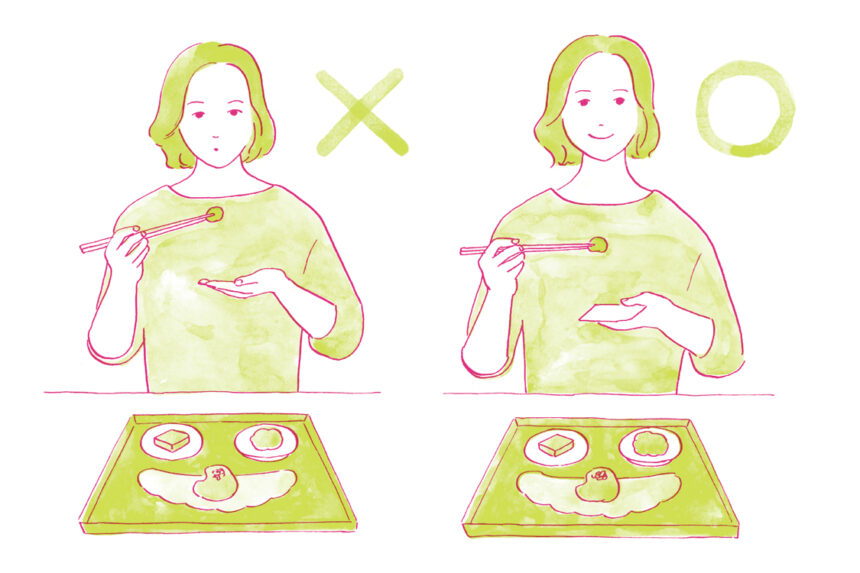
Kaiseki dishes served at authentic tea ceremonies are sometimes called “chakaiseki” to distinguish them from kaiseki dishes served outside of tea ceremonies. Chakaiseki actually has a detailed etiquette, but kaiseki dishes served at restaurants do not. However, in order to enjoy kaiseki cuisine with confidence, here are some minimum manners you should know. There are certain rules for how to dress, how to eat, and how to spend time in the restaurant, and if you keep these in mind, you should be able to enjoy your meal without any worries. These are also common to kaiseki cuisine, so please try to keep them in mind.
Relax and enjoy Kaiseki cuisine with an understanding of its origin and manners.
Kaiseki cuisine is a tradition of the tea ceremony, but they say it is important to enjoy the food without being formal.
Kaiseki cuisine should be enjoyed by using seasonal ingredients and making the most of the flavors of the ingredients. Although the minimum etiquette is necessary, there is a tendency to be concerned only about the formality of the food and to point out that “it is not right” or “it is wrong” if there is even the slightest deviation from that formality. However, what should be emphasized in table manners is to have good communication and to build a good relationship with others through the dining experience. It is important manners to enjoy communication with those present and to be grateful to the ingredients, the chef, the restaurant staff, and those present. Please enjoy the food gratefully in this way”.
Interview and text by Yoshiko Tezuka
Illustrations by Tomoko Shinozuka
Hiroko Nishidethree
We spoke with…
Manner consultant. He has taught manners to actors, athletes, and celebrities for NHK historical dramas, movies, and commercials, and has also covered the manners of the Imperial Family. She has also supervised and written more than 100 books, which have sold more than 1 million copies. The know-how that Ms. Nishide imparts can be easily incorporated into daily life and work, and is popular for its highly convincing content.
For more information about Ms. Hiroko Nishide, please visitOfficial Siteand,InstagramThe information is updated as needed on the following website.