

Ginza (shopping district in Tokyo)Western-style meal
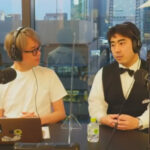
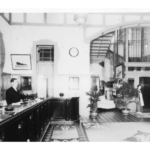
Mikawaya Grocery Store opened in Ginza in 1887. During the turmoil at the end of the war, it was re-established as French Cuisine Mikawaya and became the current “Ginza Mikawaya”. The restaurant offers exquisite Western-style cuisine. Many customers have become regular customers, and the restaurant is bustling with people every day. We interviewed Shinpei Watanaka, the fourth-generation owner of Ginza Mikawaya.
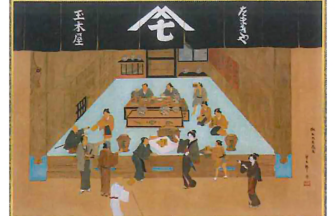
We, Ginza Mikawaya, operate a Western-style restaurant in Ginza 4-chome. We have been in business as a Western-style restaurant since 1948, after the war, but the trade name “Mikawaya” itself dates back to 1887, when the restaurant was opened as a grocery wholesaler, which is 136 years ago. As a Western-style restaurant, it has been in business for 75 years. I am the fourth-generation owner of Mikawaya, and I am currently in charge of service.
Thank you very much. What was the situation like when the Western restaurant was established at that time?
When the restaurant started as a Western-style restaurant, it was during the chaotic postwar period and supplies were scarce. In addition, since the restaurant started as French Cuisine Mikawaya, it was a very difficult time to manage the business, as such things were not yet recognized at the time.
That was really the time when French cuisine was just coming in.
Yes, it is. Historically, Western cuisine itself has been around for more than 100 years, but it was around the prewar and postwar periods that it really took off. Western food” was known in Japan as “Western cuisine” at that time, but since people were not accustomed to it, it became easier for the Japanese to eat. As a result, the cuisine became quite different from the cuisine of the home country, and it has now become a genre of “Western food.
It was originally brought to Japan by Westerners as Western cuisine, but as it became popular in Japan, it was adapted to suit the Japanese palate, is that correct?
That’s right. If we go with something close to it, it is now a genre of Japanese food, so you can think of it as similar to ramen, for example.
Ramen was originally born in China.
Yes, it may not have been called “ramen,” but what originated in China as a noodle dish took root in Japan and took this form.
Such is the case with Mikawaya, but let me ask you a little more about your generation. Mr. Watanaka, you were originally born into the family of Mikawaya, how did you see the store and the family when you were a child?
When I was a small child, I never cared much about business. This is because, although the restaurant is located in Ginza, I was born and raised in Yokohama, Kanagawa Prefecture. My grandfather was the first generation in the Western-style restaurant, and he commuted from Yokohama. Because the restaurant was not located next door, I did not get to see him at work, so if you ask me if it was a part of my life, I would say that it was a completely different existence.
Yes, I have heard many stories of various long-established shops, and many of them say that the workshop was on the side, or that they went to school while passing by the side where they were making anko (sweet bean paste) every day. While some of the stories are about artisans who would teach us how to shave something, it was located a little far away from the school.
That’s right. I was aware that they had a store in Ginza, but Yokohama and Tokyo are far apart, so it is not an easy place to get to. My grandfather was in Ginza and I was a child of my grandfather (……). He was very protective of me and I was spoiled by him.
Is it like you visit your grandfather once a month?
I don’t think it was that often. My grandfather passed away when I was 12 years old, so it was not so easy for an elementary school student to travel around. But it is an exaggeration to call it one small trip, but it was one of the things I looked forward to.
Somewhere along the way to adulthood, did you become aware of Mikawaya?
That’s right. My father also worked at Mikawaya. When I was older than 12 years old, I sometimes felt that my father was involved in the food business when he would sometimes show off his skills at home. There were some things that he couldn’t serve to customers, so he would put his own twist on them and put them on the dining table. I felt that my father was doing his job at Mikawaya.
Until I entered the workforce, I thought I would never take over.
After that, when did you start thinking about joining Mikawaya?
In fact, it was not my own idea to join the store. My uncle later became the second generation in the store. I had a cousin who also had a male sibling, and that cousin was also working at the store at the time. My father told me that I should work outside the store because he would never take over the store, so at that time, the “Mi” in Mikawaya was not even mentioned.
It is a rather unexpected development. It is a different development from what we have heard from you. You are saying that you don’t have to take over anymore, right?
Yes, I did. I was already working as a salaried worker because I was told to make a living on my own. The turning point came when I was in my eighth year as an office worker. When I was about to be transferred to a regional area by myself, there was a move at Mikawaya as well. My uncle became ill and was replaced by my father, but the store was also going through a very difficult time due to the bubble economy. My father was over 60 years old at the time, and we were thinking about the future of the store. As a matter of fact, my cousin who was working at the store quit, and we were told that there was no one to succeed him.
So that’s what happened.
In the end, there was no one to take over the business, and this was just after I had been offered a transfer to another company and I had said “yes, I will go,” so I was in a difficult situation. I refused several times to take over the business, and then they simply said, “If there is no one to take over in the end, let’s just quit the business as it is. I said, “Wait a minute. I was not sure if I would quit for such a reason after my grandfather, whom I loved very much, had brought the restaurant to this point.
It wasn’t that you were uncomfortable at that company you were working for, as much as you were thinking of going there for a transfer, was it?
I had been in the same place for eight years and was just getting used to it, so I thought I could “reset” when I heard about the transfer. So I accepted without any hesitation, but when the idea of a successor came up, I was quite upset.
May I ask what kind of work you did?
Yes, I was in sales for a company that did wholesale and manufacturing of food products. I worked in sales for a company that did wholesale and manufacturing of food products.
Is there anything you did then that you can use today?
Yes, I do. The business category is completely different from that of restaurant and sales, but I think my knowledge or perspective on ingredients has changed a lot over the 10 years I’ve been here. The way of looking at things is completely different.
For example, do you know if things are good or bad?
In particular, the company I was with was an agricultural company, so there were quite a few people who talked with the agricultural cooperative. We often talked about how vegetables, rice, and fruits were doing or not doing, so when I entered my current job, where I see such things firsthand, I felt differently about each and every ingredient. I could understand that it was because the weather was like this, or that it was inevitable that something didn’t go in because of the circumstances. I think that kind of understanding is still alive today.
Yes, since you are now on the side that manages the restaurant, you were working on the supply side, so it is quite important to be able to understand how they feel when they come to do business or deliver food to the restaurant from that standpoint.
Yes, it is. Because we are dealing with nature, there are times when it is “just not possible. However, I used to be a sales person, so I can spot a contractor who tells a lie. I am very strict with such people.
I understand. I was in sales myself, so I am “weak” when it comes to being sold to. I can never be with someone who is really sneaky, but when they try their best, I feel like I want to order something from them today.
I understand. I would give them special treatment. As a sales person, I know that these people are serious about what they do.
I have tried my best to say, “I like this, I really think this is a good idea, and I think I can help the customers in this way,” and I am weak when people say, “How can I help you?
It is exactly the same.
The most important thing is “not to bother others.
Did you have any kind of family motto in your house?
My father and mother raised me relatively freely. So I have never come this far with much of a “this” in my life, but what I was often told in the past was that I should not cause trouble for others. I think that may have influenced my character to think of the people around me first and act accordingly.
That is important. If everyone is raised without being told that, it is normal for them to think of themselves first.
That’s right. So even now, I am still in the habit of thinking that I don’t care what happens to me, but I just want to make sure that the people around me get it right before I do my own thing.
I think this is a good fit for the current era, as the required management stance is approaching that side of the market.
I would appreciate it if you could evaluate it that way.
Can you tell us about the innovations that have taken place from your grandfather’s generation to your father’s generation?
That’s right. As I mentioned earlier about genres, Western cuisine itself is one innovation in the first place. Originally, Western cuisine was a Western food, and then it was innovated into Western cuisine. Although our restaurant has changed from Western cuisine to Western-style cuisine, we are doing what we do by valuing the first part of the process, so I think what we are doing is almost the opposite of what we are doing in terms of the big theme of innovation. We place great importance on passing on what was at the dawn of the Showa period to the present.
In my generation, I would say that, partly because I was out of the office, a great many of our staff have been with us for a long time, and then many of them are still convinced that what they are doing now is fine, and that they are fine the way they are doing it. Therefore, from my point of view, I see things that make me wonder, “Why are we doing this? We are changing those things now, one by one. While keeping things the same on the surface, by changing things on the inside, I would like to create an environment where the staff involved can focus more on their work. It is like we are promoting what is called internal innovation.
Yes, the person in charge stands on the service side of the so-called “hall side” every day, but I think the morale and mindset of the staff is also important.
I am very conscious of that. I am aware that the staff members are the key to the store. There is a limit to what I can do alone. What I often tell my staff is that customers remember our names and we remember their names and become friends with them, but I want to make sure that all staff members treat each other in the same way, not just certain staff members. I am aware that we have been able to maintain this restaurant up to this point thanks to the support of our customers, and we must continue to take care of our customers as well, so we must create an environment that allows us to focus on that. I believe that is my mission.
What specific efforts are you making?
It’s a detailed process. We try to separate those things out completely. Also, if an erroneous order was placed and it took a lot of time and effort, we would have to worry about it, so we placed the order digitally. Until now, there have been many parts of the business that have been done without maintenance, so we have made sure that this part of the business is done properly. This will reduce the number of accidents.
If you worry about this, that, and the other in your mind, you will not be able to make progress.
Yes, it is. I can’t move well. If you are dealing with customers while thinking about your worries, you probably won’t be able to hear what they are saying at all. It would be rude to say things like, “She doesn’t listen to me.
I told you earlier, didn’t I?” If this happens, it is not good for the hall. We need to know what the customer meant when he or she said that.
In order to achieve our goal at all costs, we repeatedly and minutely detach the excess once, organize it, and put it back together again in a proper form.
We will improve the efficiency of the detailed work. What this innovation brings about is an environment that allows us to focus more on our customers. This has enabled Ginza Mikawaya to get to know each and every customer and build a thick relationship of trust with them.
latter part(temporal or logical sense) follow …
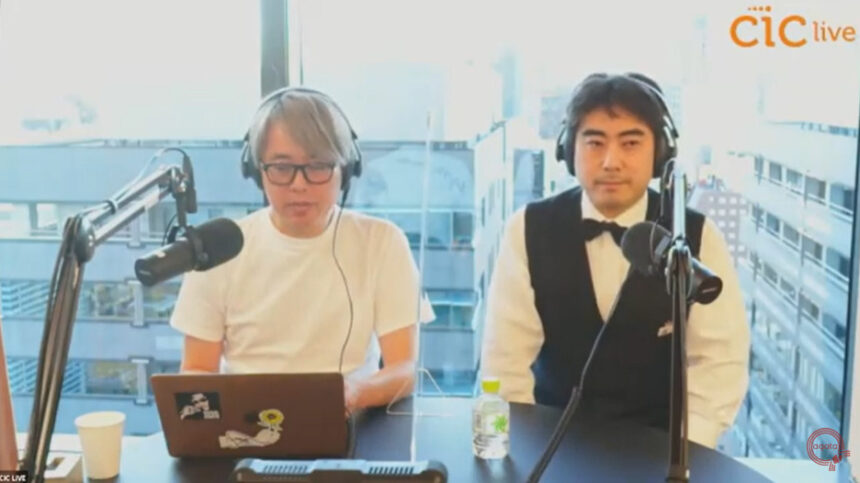
*If you would like to see this dialogue on video.here (place close to the speaker or where the speaker is)