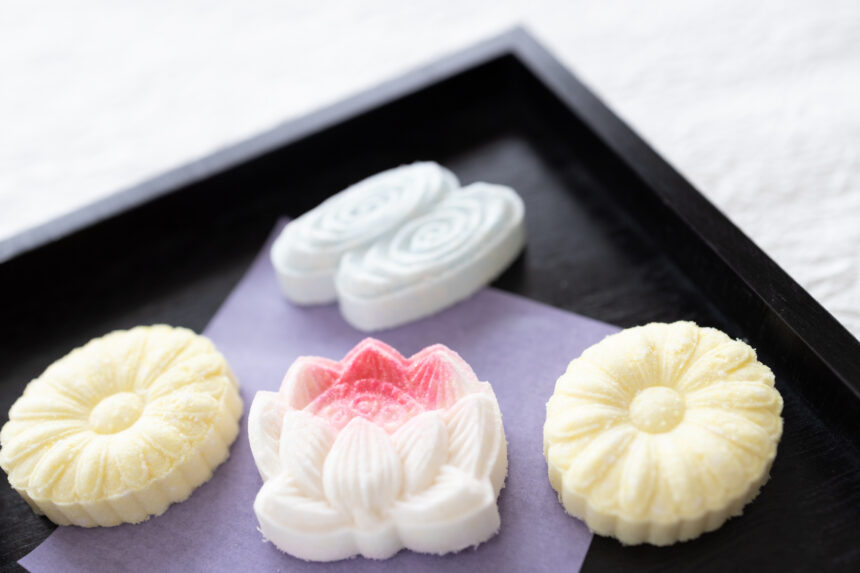
geese alighting

Japanese confectionery

geese alighting(rakugan)

dried confectionaryforged weaponry (e.g. swords, spears, etc.)

Grains such as rice, azuki, soybeans, and buckwheat are milled, kneaded with sugar, syrup, etc., colored, and pressed into a wooden mold to dry. This dried confectionery is called “Uchimono.
There are various theories as to the origin of the name. One theory is that the white rice flour ground with black sesame sprinkled on it was made to resemble a flock of geese descending on snow, while another says that when a Chinese confection called “Nanrakukan” was introduced to Japan, the “soft” was omitted and the word “Rakugan” was added, and the character for “goose” was later applied.

新着・おすすめ情報

  1. Inheriting the craftsmanship of making each toothpick one by one. Commitment to “Nihonbashi Saruya,” the only toothpick specialty store in Japan

  2. What nutrients are contained in “buckwheat tea” that are good for the body?

  3. What does “Namida (sushi)” mean?

  4. Asakusa 1 Day Sightseeing Plan] Tour Asakusa’s long-established shops! 5 spots where you can feel history and tradition

  5. 【第18回】古くから食べられてきた「そばがき」の作り方

  6. Koyasan Tokyo Betsuin (Takanawa, Tokyo)

  7. one-piece sash

  8. Why is “Koinobori” carp? The reason is said to be based on Chinese folklore.

  9. eel-liver soup

  10. battledore (early form of badminton racket)

  11. 8220;Sake Samurai”s Tour of Tokyo’s Long-established Sake Breweries with Yuki Aoi

  12. Tokyo Literature Walk] No.5: Literary figures of the Showa period settled in Shimokitazawa one after another. Why Shimokitazawa became a town of culture

  13. Tsukiji Catholic Church (Tsukiji, Tokyo)

  14. Umezono, a long-established sweet shop in Asakusa. Brand is established through trust with customers and business partners.

  15. graupel