

What to do on the far shore for ancestor memorial services? What to wear, what to bring, and what to do on the day of visitation.
visiting a graveProcedure for visiting a graveBuddhist services during the equinoctial weekcommemoration of one’s ancestors
Have you ever gone to visit a grave and wondered, “Is this right?” Have you ever visited a gravesite and wondered about manners and etiquette? We asked Ms. Hiroko Nishide, a manner consultant, about the basics you should know when visiting graves before the spring equinox.
What is the meaning and purpose of the far shore, which occurs twice a year, in spring and fall?
In some cases, you may be able to imagine that Ohigan = visiting graves, but only vaguely understand why. First, let’s review the timing and purpose of Ohigan. There are two Ohigan periods a year, in spring and fall. The first day is the “first day of the equinoxes,” and the second day is the “first day of the equinoxes,” or the “first day of the equinoxes” in Japanese.
The first day is called “the first day of the equinox,” the middle is called “Ochu-naichi,” and the end is called “higan-aki. The sun sets from the true east to the true west, and day and night are exactly 12 hours apart. Therefore, it is said that the heat and cold last until the equinoctial equinox, and it marks a major seasonal change,” says Mr. Nishide.
The equinoxes are the best time to face the place where our ancestors are, which happens only twice a year. In Buddhism, the world of worldly desires and wanderings where we live is called “Shigan” and the world of enlightenment (the Pure Land) where our ancestors live is called “Higan”. The Pure Land philosophy also states that we can cross over to the other shore by accumulating good deeds. According to the Pure Land philosophy, the Pure Land of Ultimate Bliss is located in the true west. Therefore, the days of the vernal equinox and the autumnal equinox, when the sun sets in the true west, are considered to be the days when it is easiest to cross from this world to the other world. It is believed that by holding ancestral memorial services on these days, the ancestors will be pleased.
When is the best time to visit a grave during the far shore?
The word “Ohigan” originally comes from “Arrival at the other shore,” the path to enlightenment (satori). To attain enlightenment means to become a Buddha, and there are six paths (Roku-haramitsu). The first of these is fuseki. The first of these is fudan-enforcement, which includes wagan-enforcement (smile at others), omi-en-en-en-en-en-en-en-en-en-en (look at others with kindness), jido-en-en-en-en (speak kind words), shin-en-en-en-en-en (serve others with one’s body), and shindo-en-en-en-en (compassion).
One of the most important acts on the far side of the equinox is to always remember to smile, and to use unbiased and kind gazes and compassionate words and actions, and above all, to put yourself in the other person’s shoes and give form to a caring heart, which is the sincerity manner.
With this in mind, he taught us about manners related to the equinoxes and visiting graves.
First of all, the best time to visit graves is on the middle days of the Ohigan period, the vernal equinox and the autumnal equinox, but there is no problem if you can go at any time during the period. Since large cemeteries are expected to be crowded on weekends and holidays, shifting the date is also an option,” said Mr. Nishide.
Nishide-san, who advocates manners and a “considerate mindset that puts oneself in the other person’s shoes,” says, “The grave is a place for one’s ancestors to be cared for.
The grave is a place to communicate with the ancestors. It does not mean that the ancestors are there. As the famous lyrics of the song “A Thousand Winds” say, from the standpoint of the ancestors, “I am not there. Mr. Masamichi Kojima, the chief priest of Enpukuji Temple, told us, “A grave is a place where we can talk with our ancestors and remember their legacy. It is better to visit graves after knowing the significance of graves in this way,” said Mr. Nishide.
When we think of ancestral memorial services, the summer Obon season also comes to mind, but there is a big difference between Obon and Ohigan. Obon is an event to welcome ancestors who return to their homes, whereas the Ohigan is an event where people go to meet their ancestors from their homes. Therefore, even if you are not close to your ancestors, it would be nice if you can visit their graves on the Ohigan.
What to wear when visiting a grave?
It is not necessary to wear formal attire when visiting a cemetery, and the same attire as usual is fine. However, please be aware that this is a public place and avoid revealing clothing, sandals, high-heeled shoes, shorts, etc. “Avoid primary colors.
Avoid primary colors. Off-white, beige, gray, and other subdued colors that are appropriate for greeting and conversing with ancestors are safe. Some people say that black is associated with the image of mourning, but this does not mean that it is a bad color. However, it is safer to refrain from using black because it will stand out if it gets dirty when cleaning the graves,” says Ms. Nishide.
List of things to bring when visiting a cemetery
And your belongings are also important. When visiting a grave, you will also want to clean the grave. Some personal belongings are necessary for this purpose, so please refer to the following list to get all the necessary items.
Offerings: Food and drink that your ancestors liked, and a white half-sheet of paper on which to place them.
A pair of flowers…star anise is best. Cut flowers are not normally offered because the pollen will soak into the gravestone. If you bring fresh flowers, it is best to take them home after you have finished praying.
Incense sticks…To avoid damaging the gravestone with ash, use incense sticks that do not contain tab powder or charcoal powder in their composition.
If there is a candlestick on the gravestone, refrain from using long candles. There have been cases of burning the stone and cracking or charring the gravestone.
Lighters with handles and wind shields are useful.
Military gloves: If weeding is necessary
Rubber gloves to prevent rough hands when cleaning
Garbage bags to put weeds, dead leaves, etc.
Insect repellent spray (if necessary)
When visiting a grave, one should join hands with the deceased after the cleaning is done. Please try to wear clothes that will not make you feel self-conscious and have the necessary belongings with you. The more you are aware of these things, the more refreshed you will feel after visiting the cemetery.
Manners and procedures for visiting graves
To avoid confusion after you arrive at the cemetery, it is a good idea to know the general manners and procedures to keep in mind when visiting the cemetery.
When you arrive at the temple, visit the principal image first (if the temple has a cemetery).
During the higan (equinox), temples often hold higan memorial services. It is best if you can attend the service, but if you do not have a guide, you should visit the main sanctuary first. At this time, if possible, it would be wise to pay a visit to the temple that usually protects the graves with a gift of 1,000 to 3,000 yen in a money envelope marked “Kozaika. Of course, tea cakes would also be fine. At that time, you should say, “Thank you for always protecting the graves. However, since the main purpose of the visit is to visit the graves, you do not have to do this if it is difficult,” says Mr. Nishide.
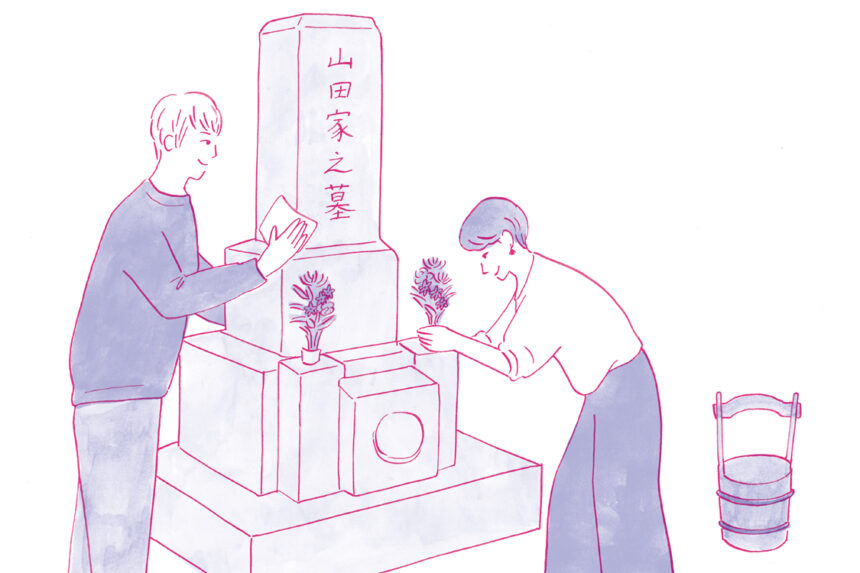
2. Gassho in front of the grave and then clean the gravesite.
Pick up dead leaves and other noticeable debris, and pull out any weeds. Be careful not to pull trash over neighboring graves or step on the neighbor’s property with your feet. When I once instructed a TV program on the etiquette of visiting graves, a celebrity took off his shoes when cleaning the cemetery. Depending on the shape of the grave, I also change into clean shoes with clean soles for cleaning. This does not mean that you have to do so by any means. However, manners are a way of expressing one’s gratitude to others through one’s behavior and form. It would be wonderful if we could understand its essence and apply it to visiting graves. The ancestors will be pleased and grateful to know that they are cared for,” says Nishide.
3. Clean the tombstone with a soft cloth
Scrubbing with a scrubbing brush or other hard object will scratch the gravestone and remove the luster of the stone, so use a soft cloth or sponge to clean it. Be careful not to use too much force as it may cause the stone to break or chip. If you are really concerned about stains or moss, use diluted kitchen bleach. In summer, you can also put them in a flower vase so the water will not be damaged and they will last longer. Once you have finished cleaning, it is a good idea to join hands and express your gratitude and thanks for allowing us to clean. Then, use a ladle to pour clean water over the entire area. Some people believe that water should not be sprinkled on gravestones, but originally, water is considered very important in Buddhism, which leads to directing water and mizumi-shuyu. However, if you are concerned about it, you do not have to do so,” says Mr. Nishide.
4. Offer flowers, food, candles, and incense
Take a piece of white half-sheet or copy paper and place the offering on it. Fold the half sheet of paper so that when folded in half, the side that comes to the top is down on the left. Then place the offering on top of it with the looped side facing you. If you place the paper on a wet tombstone, it will stick and tear, so it is best to have plastic wrap or foil under the paper. It is said that ancestors receive fragrance, so drinks should be offered on the half sheet of paper with the mouth open. The way to offer incense varies according to religious beliefs, but the basic rule is to offer either three incense sticks or the full number of incense sticks (10),” says Nishide.
Praying
Finally, pray with your palms together. When you have finished praying, take the offerings down and take them home. If you will not be able to visit the shrine for a while, it is a good idea to take the flower arrangement home with you.
The above is a general guideline, but it may vary depending on the cemetery where the gravesite is located.
There are no absolute rules or regulations for visiting graves. There are no absolute rules and regulations for visiting graves. If you are unsure about something, it is a temporary shame to ask, and a lifetime shame to not ask. The best way to be sure is to talk to the people involved at the temple or cemetery,” says Mr. Nishide.
It will be an even better time if you value communication in these situations as well.
What to do other than visit graves during the far shore? Procedure for Ancestor Memorial Services at Home
What are other things to do on the equinoxes besides visiting graves? We also asked about how to make memorial services for ancestors at home.
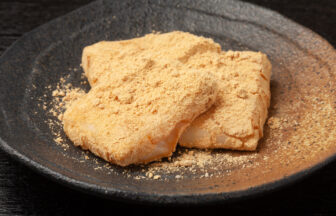
If you have a Buddhist altar at home, I think your ancestors will be pleased if you clean it more carefully than usual and arrange Buddhist flowers on it before the first day of the equinox. As for offerings, botamochi in the spring and o-hagi in the fall, as well as fruits and favorite foods of the deceased, are prepared. Incidentally, botamochi and o-hagi are the same, but they are made in the image of peony flowers in spring and hagi flowers in fall. Botamochi are made with koshian (bean paste) and are round and large in size to evoke the image of these flowers. Hagi (bush clovers) are said to be smaller and made with mashed sweet bean paste,” says Ms. Nishide.
During the seven days of the far bank, people light a torch before breakfast and dinner, and offer incense to make a memorial service for their ancestors.
The basic idea of cooking on the far side of the river is to use vegetarian dishes in accordance with Buddhist beliefs against killing,” says Nishide, “but it can be flexible according to the family’s ideas, such as the deceased’s favorite foods.
Although such events as visiting graves tend to be somewhat formal and rule-oriented, what is important even on such occasions is the warm sincerity of the deceased’s spirit.
There are no absolute rules for visiting graves, so the most important thing is to be grateful to your ancestors. It may be difficult to visit the graves during the far-off period of the year because of busy schedules. If you force yourself to visit the graves out of a sense of obligation or responsibility, your ancestors will not be happy. In such cases, don’t worry about the time of year. It is fine to visit when you can, and when you can spare the time. There are also those who are unable to visit the graves due to health or distance, or those who do not have a grave to visit. Even in such cases, you can express your gratitude to your ancestors by saying, “Thank you for always protecting me,” quietly and peacefully as you look west toward the setting sun,” says Nishide.
Supervision/
Daibonzan Enpukuji Temple, Nishiyama Fukakusa School of Jodo Sect
Masamichi Kojima, 85th abbot of Enpukuji Temple
Mr. Kojima is fascinated by the Buddha, and is popular for his easy-to-understand teachings and personality as a missionary to correct misinformation about Buddhism and graves. In recent years, he has received many requests for pet memorial services, and he also heals the hearts of those who have suffered pet loss because of his compassion for living animals.
Interview and text by Yoshiko Tezuka
Illustrations by Tomoko Shinozuka
Hiroko Nishidethree
We spoke with…
Manner consultant. With the motto of “Sincerity of Manners®”, which puts himself in the other person’s shoes, he has instructed actors, athletes, and celebrities on manners and appeared in NHK historical dramas, movies, commercials, etc. He has also covered manners for the Imperial Household. She has also supervised and written more than 100 books, which have sold more than 1 million copies. The know-how that Ms. Nishide imparts can be easily incorporated into daily life and work, and is popular for its highly convincing content.
For more information about Ms. Hiroko Nishide, please visitOfficial Siteand,InstagramThe information is updated as needed on the following website.