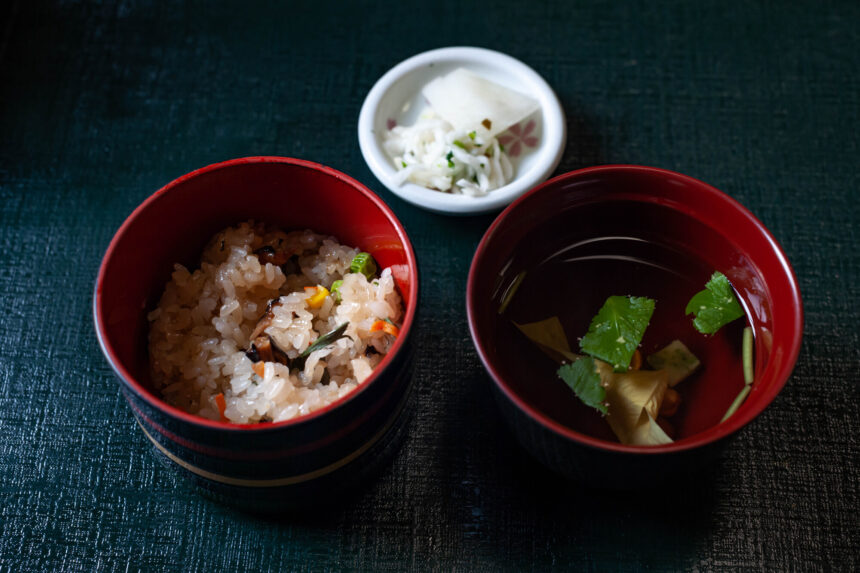
soup served at the end of a traditional Japanese dinner

Japanese-style meal

soup served at the end of a traditional Japanese dinner(tomewan/tomewan)

banquet

Miso soup or clear soup served at the end of a kaiseki meal, together with rice and savory dishes. It is sometimes described as “tote-bowl,” meaning “all the dishes have been served, and there will be only dessert after this. Some say it means “stop serving sake. If “saki” is served with miso soup, “tome-bowl” is served with miso soup, and if “saki” is served with miso soup, “tome-bowl” is served with clear soup.

新着・おすすめ情報

  1. large building

  2. Fuzoku ningyo” are dolls that reflect the customs of various regions in Japan. There are Edo genre dolls, Kyoto dolls, etc.

  3. An arrow wheel is a windmill attached to the pole of a carp streamer. What is the meaning of the sound of its spinning?

  4. Manners for Year-End Gifts for 2023: 3 recommended products and notes on when and how to give them.

  5. Nara Ningyo” is characterized by the powerful touch of a single sword digging. What is the meaning behind it?

  6. Fukutoku Shrine Meibuki Inari (Nihonbashi, Tokyo)

  7. Shinobazunoike Pond Oratory, Kan-eiji Temple

  8. Hanamaki soba

  9. 【第12回】「手打ち」というだけで蕎麦は美味しいわけではない

  10. Shinjuku Suehirotei (Shinjuku, Tokyo)

  11. What does “Tenko” mean? Explanation of the meaning of this doll

  12. traveling clothes

  13. What does a “hair dresser” do? Series of Craftsmen Who Make Dolls

  14. Nihonbashi Kuroeya deals in lacquerware from all over Japan. Protecting the goodwill through innovation, not single-mindedness.

  15. cucumber sushi wrapped in nori (seaweed)