

temple (Buddhist)Ueno, Yanaka, Nippori
Shinobazunoike Pond Oratory, Kan-eiji Temple(Kan’ei-ji Benten-do Temple)
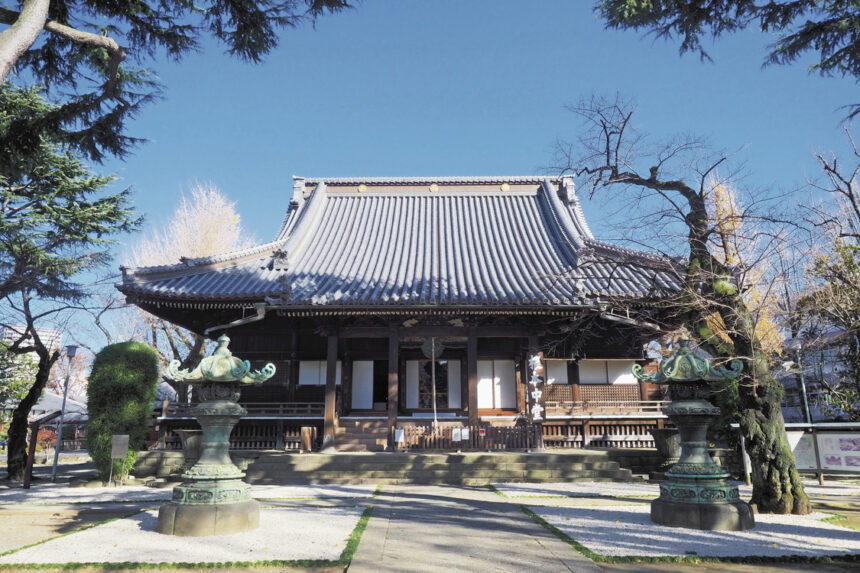
Kan-eiji Temple, located on the north side of Ueno Park, was built in 1625 by the great priest Jigen Daishi Tenkai of the Tendai sect on a site facing the demon’s gate of Edo Castle. Officially named “Toeizan Kan’eiji Temple,” it is a separate head temple of the Tendai sect. The temple consists of Nemoto Chudo Hall, Kiyomizu Kannon Hall, and Kaisando (Ryodaiji) Hall, and several buildings and pagodas are designated as Important Cultural Properties. Kan’eiji Temple is the family temple of the Tokugawa family, and six shoguns are buried in the mausoleum. The Shinobazunoike Pond Oratory, located on the grounds of Kan’eiji Temple, was built as a hall in a natural pond that resembles Lake Biwa and Chikubu Island. It has a lotus pond, a boat pond, and a cormorant pond, and visitors can enjoy the simultaneous blooming of lotuses in summer.
Spot OutlineOutline
| address (e.g. of house) | 1-14-11 Uenosakuragi, Taito-ku, Tokyo |
|---|---|
| Access | 7 minutes from JR Uguisudani Station, 15 minutes from Ueno Station |
| phone | 03-3821-4440 |
| Business Hours | 9:00~17:00 |
| regular closing day | without a holiday |
| External Links | |
| Founding and opening of business | 1625 (Kan’ei 2) |