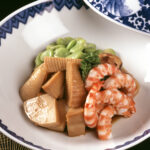
Mukozuke” is served at the beginning of kaiseki cuisine. What is the origin of its name?

Japanese-style meal

Mukozuke” is served at the beginning of kaiseki cuisine. What is the origin of its name?(mukouzuke)

tea-ceremony dishestea party (formal)tea gathering (for the tea ceremony)

A dish served with rice and soup on an oshiki at the beginning of a kaiseki meal. Vinegared dishes such as namasu and sashimi are often served. It is also called “ogokore” or “omukoko. The name comes from the fact that it is placed on the “other side” of the oshiki (the side immediately in front of the guests where the rice and soup are served). Because mukozuke dishes continue to be used after the meal is served, the plates used for these dishes are an important expression of the tea party host’s sense of taste.

新着・おすすめ情報

  1. Nara Ningyo” is characterized by the powerful touch of a single sword digging. What is the meaning behind it?

  2. Ruins of the Tokugawa family residence of the Kii Wakayama domain (Kioicho, Tokyo)

  3. National Diet Library International Library of Children’s Literature

  4. long-sleeved kimono

  5. 【第5回】東京から静岡へ 蕎麦店の系譜と受け継がれる蕎麦作りの伝統

  6. The lineup of the “five musicians” also has a meaning.

  7. Ruins of Akasaka-mitsuke

  8. 【老舗ご当主・識者と歩く】日本推しラトビア人アルトゥルさんと虎ノ門−新橋の老舗をめぐる

  9. marks indicating the Japanese meaning of the texts of Chinese classics

  10. What is meant by “santai zorai” offered for the May dolls?

  11. What does a “hair dresser” do? Series of Craftsmen Who Make Dolls

  12. 【第3回】蕎麦の香りを楽しめる蕎麦メニューとは

  13. 【第8回】江戸時代から語られるぶっかけの由来と食べ方指南

  14. Sengakuji Temple

  15. Sword eyelets become one-of-a-kind accessories. Nihon Katana, a long-established store specializing in swords that you can enjoy even if you are not an enthusiast.