

What are “Ichimatsu Dolls”? It was made to resemble a certain Kabuki actor in the Edo period.(Ichimatsu Ningyo/ichimatsuningyo)
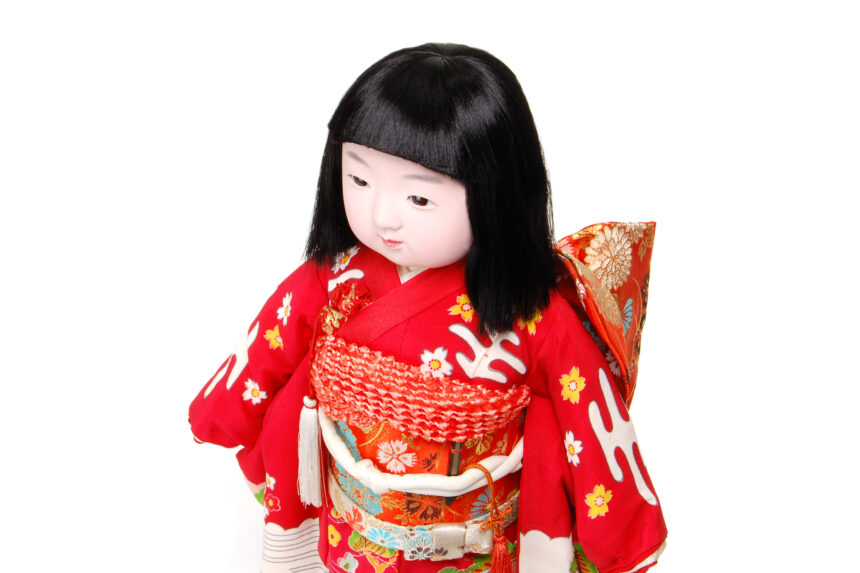
A doll in the shape of a young child. It is said that the dolls were originally made to resemble the face of Ichimatsu Sanokawa, a kabuki actor of the mid-Edo period. In Edo, the dolls were simply called “ningyo,” while in Kyoto and Osaka they were called “Ichima ningyo. There are dolls for both men and women, with girls often dressed in wigwams and furisode (long-sleeved kimono) and boys in formal wear such as haori (Japanese traditional haori coat). They were carved out of wood or made of paulownia wood powder and glued together. The body is made of carved wood or paulownia wood powder mixed with glue (a type of clay), and hands and feet made of crepe are attached to the body so that the doll can move. In the old days, people used to buy a naked doll with only a torso and play with it by making a kimono at home and dressing it up. Nowadays, the dolls are dressed in kimono from the beginning and are popular as ornamental dolls. They are also called Yamato dolls.