Ohagi/Botamochi

Japanese confectionery

Ohagi/Botamochi(ohagi/botamochi)

red bean pasteBuddhist services during the equinoctial weekmochi (glutinous rice or other grain, sticky enough to make mochi rice cakes)

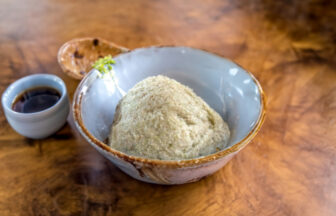
It is made by cooking glutinous rice or a mixture of glutinous and non-glutinous rice, pounding it coarsely, and then rolling it into a ball. It is called “o-hagi” when made on the autumnal equinox to honor the spirits of ancestors, and “botamochi” when made on the spring equinox. The kanji for “o-hagi” and “botan-mochi” are “gohagi” and “botan-mochi,” respectively, which are said to be named after the autumnal hagi flower and the spring peony flower, respectively.
新着・おすすめ情報

  1. wheat starch

  2. Shirokiya Denbei, a long-established shop of all-natural, 99% handmade Edo-style brooms. Why has the tradition been preserved for nearly 200 years?

  3. What does “Sarashina (soba)” mean and where did it originate?

  4. glutinous rice steamed with red beans or some other ingredient

  5. Railroad starting point 0 leagues sign (Shinbashi, Tokyo)

  6. The taste of soba-tsuyu is the character of the restaurant. What is the taste that Sarashina Nunoya has continued to preserve?

  7. stem

  8. The 2nd “Sake Samurai”s Tour of Tokyo’s Long-established Sake Breweries with Yuki Aoi

  9. Continuing to exist is a brand. What “Nihonbashi Saruya,” a toothpick specialty store, thinks a brand should be.

  10. light crimson (dye)

  11. Tomioka Hachimangu Shrine

  12. Tsutanoya” was established in 1937 and supports Japan’s fish-eating culture with its delicious taste. What is “Kyoka-zuke”, an evolution of Saikyo-zuke?

  13. Bank of Japan

  14. Minamiya Temple (Komagome, Tokyo)

  15. 【第12回】「手打ち」というだけで蕎麦は美味しいわけではない