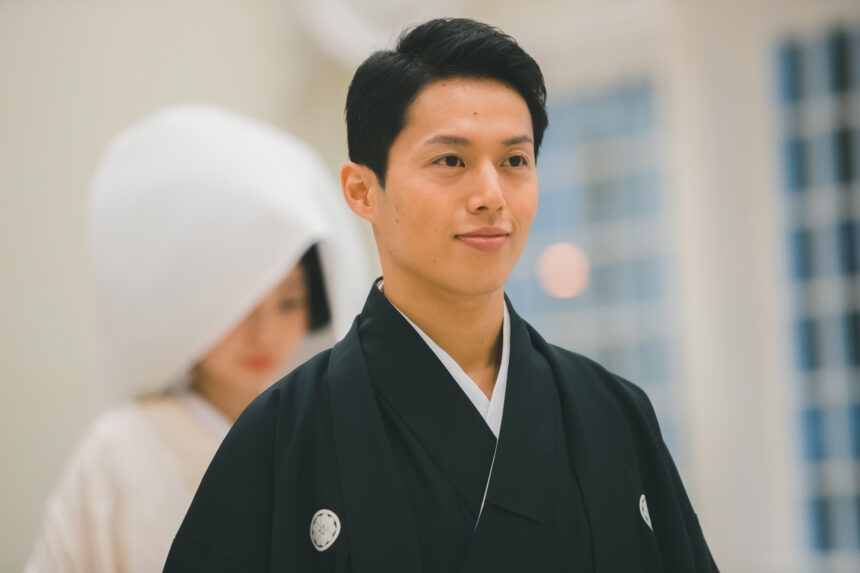
clothing (e.g. kimono) decorated with one’s family crest

Japanese clothing

clothing (e.g. kimono) decorated with one’s family crest(montsuki)

Japanese clothesclothing

A kimono or haori with a family crest (kamon). It is also called monbokuho. There are three types of crests: five, three, and one, with the five crests being the most prestigious. There are several ways to put a crest, such as nuki-mon (a crest dyed in white), sei-mon (a crest bordered with embroidery), and haprint-mon (a crest imprinted with a color). Originally worn by court nobles and warriors, it spread to wealthy merchants and actors during the Edo period (1603-1867), and was generally worn as formal attire from the Meiji period (1868-1912) onward. It sometimes refers to the black haori hakama with five crests worn by men.
新着・おすすめ情報

  1. Ome Shinmachi Oido (Ome, Tokyo)

  2. Meishu no Taki Park (Oji, Tokyo)

  3. method of patterning traditional Japanese clothing (the tops of all of patterns being pointed downwards)

  4. light broth made of jellied sweet bean paste

  5. What does “Sarashina (soba)” mean and where did it originate?

  6. How do you read “shicho”? What do the different expressions mean? Hina Dolls

  7. Virudhaka (Buddhist deity)

  8. What is the difference between “Ginjo-shu” and “Junmai Ginjo-shu”? Words related to sake

  9. Ryu Kobo in Nihonbashi has been innovating braided cord culture for more than 130 years.

  10. The soul of the craftsman resides in the old-fashioned production method. The long-established comb shop “Juso Yakushi Ten” that produces the one and only boxwood comb.

  11. Anyone can do it by themselves! Basic yukata dressing – men’s version

  12. Tokyo Station Hotel (Marunouchi, Tokyo)

  13. Long-established Tabi Shoes supported by all generations. Ohnoya Fuso-Honten” continues to make Tabi Shoes with all our hearts.

  14. Mori Garden (Roppongi, Tokyo)

  15. What is meant by “santai zorai” offered for the May dolls?