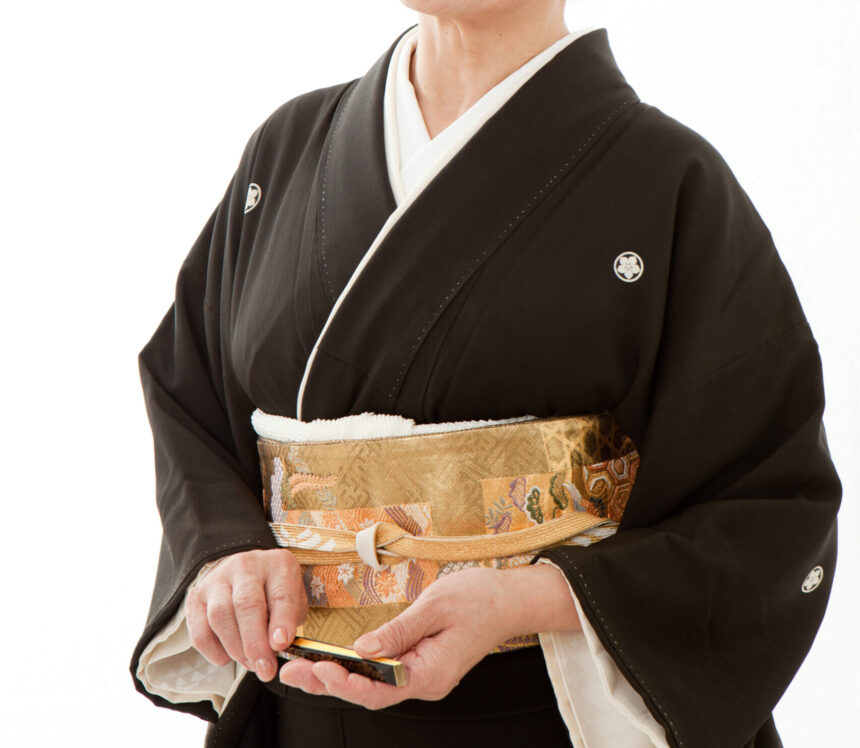
black formal kimono with designs along the bottom of the skirt worn by married women on ceremonial occasions

Japanese clothing

black formal kimono with designs along the bottom of the skirt worn by married women on ceremonial occasions(kurotomesode/kurotomesode)

dry-goodsJapanese clothesclothing

Tomesode” is a highly formal kimono worn by married women, and is a shortened version of furisode with long sleeves. A black kimono with a gorgeous pattern on the hem is called “Kuro-tomesode. The fabric is made of crepe (crape), and patterns such as auspicious auspicious designs and traditional Yukoku patterns are favored. The obi and accessories should be gold, silver, or white, and the obiage, obijime, half collar, and tabi (socks) should be white. A kimono with five family crests dyed on the back, both outer sleeves, and both breasts is the first formal dress for women, and is worn by relatives at weddings and other celebratory occasions.

新着・おすすめ情報

  1. Why is the oak in “Kashiwa-mochi” said to symbolize the prosperity of descendants?

  2. To make swords a part of our daily lives. The future of swords is the goal of Nihon Katana, a long-established sword specialty store.

  3. chopped kabayaki eel on rice

  4. Ruins of Hachioji Castle

  5. Shokado bento” is a shortened form of “kaiseki” cuisine. Kaiseki” or “Kaiseki”?

  6. Tokyo Literature Walk] No. 4: Cultural City of West Tokyo, from Seijo-Gakuen to Roka Koen

  7. What is the meaning of “hi-ire” in sake making? Words related to Sake

  8. 【第28回】蕎麦のつなぎに小麦粉を使用する理由

  9. stem

  10. pure silk

  11. Takao Yakuoin (Mt. Takao, Tokyo)

  12. battledore (early form of badminton racket)

  13. Matsui Sake Brewery once closed. A closer look at the creative sake brewing process at the revived brewery.

  14. sweet dumpling made with mochi flour and (sometimes) millet flour (famous product of Okayama)

  15. What is the story behind the “Edo fast food” that has been loved for 200 years? Komagata Dozeyu