What is the story behind the “Edo fast food” that has been loved for 200 years? Komagata Dozeyu

The Five Secret Secrets of Long-established BusinessesAsakusa (department store)weather loach (Misgurnus anguillicaudatus)wrestler of Hokkaidan ancestryTokyo stylemain southern gate of the Heian Palace’s reception compound

Bringing the best of Japan to the world, and the best of the world to Japan, agatajapan.

Japan is one of the few countries in the world where there are more than 33,000 long-established shops that have been in business for a hundred years. In this series of articles, we ask the owner of a long-established business about the “five secrets” that make it a long-established business.

Doze-nabe” has been loved for more than 200 years in Asakusa, Tokyo. Komagata Doze-nabe was established in 1801 and continues to serve the traditional taste at its main store in Komagata. The store, which still looks the same as it did back then, offers comforting tastes and stories to men and women of all ages. How does this long-established restaurant handle its dojos and what is important to them?

Let us reveal the secrets of long-established businesses from the perspective of five profound principles.

Edo’s fast food that was featured in “Edo Meibutsu Sakehan Tebikiso” (Edo Meibutsu Sakehan Tebikiso).

When you think of fast food in Edo, what comes to mind? Sushi and tempura, perhaps.

Asakusa’s specialty, “doze-nabe”, is a dish of chopped up tofu stewed with gobo (burdock root) in a simmering iron pot, and is one of the fast foods of Edo that have been pleasing people’s palates since the Edo period.

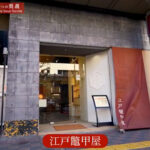
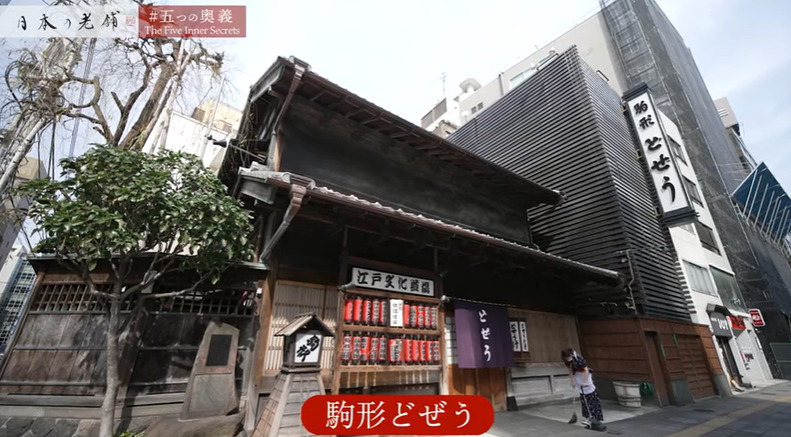
The main store of “Komagata Doze” is located in a traditional Japanese house in Asakusa, a popular sightseeing spot for foreigners.

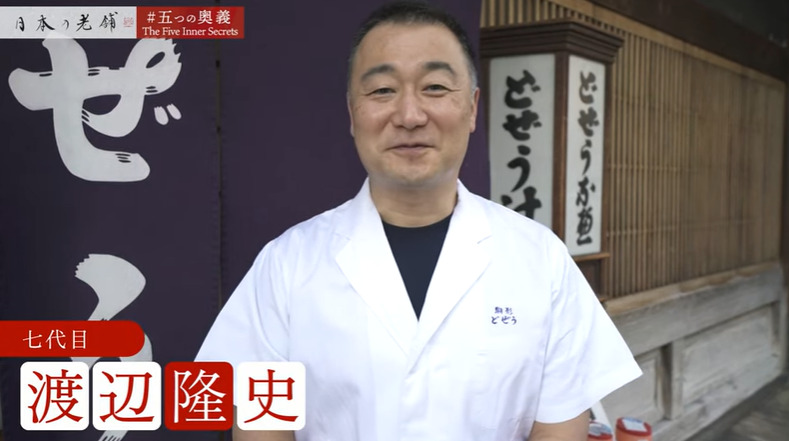
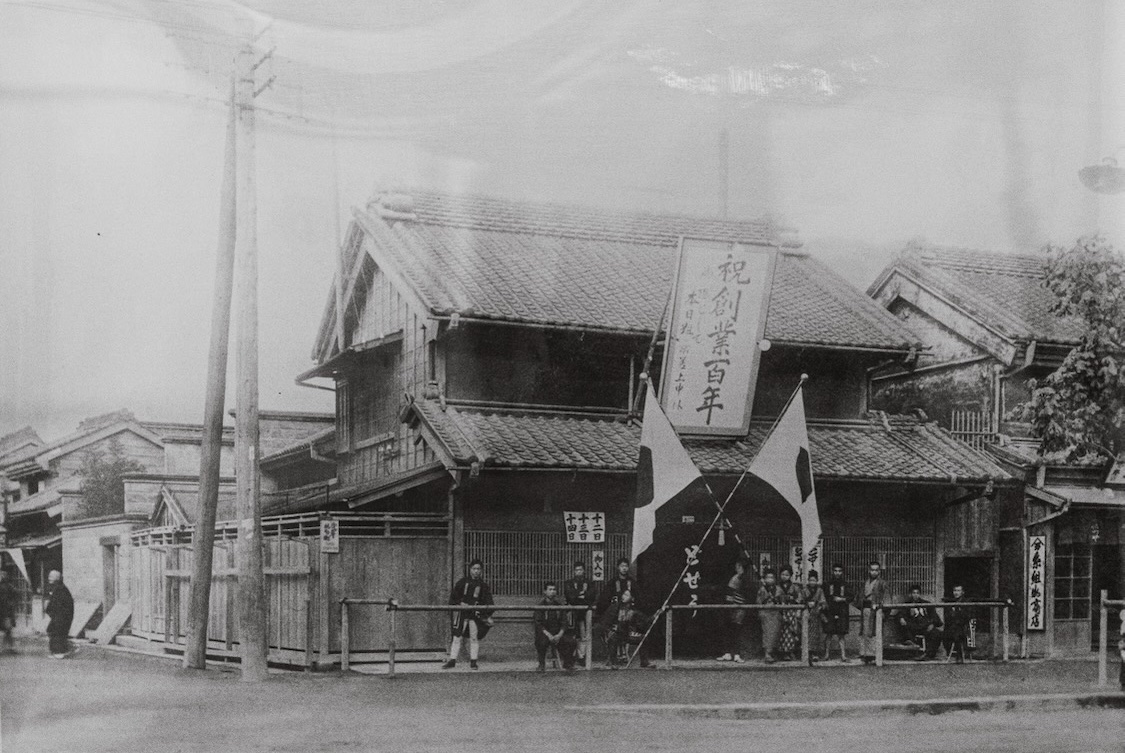
When Mr. Takashi Watanabe, the seventh generation owner, said, “Welcome,” I stepped into the restaurant and saw many customers from noon. Founded in 1801, the restaurant is located in the same building as theKyouwa era (1801.2.5-1804.2.11)The restaurant, which was well known as a long-established restaurant for doze-nabe and doze-jiru (doze soup), still retains black-and-white photos from the time it celebrated its “100th year in business.

The building itself was destroyed by fire twice, once in the Great Kanto Earthquake and once in the war, but the store, which was restored in 1964 based on blueprints from the Edo period, still reminds us of its former days.

Peddlers would eat doze soup and rice here in the morning, and if they sold at a good price, they would get a doze-nabe and a bottle of sake on the way home,” Watanabe said.

Komagata Doze’s doze-nabe was popular among the general public just like today’s fast food, and its popularity can be seen in its mention as a specialty in “Edo Meibutsu Sakehan Tebikiso,” a gourmet guidebook published in 1848 that introduced famous restaurants in Edo (now Tokyo).

What is the secret behind “Komagata Dosage”‘s dosage nabe, which has been loved for 200 years?

Five secrets of long-established stores No. 1: Predict the number of customers and stock up on loaches.

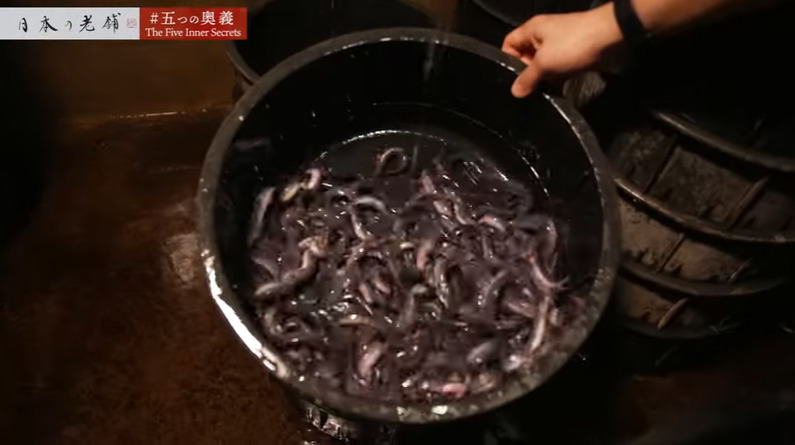
This is the room where we keep our most important ingredients,” Watanabe-san said, leading the way to a cool, dark room with many vats stacked in the dripping fresh water.

Inside the vat are, of course, “loach. The 400 kilograms of loach, purchased alive, are carefully raised in this room using groundwater. Before the coronavirus outbreak, the entire roomful of loach was used within five days to a week. In the “Komagata Dozeu” method of rearing, where the loach is not fed, the oil and meat of the loach will fall off after too many days.

Predicting how many customers will come to a restaurant is important when dealing with rare and short shelf life loaches.

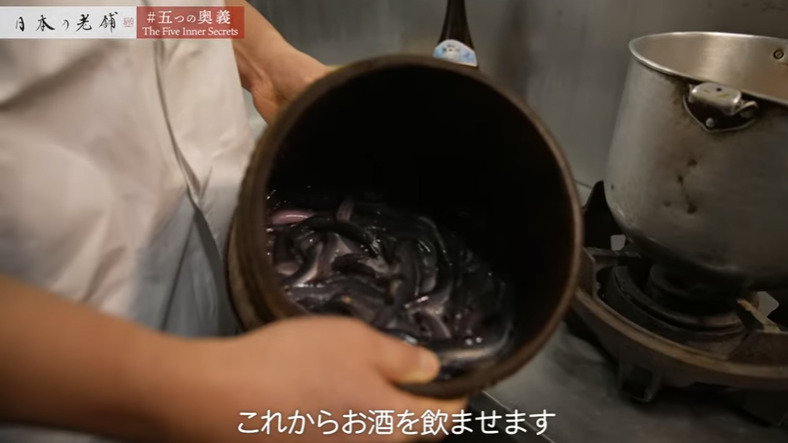
The five secrets of the long-established business No. 2: Give the loach a drink and use it whole.

An important part of making dozen nabe is the process of “giving sake to the dojos. After 15 minutes of drinking sake, the dojos in the vat are intoxicated by the sake and become sluggish and inebriated. This process produces flavorful and tender dojo.

In the Edo period, sake was an expensive commodity,” Watanabe said.

The seventh generation of the family believes that the doze-nabe dish was created based on the concept of making the supposedly inexpensive dojo drink expensive sake. The intoxicated dojos are then cooked whole in a miso soup with sweet soybean paste. From here, it is simmered slowly for one hour. The nutrients are sealed in and there is no need to worry about wasting the ingredients.

A loach should be sold as a whole.

It is one of the family precepts that “Komagata Dozeu” cherishes.

The Five Secret Secrets of Long-established Businesses No. 3: Whispered burdock should aim for willow leaves.

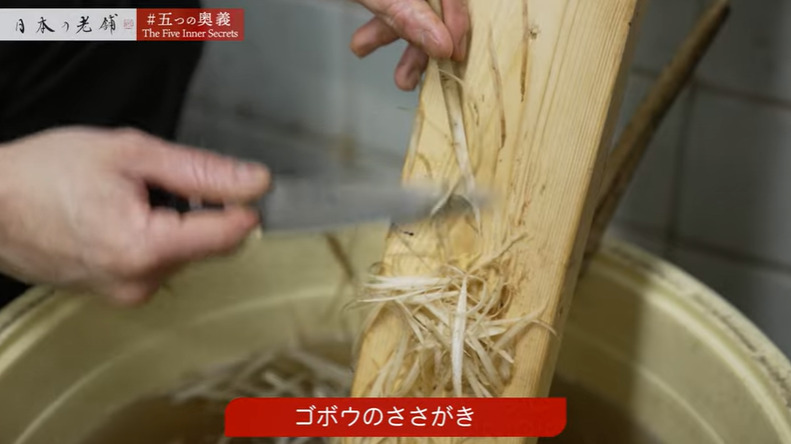
One of the most famous dishes at Dosetsu Nabe is “burdock root slices.

When we are busy, we make about 20 kilograms by hand,” says Watanabe.

The ideal “willow leaf” is not too thick to be crunchy or textured. It takes several years of training to achieve that thinness and shape. No slackness is allowed in order to achieve the soft feel when grasped. The fruit of such efforts is a zewnabe that is soft to the bone, a perfect combination of dojo and burdock root.

Five secrets of a long-established shop No. 4: Tools for handling stewed loach are custom-made.

Handling doze nabe is also a critical part of the serving process.

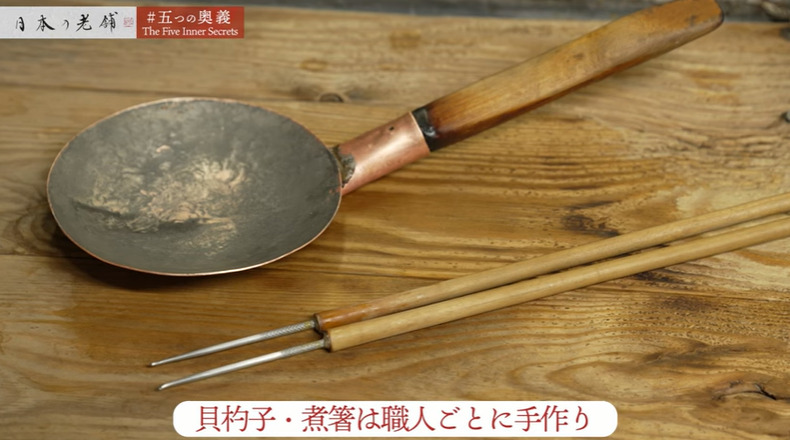
Dojos are boiled very softly and must be delicately arranged or they will lose their shape. The tools used to handle the loach, such as the “shell ladle” and “boiled chopsticks,” are handmade to order by each artisan.

The “Kaishakuko” is designed to scoop up about 70% of a pot at a time, while the “Nimi-chopsticks” are thin enough to easily grip the neck of a loach, the toughest part of a loach.

The Five Secret Secrets of Long-established Restaurants No. 5: Let the customer feel the story behind the doze-nabe.

What is the mission of a long-established business? Mr. Watanabe answered, “I believe that sharing wisdom is very important.

The wisdom of giving loach a drink to enhance its aroma and soften its bones will one day be lost if it is not passed on. At Komagata Dozeu, we are committed to carrying on the tradition and positively influencing our customers.

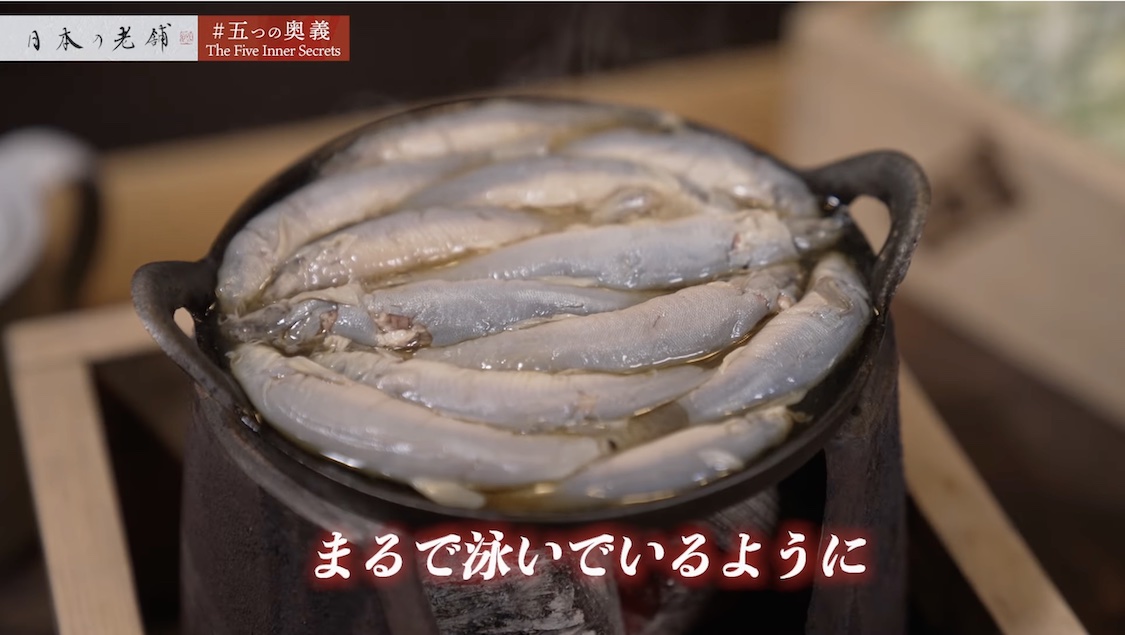
It is no coincidence, for example, that the heads and tails of the loach are arranged alternately in the doze-nabe.

This is in the hope that customers will feel as if they were swimming in a natural state of loach.

Watanabe says, “Let’s ‘create a story’ for the people who have spent the money and time to come to our restaurant. The story of Komagata Doze-nabe is to create a story of how eating Doze-nabe made you forget about something unpleasant or how it cheered you up.

Why Komagata Dozezu has continued for over 200 years

Mr. Watanabe explains that the reason Komagata Dozezu has continued for more than 200 years is that “each generation’s head of the family changed the role of the store in response to the needs of the times.

Even though values have changed dramatically since the end of World War II, Komagata Dozeu has grown to be an even more beloved long-established business because of its ability to offer the goodness of the old days. The depths and stories of Komagata Dozeu will continue to heal people and provide them with vitality for tomorrow.

Starmark Corporation

Good things of Japan to the world Good things of the world to Japan Good things of tradition to the present day Good things of the present day to tradition.

The video of “The Five Deep Meanings: Komagata Doze version” can be viewed athere (place close to the speaker or where the speaker is)from (e.g. time, place, numerical value, etc.)

新着・おすすめ情報

  1. Asakusa 1 Day Sightseeing Plan] Tour Asakusa’s long-established shops! 5 spots where you can feel history and tradition

  2. Shinko Matsuri (torch festival) is held at Kameido Tenjinja Shrine! A solemn spring fire festival in memory of Sugawara no Michizane

  3. Yamamotoyama Fuji-e Tea Salon

  4. 【第2回】美味しい蕎麦屋を見分けるコツは、お客様の「姿勢」を見ること

  5. Eating Doze soup every day to check the taste. The current owner of Komagata Dozeu, a famous restaurant that has been in business since the Edo period, demonstrates his commitment to preserving the taste of his products.

  6. Tama Cemetery (Fuchu, Tokyo)

  7. Shortcakes, pancakes and afternoon tea. A beautiful way to eat sweets.

  8. The family motto is “Be a connoisseur. Gyokuho-Do” has continued to support the tea culture by handling tea utensils of the Unshu-Matsudaira and Omotesenke families.

  9. A tour of long-established Tokyo sake breweries with “Sake Samurai” Aoi Yuki

  10. Hotel Ryumeikan Tokyo’s annual “All-You-Can-Eat Osechi Event”.

  11. Sembikiya Sohonten Nihonbashi Fruit Parlor

  12. What is the origin of the term “chilled sake”? Words related to sake

  13. polearm

  14. MATSUZAKI SHOTEN (Buy / Ginza area) page is now open

  15. Hikarimono (sushi)