What’s in a Kaiseki meal? Explaining the Difference from Kaiseki Cuisine

Japanese-style meal

What’s in a Kaiseki meal? Explaining the Difference from Kaiseki Cuisine(Kaisekiryouri)

banquet

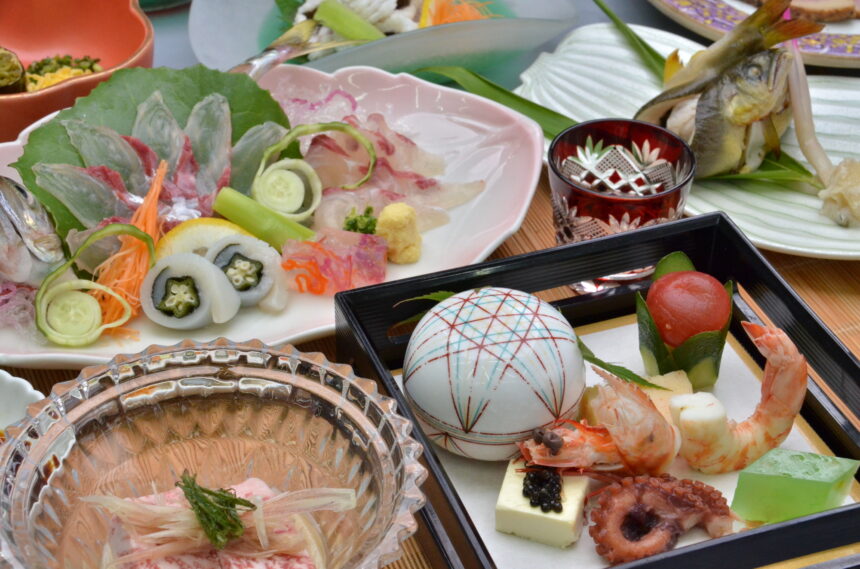
Kaiseki ryori” is sometimes confused with “kaiseki ryori,” which is read the same way, but they are different.
Kaiseki ryori” is a dish served at a tea ceremony before the tea ceremony, while “kaiseki ryori” is a banquet dish enjoyed with alcohol at a restaurant. Kaiseki ryori is a gorgeous dish with a large number of items, and the order in which the dishes are served varies, but basically it consists of “appetizers,” “oshinogi (small sushi or soba noodles),” and “oshinogi (small sushi or soba noodles). The order in which the dishes are served varies. Clear soup. Mukozuke (Sashimi) Sashimi,” “Hachizakana (grilled dishes),” and “Gokozakana (strong appetizers). Hachizakana (grilled dish)”, “Shizakana (side dish). Hachizakana (boiled, dressed, deep-fried, etc.), tomesakana (vinegared, dressed, etc.) Most of them are composed of “rice, pickles, miso soup” and “mizu-gashi or sweet (fruit, sherbet, etc.)”.
新着・おすすめ情報

  1. Ueno, Yanaka, Nippori

  2. What is the origin of the term “chilled sake”? Words related to sake

  3. The soul of the craftsman resides in the old-fashioned production method. The long-established comb shop “Juso Yakushi Ten” that produces the one and only boxwood comb.

  4. Kanda Myojin

  5. Yuri Shikaku] Toraya’s Yokan, a must-have for a mountain snack. How to enjoy Japanese sweets that reflect the changing of the seasons

  6. sandbar that projects into the ocean, particularly in a wavy form

  7. Imperial Palace

  8. Manners for Year-End Gifts for 2023: 3 recommended products and notes on when and how to give them.

  9. Seiro soba (buckwheat noodles)

  10. A Walk in Edo with Old Maps] No.5: Traces of Edo Remain Strong in “Differences in Elevation” and “Town Names” in Ushigome and Ichigaya

  11. pure silk

  12. 【第21回】古文書から紐解く江戸につながる「そば切り」の伝承

  13. Komagata Dozeu, a famous restaurant with a history of more than 200 years, serves dojo cuisine.

  14. vinegared rice and sliced raw tuna wrapped in seaweed

  15. semi-formal kimono for women