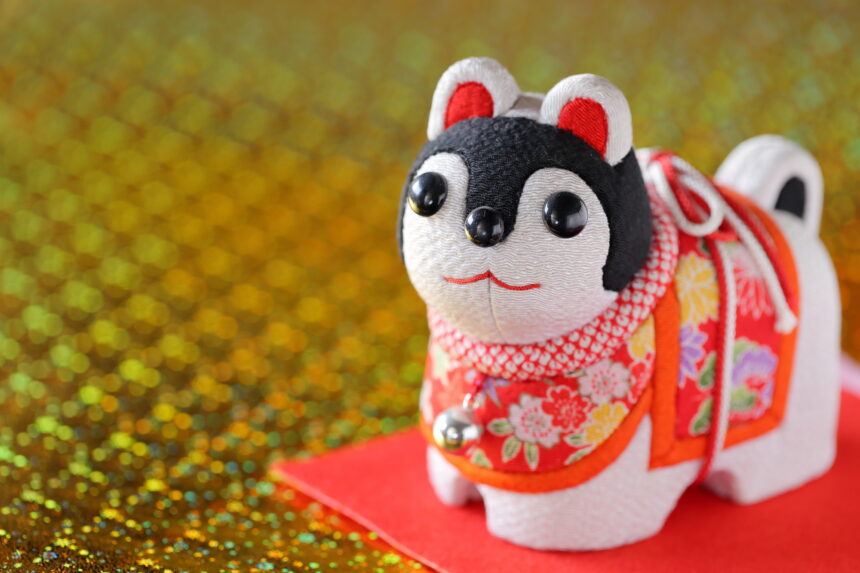
The name “Mokumegome doll” comes from the fact that the fabric is pressed into the shape of a doll.

puppet

The name “Mokumegome doll” comes from the fact that the fabric is pressed into the shape of a doll.(kimekomi ningyo/kimekominingyo)

traditional craft

It is said to have been invented by Tadashige Takahashi, a servant of the Kamo Betsurai-jinja Shrine in Kyoto, during the Genbun period of the Edo period (1603-1868). The dolls were made of wood or paulownia wood powder mixed with glue (toso, a type of clay). The dolls are made of wood or paulownia clay (a kind of clay made by mixing paulownia wood powder and glue), and edges of glittering fabrics such as brocade, twill, and crepe are pressed along the grooves to make the dolls look like costumes. There are a variety of subjects, including Sekku dolls, Kabuki dolls, and dolls for the Chinese zodiac. Edo Mokumegome Ningyo” was developed when the technique was brought to Edo (present-day Tokyo). Today, it is designated as a traditional handicraft by the Tokyo Metropolitan Government and Saitama Prefecture.

新着・おすすめ情報

  1. What is the difference between kaiseki ryori and kaiseki cuisine? Explanation of the origin and manners you should know!

  2. Ginza Matsuzaki Senmochi, a long-established shop, depicts tradition and innovation with its signature product “kawara senbei” (tile rice cracker).

  3. Samurai dolls” for Dragon Boat Festival. When did they come to be displayed?

  4. glutinous rice steamed with red beans or some other ingredient

  5. Former Residence of Soseki Natsume (Cat’s House)

  6. With 670 years of history, yet unafraid of change. Shioze Sohonke” continues to innovate ambitiously.

  7. Chinzan Villa

  8. Manju, Monaka, Daifuku, etc.: Manners for Eating Wagashi without Worrying about Public Appearances Anymore

  9. end of the year

  10. Ruins of Hachioji Castle

  11. Kakurinji Temple (Shirokanedai, Tokyo)

  12. Daenji Temple (Meguro, Tokyo)

  13. short sword

  14. When did the Hina Matsuri (Peach Festival) begin?

  15. Founded in 1877, “Ningyocho Shinota Sushi” is a famous inari sushi restaurant. The secret of the long-loved taste