Kurume Kasuri

Japanese clothing

Kurume Kasuri(kurumekasuri/kurumekasuri)

Japanese clothesclothing

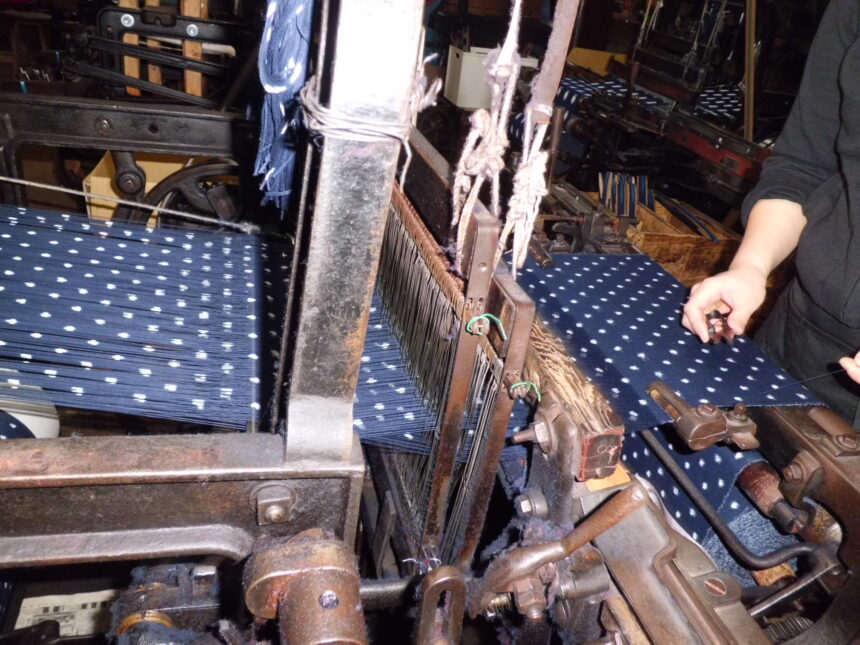
This textile was made as a side job for farmers in the Chikugo region centered on Kurume City, Fukuoka Prefecture. Cotton threads are knotted and dyed with indigo, and a kasuri pattern is woven by hand. The patterns include geometric and pictorial (picture and character) patterns, and are classified into small, medium, and large patterns according to size and number of patterns. Kurume kasuri was born around 1800 (late Edo period). A young girl named Den Inoue noticed a white speckled pattern on faded old clothes and came up with the idea of creating a pattern by binding and dyeing threads from them. As this technique spread, people invented new patterns, and after the Meiji period (1868-1912), it spread throughout Japan as a common people’s kimono. Along with Iyo-kasuri and Bingo-kasuri, it is also known as one of the three most popular kasuri in Japan.

新着・おすすめ情報

  1. The taste of soba-tsuyu is the character of the restaurant. What is the taste that Sarashina Nunoya has continued to preserve?

  2. light crimson (dye)

  3. purity

  4. Definitions of “Daiginjo-shu” and “Junmai Daiginjo-shu” [Words Related to Sake].

  5. Koishikawa Botanical Garden

  6. ramen

  7. New Year’s gift (usu. money given to a child by relatives and visitors)

  8. gore

  9. sake brewed without addition of saccharides and no more than 120 litres of seed alcohol per tonne

  10. Old Furukawa Garden (Komagome, Tokyo)

  11. Nihonbashi Saruya is the only toothpick specialty store in Japan. Once you use it, you will never go back to ordinary toothpicks.

  12. 【第1回】蕎麦の実の殻を完全に取り除いて作る「江戸蕎麦」

  13. Omori Shell Mound Site Garden

  14. Improving operations is the only way to face customers. What Ginza Mikawaya, a long-established Western-style restaurant in Ginza, values

  15. Kameido Tenjinja Shrine (Kameido, Tokyo)