Types of “Hina Dolls.” What are the characteristics of their costumes?

puppet

Types of “Hina Dolls.” What are the characteristics of their costumes?(hinaningyo)

Dolls’ Festivalspringpeach festival

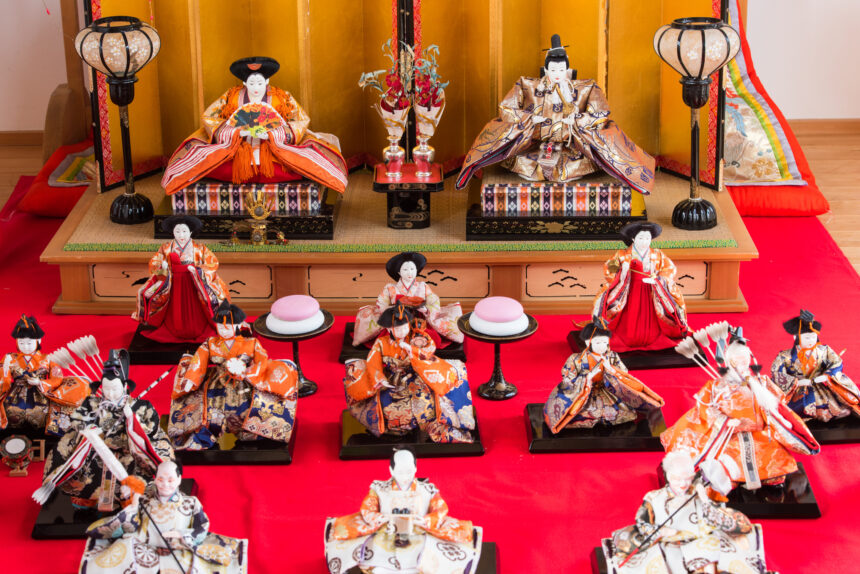
Setsubuku dolls are displayed on Hina Matsuri (Girls’ Festival) on March 3. There are various theories about the origin of Hinamatsuri, but it is believed to be a fusion of the custom of entrusting misfortunes to “hitokata” (dolls) and throwing them into rivers, and the Heian-period “Hiina-asobi” (a play with small paper dolls, a pair for each gender) and the Joushi-no-Sekku festival on March 3. In the Edo period (1603-1867), the event became a festival to pray for the healthy growth of girls. There are various types of Hina dolls, such as paper dolls, costume dolls, and clay dolls. The costumes of the costume hina dolls are based on the formal wear of the Emperor, Empress, and court nobles at court, with the male dolls dressed in korokan sokutai and the female dolls in juni-hitoe. In the Edo period (1603-1867), Hina festivals became more popular, and as a result, dolls as exquisite and elegant as works of art began to appear. The dolls are faithfully reproduced down to the smallest detail, and are works of art that convey the prestige of the Heian period to the present day.

新着・おすすめ情報

  1. sandbar that projects into the ocean, particularly in a wavy form

  2. Honshiba Park (Tamachi, Tokyo)

  3. eel-liver soup

  4. Takao Yakuoin (Mt. Takao, Tokyo)

  5. Umezono, a long-established sweet shop in Asakusa: From awa-zenzai to dora-soft (soft rice cake), “80% on the defensive, 20% on the offensive” wins the hearts of young people.

  6. Eating Doze soup every day to check the taste. The current owner of Komagata Dozeu, a famous restaurant that has been in business since the Edo period, demonstrates his commitment to preserving the taste of his products.

  7. Tokyo National Museum

  8. 【老舗ご当主・識者と歩く】日本推しラトビア人アルトゥルさんと虎ノ門−新橋の老舗をめぐる

  9. mound containing a monument to Shomon (i.e. a place of scenic beauty)

  10. What to do on the far shore for ancestor memorial services? What to wear, what to bring, and what to do on the day of visitation.

  11. Tama Cemetery (Fuchu, Tokyo)

  12. Ruins of the Tokugawa family residence of the Kii Wakayama domain (Kioicho, Tokyo)

  13. eel and cucumber salad, finely sliced, dressed in sake, soy, and vinegar

  14. What is the origin of the word “toji” in sake brewing? Words related to sake

  15. Why is the oak in “Kashiwa-mochi” said to symbolize the prosperity of descendants?