

Column: Don’t call me the landlady!turfJapanese clothingobiclothing
It’s June and the rainy season is about to begin. In Japan, which has four distinct seasons, we are entering the season when kimonos are the most “hated” (lol).
In the second issue, I told you that kimonos can be re-tailored by washing and stretching, and that Japanese people in the past used up the silk threads of “silkworms” without wasting them until they were finally turned into hataki. In fact, “obi,” an essential part of kimono, can be made from various raw materials other than silk, even more so than kimono.
A wide variety of obi materials, including plant fibers and Japanese paper materials
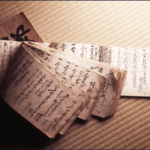
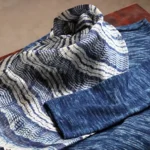
In addition to the cotton and linen obis (often half-width obis) that are used for yukata, there are also rattan cloth woven from stripped rattan fibers, which is a natural fabric, and Japanese paper made from gampi (gampi) and other bark fibers. Because the obi is made in a straight line and does not require much length, it is made from a wide variety of materials.*Ligamentous fiber: Fiber taken from the stems of plants.
Kimonos were originally called “kosode” in the court during the Heian period (794-1185), which was a kind of undergarment worn inside a ceremonial dress, and became omotegi (the outer most garment). However, the width of the essential obi has changed with the times.
In the Muromachi period (1336-1573), practicality took precedence over decorative elements, and the width of the obi was as thick as a piece of string, but in the early Edo period (1603-1868), the obis worn by the oiris in the Yoshiwara district were more luxurious and wider than today’s pouch obis. The required width of obi changed fluidly with the times.
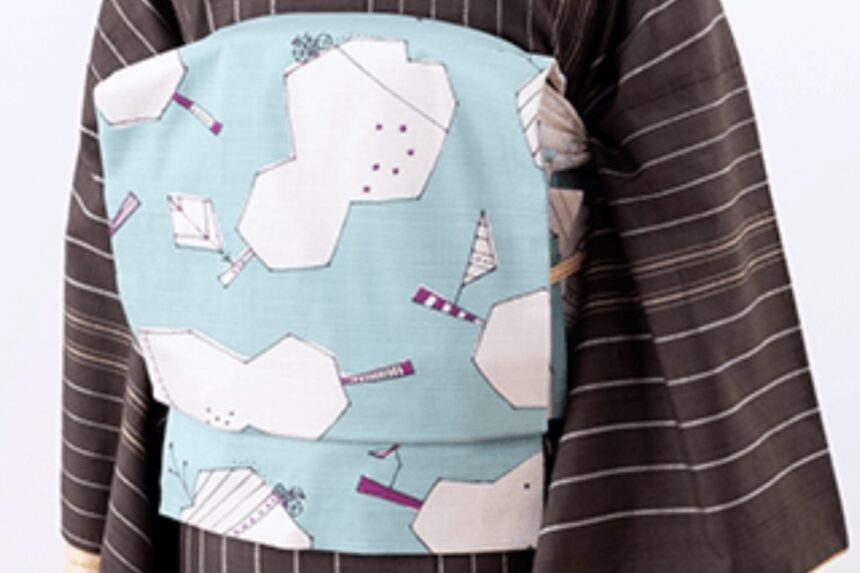
Old clothes and tenugui hand towels with fashionable patterns can also be transformed into obis.
Just as our modern attire changes with our climate and lifestyle, the kimono and obi have settled into their current styles because they have shifted and changed with the climate and lifestyle of Japan over the last thousand years.
When you think about it, there is really no such thing as “it has to be this way. ……
We would like to advertise a little bit here. …… We at Chokoya would like everyone living in the modern age to enjoy kimonos more familiarly and freely, and as an unprecedented new initiative, we are proposing “making obis from your favorite cloth”. Obi tailors carefully select and finish obi cores that match the obi using traditional techniques, but as one of the Obi craftsmen who works with us at TOCHOYA says, “In the past, we even made obis out of snake skin. We are making the impossible possible.
Please bring in your favorite clothes that you can’t throw away, surplus cloth from sewing, or even tenugui hand towels. If there is not enough cloth, we will tailor it with “extra cloth. For tenugui hand towels, please prepare 6 to 7 pieces of the same pattern depending on the length of the obi.
Recently, we have been receiving an increasing number of special orders from fashionable men for kaku obis (thin obis for men). Please feel free to visit our store for any kind of consultation!
Well, that’s enough advertising, please visit ……. In the next issue, we will be talking about “Kimono rank and seasons”. It may be an earache for those of you who have just started wearing kimonos. ……(laugh)
Thank you for reading.
June 7, 2023 Eri Kobayashi, Dingoya
Eri Kobayashi
6th generation head of the Dingoya family
This article was written by…
The sixth generation of “Choukoya,” a long-established kimono store founded in Kansei 10, which suddenly appears on the first floor of the Toranomon Hills Business Tower. 2016, she decided to take over her husband’s business, a kimono shop, from a completely different industry such as ORIX Group. Kimono dresser and kimono personal color analyst. She conveys “kimonos that will last for the next generation” that are not bound by common sense or stereotypes, and is a permanent board member of the “Hyakunenkai,” an association of long-established kimono shops in Shiba from 2020.
Her hobbies are “dressing and coordinating others” and solo camping.Dingoya Home PageDingoya Instagram