

Column: Don’t call me the landlady!turfsummer kimonoOjiya shrinkage(silk) gauzesilk gauze (esp. used in light clothing for high summer)
Hello.
Summer is finally in full swing, and some of our foreign customers who visit our store ask us, “Isn’t it hot in a kimono?” I sometimes get asked by foreign customers who come to our store, “Isn’t it hot in a kimono?
I think everyone who reads this column may feel the same way. From this time onward, I would like to explain in several parts about “class and season,” which are the main reasons why kimonos are shunned.
Change from kimonos to obis and half collars to “ro” and “gauze” materials with a translucent feel.
First of all, I would like to talk about “seasons”.
This column will continue for a while with the rudimentary contents of kimono ABC for those who do not currently wear kimono, so please bear with me even though it may be boring for those who know a lot about kimono.
First of all, I would like to touch on the devices and manners of wearing a kimono (meaning a summer kimono, not a yukata) in summer, and the selection of materials.
As a “rule for wearing a kimono in summer,” from June to early September, you should wear (or change the material of) a transparent material called “ro” as the material for the half collar of the long lintel you wear underneath. In preparation for summer, not only the kimono itself is changed, but also preparations for “seasonal attire,” including undergarments, begin in a flurry.
Summer kimonos and obis are made with special weaves such as “ro” and “sha,” which are different from those used in other seasons. Although they are transparent in appearance and do not break the ratio of kimono and obi or their style, they are lightweight, and the colors and patterns give a different impression, showing the enthusiasm and sensibility of the Japanese people to enjoy the seasonal feeling of summer.
In terms of materials for summer kimonos, those made of hemp are the coolest, just like western clothes, and considering the fact that they sweat, those that can be washed at home are very popular.
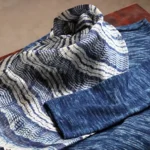
A typical summer kimono made of hemp from the Ojiya region of Niigata Prefecture, called “Ojiya-chijimi,” floats on the skin without sticking to it, so it feels like a feather when you put it on. Because it is transparent, you must wear a long undergarment underneath, but even so, once you get used to it, you may actually sweat less when wearing an Ojiya-chijin, considering how sticky it feels against your skin when you wear a yukata made of cotton over a skin undergarment.* Incidentally, when wearing a kimono, one must wear a kimono undergarment called a hikibantu (underwear for kimono) and a hem awning (like a petticoat), then the long underwear, then the kimono, and then the obi (sash).
The materials used for obis are also maximally lightweight, such as silk woven with a translucent technique for summer and obis made of a special thin linen called jofu, and some summer obis weigh about one-third as much as the pouch obis worn in fall and winter (the heaviest ones for formal wear weigh less than 1 kg).
The ventilation through the “body eight” gives it a more open feeling than clothes.
Also, basically, a kimono has an unstitched opening called “miyatsukuchi” at the sides where sweat easily occurs (men’s kimonos, by the way, do not have this opening…). (By the way, men’s kimonos do not have this… although it would be nice if they did.) It may seem surprising, but the wind enters the upper half of the body through these openings and it is surprisingly cool, and unlike western clothes, it is difficult to get sweat stains on the sides, which is a new discovery for me. At first, I hated the idea of wearing a kimono in the summer. …… (laughs).
Kimono is a “long one-piece dress” if I may use an analogy.
In terms of coolness, of course, it loses out to a tank top and shorts in the summer, but except for the belly area where the obi is tightened, both the upper and lower body feel open, and it is cooler than jeans or pantsuits.
Unlike western clothes, kimono does not change its shape throughout the four seasons.
For summer kimonos and summer obis, there are many tearful efforts and innovations by Japanese people, such as having open sides to let sweat escape, weaving with limited materials to reduce weight, and so on, in order to make them feel cooler for only a little more than two months throughout the year.
The story about patterns and seasonal motifs will be in the next issue.
Thank you for reading.
June 21, 2023 Eri Kobayashi
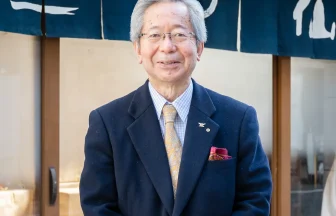
Eri Kobayashi
6th generation head of the Dingoya family
This article was written by…
The sixth generation of “Choukoya”, a long-established kimono store founded in Kansei 10, which suddenly appears on the first floor of the Toranomon Hills Business Tower. 2016, she decided to take over her husband’s business, a kimono shop, from a completely different industry such as ORIX Group. Kimono dresser and kimono personal color analyst. She conveys “kimonos that will last to the next generation” that are not bound by common sense or stereotypes, and is a permanent board member of the Hyakunenkai, an association of long-established kimono shops in Shiba from 2020.
Her hobbies are “dressing and coordinating others” and solo camping.Dingoya Home PageDingoya Instagram