rice cake with bean paste wrapped in a preserved egg

Japanese confectionery

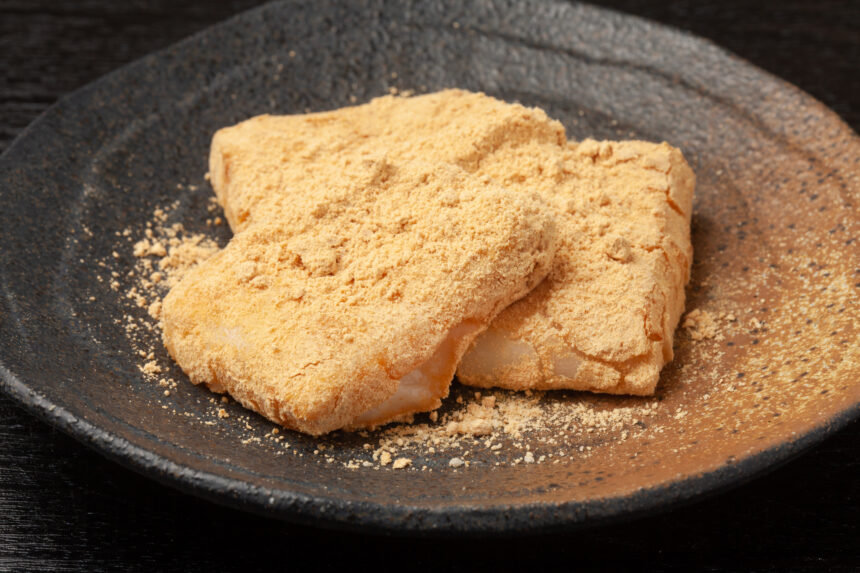
rice cake with bean paste wrapped in a preserved egg(abekawamochi)

soy flourmochi (glutinous rice or other grain, sticky enough to make mochi rice cakes)

Soft rice cake covered with soybean flour and sugar. It is a specialty of Shizuoka City. The name comes from the “Abe River” that runs through Shizuoka Prefecture, and there are several theories as to its origin. The first is that Tokugawa Ieyasu ate a similar mochi when he rested by the Abe River during the Edo period (1603-1867) and named it after him. The other theory is that it was known among travelers on the Tokaido Highway as a specialty sold at teahouses along the Abe River. Even today, several stores offering Abegawa mochi still stand side by side at the foot of the Abegawa Bridge.

新着・おすすめ情報

  1. Tokyo Metropolitan Teien Art Museum

  2. Japanese dessert consisting of two slices of kasutera (sponge cake) with red bean jam in between

  3. brewer’s rice

  4. Inari-zushi

  5. sweet yuzu-flavoured steamed dumpling

  6. Minamiya Temple (Komagome, Tokyo)

  7. Fuzoku ningyo” are dolls that reflect the customs of various regions in Japan. There are Edo genre dolls, Kyoto dolls, etc.

  8. Okadaya Fuse” has a history of 188 years.

  9. battledore (early form of badminton racket)

  10. Shinko Matsuri (torch festival) is held at Kameido Tenjinja Shrine! A solemn spring fire festival in memory of Sugawara no Michizane

  11. undershirt

  12. What is kaiseki ryori? What is the difference between kaiseki ryori and kaiseki cuisine, and which is eaten at a tea ceremony?

  13. Nezu Shrine (Nezu, Tokyo)

  14. chopped kabayaki eel on rice

  15. Ruins of Kirishitan residence (Myogadani, Tokyo)