Hamura Intake Weir

historic siteHigashimurayama, Ome, Okutama

Hamura Intake Weir(Hamura Weir)

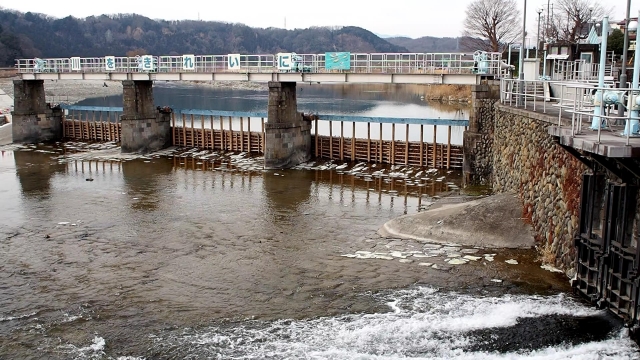
river running between Tokyo-to and Kanagawa Prefecturesluice gatewater trickling from the Tamagawa River

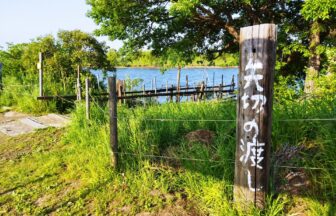
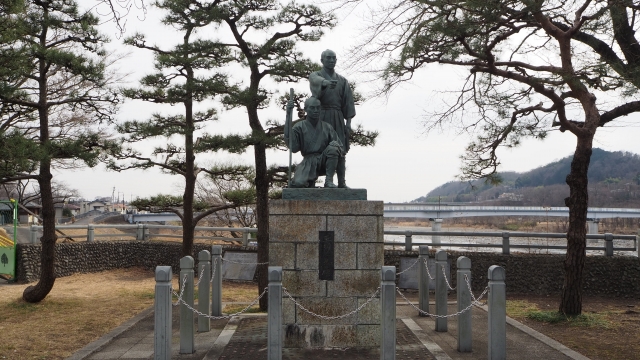
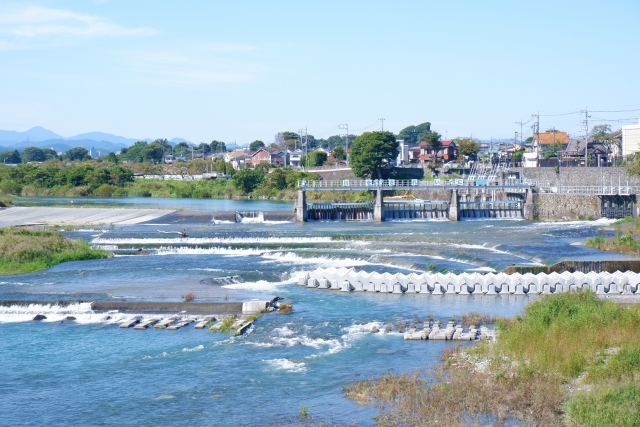
It is an intake weir for the Tama River that was constructed at the same time as the Tamagawa Josui, and was completed in 1653. It consists of a tidal weir that holds back the river, a fixed weir, a fish passage for fish to come and go, and the first sluice gate that takes in the water that has been held back. When the water level of the Tama River rises above a certain level due to heavy rains such as typhoons, the weir is removed and the weir itself is flushed downstream, and when the water level drops, the weir is rebuilt. When the water level drops, the weir is reconstructed. Raw water taken from the reservoirs is led to the Murayama-Yamaguchi Reservoir and the Ozaku Water Filtration Plant, as well as to the Higashimurayama Water Filtration Plant via the Tamagawa Josui Channel. Nearby stands a statue of the Tamagawa brothers, who made great contributions to the construction of Tamagawa Josui.

Spot OutlineOutline

address (e.g. of house) 3-8-32, Hadou, Hamura-shi, Tokyo
Access 10-minute walk from Hamura Station on the JR Ome Line.

Business Hours always open
External Links

Official Web Site

Founding and opening of business 1653 (Shouou 2)

新着・おすすめ情報

  1. Daenji Temple (Meguro, Tokyo)

  2. silk gauze

  3. Arisugawa-no-miya Memorial Park

  4. Anyone can do it by themselves! How to Tie a Yukata Obi – Kai no Kuchi

  5. Edo-Tokyo Open-Air Architectural Museum (Koganei, Tokyo)

  6. The family motto is “Be a connoisseur. Gyokuho-Do” has continued to support the tea culture by handling tea utensils of the Unshu-Matsudaira and Omotesenke families.

  7. various

  8. 【第18回】古くから食べられてきた「そばがき」の作り方

  9. 【第12回】「手打ち」というだけで蕎麦は美味しいわけではない

  10. long-sleeved kimono

  11. Seppuku monaka” and “Keikyuu monaka” …… “Shinshodou” produces wagashi that are both humorous and delicious.

  12. To make Japanese “tea culture” widely known. Flexibility of “Gyokuho-Do” to change with the times.

  13. rolled sushi with rice and other ingredients

  14. battledore (early form of badminton racket)

  15. The same manufacturing method since the establishment of the company. Interview with Satoru Nakamura, the 7th generation of Shirokiya Nakamura Denbei Shoten, who weaves Edo brooms using craftsmanship passed down from generation to generation .