light crimson (dye)(tsujigahanazome/tsujigahanazome)
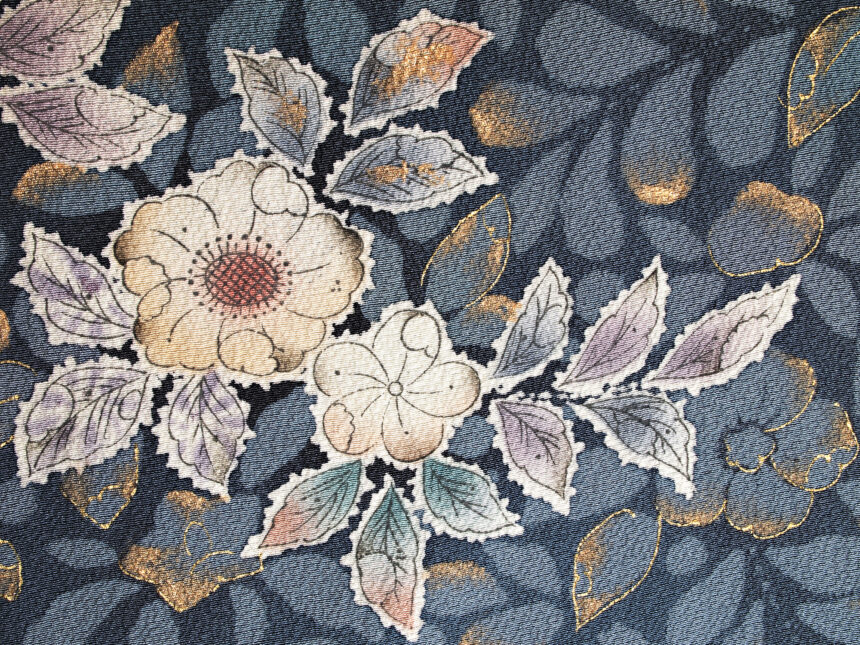
Pattern dyeing was popular from the Muromachi period (1333-1573) to the early Edo period (1603-1868). The pattern is expressed based on seijime-shibori (a method of dyeing by tightening and squeezing a thread sewn with a picture or design. The pattern is expressed based on the seijime shibori (a method of dyeing by tightening and squeezing a sewn thread of a picture or design, leaving the squeezed part dyed white to form a pattern). The artist added ink, vermilion, gofun (white paint made from powdered shells of clams, oysters, etc.), foil, embroidery, and other techniques to the base. The motifs of withering flowers and leaves were used to express not only splendor but also beauty, and the technique came to be used in the camp coats of warriors. Although this dyeing technique is older than yuzen-dyeing, it is said to be “phantom dyeing” because there are few references to it and it suddenly stopped being produced around the beginning of the 17th century. The technique was revived at the end of the Showa period (1926-1989), and today it is a prestigious dyeing technique used for furisode (formal kimono) and visiting kimono.