Horikirishobuen (Horikiri Shobuen, Tokyo)

Parks & GardensMukojima, Honjo

Horikirishobuen (Horikiri Shobuen, Tokyo)(Horikiri Iris Garden)

Hiroshige Utagawacalamus

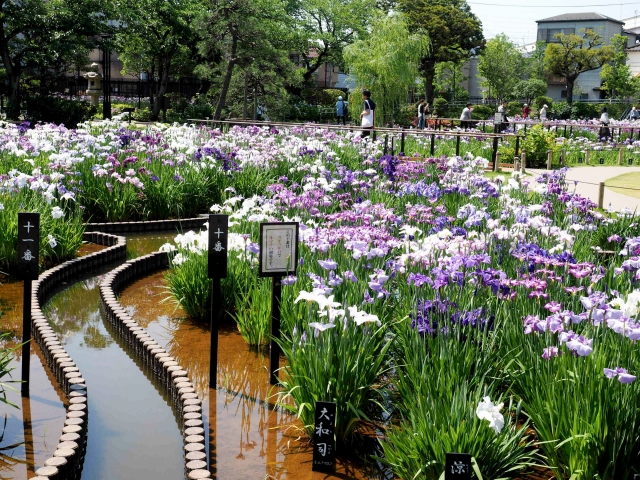
Horikiri no Hanashobuen was established in the late Edo period (1603-1867) as the first tourist iris garden in Japan, and later became a favorite strolling spot for Tokugawa shoguns. Hiroshige Utagawa’s ukiyoe “Horikiri no Hanashobu” (The Iris of Horikiri) is still one of the most famous paintings. The Tokyo Metropolitan Government purchased the park during the Showa period (1926-1989), and it is now under the management of Katsushika Ward. The vast site is planted with 6,000 irises of about 200 varieties, including rare varieties; the first flowers bloom around mid-May, and the best time to view them is from late May to mid-June. The “Katsushika Iris Festival” is held every year around the same time, featuring a lively fair and entertainment. In addition to irises, plum blossoms, wisteria, jugatsu cherry blossoms, and peonies can also be seen, making the garden enjoyable to visit at any time of the year.

Spot OutlineOutline

address (e.g. of house) 2-19-1 Horikiri, Katsushika-ku, Tokyo
Access 10 minutes from Horikirishobuen Station on the Keisei Electric Railway line

phone 03-3697-5237
Business Hours 9:00-17:00 (8:00-18:00 from June 1 to June 25)
regular closing day Open all year (except New Year’s holidays)
External Links

Official Web Site

Founding and opening of business 1975 (Showa 50)

新着・おすすめ情報

  1. Hikarimono (sushi)

  2. We don’t stick to tsukudani alone. They are also introducing Western flavors and expanding their sales channels. The Challenge of Shimbashi Tamakiya

  3. What is Dragon Boat Festival?

  4. Why is the oak in “Kashiwa-mochi” said to symbolize the prosperity of descendants?

  5. Customer information is written down in a notebook and shared with all staff. Ginza Mikawaya’s commitment to hospitality

  6. Ikegamihonmonji Temple

  7. Zoshigaya Kishimojin Hall

  8. Shiba Daimon Sarashina Nunoya

  9. point (of a sword, etc.)

  10. Seiro soba (buckwheat noodles)

  11. Taisyuji Temple (Shinjuku, Tokyo)

  12. marks indicating the Japanese meaning of the texts of Chinese classics

  13. Kurume Kasuri

  14. Tokyo Station Hotel (Marunouchi, Tokyo)

  15. 【第24回】海苔と海苔を使った蕎麦メニューの歴史